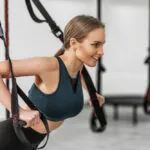
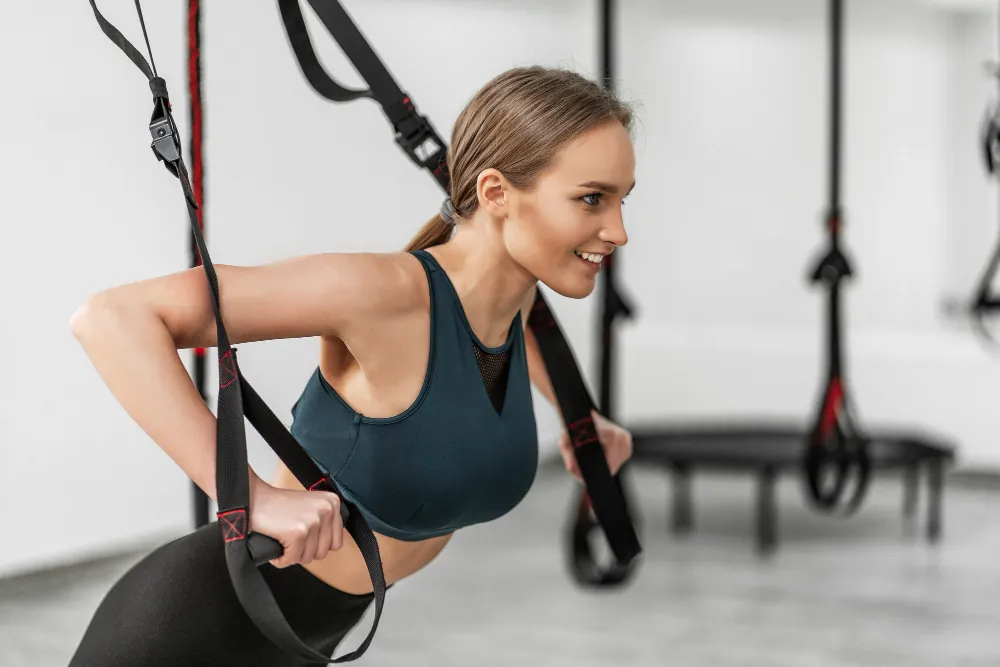
Think your core workouts are tough? Try doing them while hanging from a pair of straps that move every time you breathe. Suspension training doesn’t care how strong you think you are. It will make your abs beg for mercy and force your stabilizers to actually work for once. If you crave that deep burn that tells you you’re getting stronger, these suspension training core exercises are exactly what you need.
Can Suspension Training Be Effective for Core Workouts?
Yes. Once you’re doing a hundred crunches and V sit-ups, it’s time to level up.
The key idea behind these movements is that your body isn’t stable on the ground, which means that if you don’t want to twist and turn, your core has to stay active at all times.
With suspension training core exercises, there’s no “cheating” like with exercises on the floor. You can’t rely on momentum or isolate one area. Everything needs to work in harmony.
Pro Tip Before You Start
Some of these exercises are similar to ones you can do with a stability ball, like the Jackknife. If you’ve ever tried that, you know how hard it can be to stay balanced. But once you master the movement and start doing proper reps, you’ll see amazing progress.
So take the first few workouts to understand the movement and learn how to maintain balance. It might feel awkward at first, but if you go slowly and pay attention to your form, you’ll master it and learn how to feel the real burn.
Best Suspension Training Core Exercises
Here are our favorite exercises.
Plank Hold
- Place your feet in the straps and walk your hands out into a high plank position.
- Keep your body in a straight line from head to heels.
- Engage your core, squeeze your glutes, and hold for 30-60 seconds.
- Form tip: Don’t let your hips sag. Think about pulling your belly button toward your spine the entire time.
Suspended Pike
- Start in a plank with feet in the straps.
- Using your core, lift your hips toward the ceiling until your body forms an inverted “V.”
- Slowly return to the plank position without letting your lower back dip.
- Form tip: Keep your legs straight.
Body Saw
- Begin in a forearm plank with feet in the straps.
- Gently rock your body forward and backward by shifting through your shoulders.
- Maintain core tension throughout to prevent your back from arching.
- Form tip: The farther you “saw” forward, the tougher the burn.
Suspended Knee Tuck
- Start in a high plank, feet in the straps.
- Pull your knees toward your chest using your core, not momentum.
- Extend your legs back to plank and repeat.
- Form tip: Keep your spine neutral as you pull in.
Suspended Side Plank
- Lie on your side with both feet in the straps and your bottom elbow directly under your shoulder.
- Lift your hips to form a straight line from head to heels.
- Hold for 30-45 seconds per side.
- Form tip: Don’t let your shoulder sink.
Suspended Mountain Climbers
- Start in a high plank with feet in the straps.
- Drive one knee toward your chest, then switch legs in a controlled, alternating motion.
- Keep your hips level and core tight throughout.
- Form tip: Move quickly enough to raise your heart rate, but not so fast that you lose the form.
Are These Exercises Better Than Regular Core Exercises?
In most cases, yes. If you’ve mastered regular core exercises, then you should definitely try these.
The difference lies in instability. When your feet are in straps, your body has to work together to stay balanced. Your abs, obliques, and even your lower back are engaged much more than during a regular core exercise.
But this doesn’t mean you should ditch traditional core work. If you’re still a beginner, focus on mastering the basics first. You can start adding more advanced exercises once a week to build strength and confidence.
Benefits of a Stronger Core
Abs are great, but with a stronger core, you can experience many more benefits.
- Better Posture and Alignment: A strong core is crucial for supporting your spine and keeping your body upright.
- More Power in Every Movement: Whether you’re lifting weights, sprinting, or swinging a golf club, your core drives the motion. Strong abs and stabilizers can help improve performance in almost any sport or activity.
- Improved Balance and Stability: The stronger your core is, the better you can react, stabilize, and maintain control, especially during dynamic movements.
- Less Risk of Injury: A stable midsection protects your back and joints by evenly distributing the load and reducing compensations.
How Frequently to Do Suspension Training Core Exercises?
These exercises are intense when done right, so you’ll need to keep recovery in mind. Here’s how to plan your sessions:
- Frequency: 2-3 times per week is ideal.
- Session Length: 15-20 minutes.
- Progression: Start with shorter holds and fewer reps, then increase gradually.
What Other Benefits Can You Expect from Suspension Training?
Suspension training doesn’t just sculpt your core. Here’s what you can also expect:
- Full-Body Activation: Every exercise targets multiple muscle groups. You can expect some soreness in your shoulders, glutes, and even your chest.
- Improved Mobility: The dynamic nature of the straps promotes a better range of motion and greater joint flexibility.
- Better Coordination: Once your brain and body learn to work together, you’ll notice more control, improved balance, and quicker reaction time.
- Increased Core Awareness: You’ll become more conscious of your posture and alignment, even outside the gym.
FAQ
Do I need to be advanced to start suspension training?
Not at all. Beginners can start with basic holds and planks, adjusting the angle of their body to make exercises easier.
What equipment do I need?
All you need is a suspension trainer like TRX or any quality strap system. Anchor it securely to a door, ceiling mount, or sturdy outdoor structure, and you’re set.
Is suspension training safe for people with back pain?
When done correctly, yes. It can actually help by strengthening deep stabilizers and improving posture. However, if you have an injury or chronic pain, get clearance from a trainer or healthcare professional first.
Can I do suspension training every day?
It’s best not to. Your muscles need time to recover. Stick to 2–3 times per week for optimal progress.
Key Takeaways
Suspension training core exercises are the real deal when it comes to building lasting strength.
- They challenge your stability and keep your entire core active and engaged.
- Two to three focused sessions per week are enough to see real progress.
- A stronger core improves posture, power, and helps prevent injuries.
- Suspension training boosts coordination, balance, and total body control.