
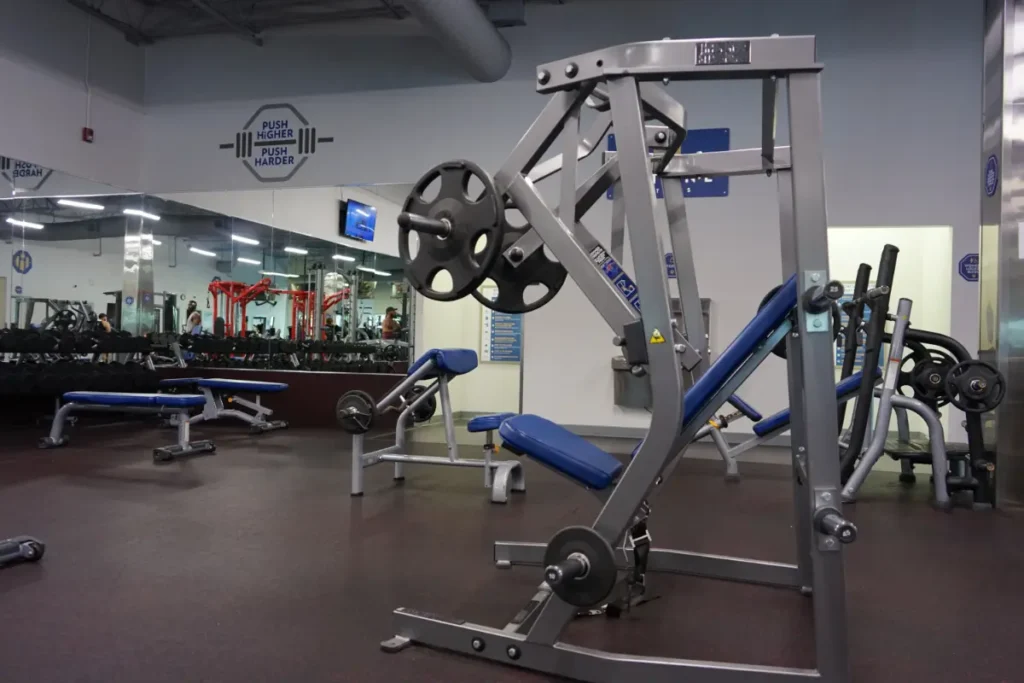
A simple beginner gym workout routine is a 3-day full-body plan that repeats the same core movement patterns (squat, hinge, push, pull, carry) so you can build strength safely and progress week to week. Train on non-consecutive days, use controlled weights you can lift with good form, and focus on small, steady improvements for 8–12 weeks.
Key Takeaways
- Non-consecutive training days help beginners recover and progress faster than training hard every day.
- Use “reps in reserve”: finish most sets with 2–3 good reps left to protect form and joints.
- Progress is small on purpose: add a little weight, a rep, or a set only when all sets feel controlled.
- Walking counts: daily steps support fat loss, conditioning, and recovery without beating you up.
- Cardio is optional, not a punishment: start easy and build gradually so it doesn’t interfere with strength workouts.
- Run the plan long enough: 8–12 weeks of consistency beats switching routines every week.
What Makes a Good Beginner Gym Workout Routine?
A good beginner routine is simple, repeatable, and focused on learning the basics with safe progressions. You don’t need 20 different exercises or advanced techniques to see results in the first months.
Instead, your plan should:
- Train your whole body 2–3 times per week using big, multi-joint exercises (squats, pushes, pulls, hinges).
- Use gym-friendly equipment—machines and dumbbells that are easier to control than heavy barbells when you’re new.
- Start with light weights and perfect form, then adA simple beginner gym workout routine is a 3-day full-body plan that repeats the same core movement patterns (squat, hinge, push, pull, carry) so you can build strength safely and progress week to week. Train on non-consecutive days, use controlled weights you can lift with good form, and focus on small, steady improvements for 8–12 weeks.d small, steady increases over time.
- Include rest days so your muscles, joints, and nervous system can recover.
- Fit your real life—your work, family, and energy levels—so you can actually stick to it.
Some beginners also need to factor in a higher starting body weight, joint pain, or long breaks from exercise. If that sounds like you, check out this strength training guide before you jump into a full gym routine.
What to Decide Before You Start Your Routine
A few decisions upfront make your beginner gym workout routine much easier to follow.
Think about:
1. Your main goal
Are you focused on losing fat, gaining muscle, improving energy, or a mix of all three? For most beginners, a full-body strength routine with some cardio covers all of those goals well.
2. Your current fitness level
If you’re completely new, recovering from a break, or dealing with aches and pains, start with lighter weights, fewer sets, and slower progressions. Your first month is about learning movements, not chasing personal records.
3. How many days you can realistically train
Be honest. If you can commit to 3 days per week, build your plan around that instead of aiming for 6 and burning out after a week.
4. What you actually enjoy
Hate running? You don’t need to run. Prefer machines to free weights? That’s fine. The best beginner routine is the one you can repeat for months, not the “perfect” plan you abandon after 2 weeks.
Building a balanced physique also means not neglecting key areas like your shoulders. From the beginning, add in our essential shoulder exercises for beginners so you stay strong and stable in every pressing and pulling movement.
How Many Days per Week Should a Beginner Go to the Gym?
Most beginners do best with 3 gym workouts per week, plus light movement on non-gym days. That gives your muscles enough stimulus to grow without flooding your body with more fatigue than it can handle.
Here are simple weekly options you can copy:
| Goal | Days in the Gym | Example Weekly Schedule |
|---|---|---|
| General fitness | 3 days | Mon – Gym full body Wed – Gym full body Fri – Gym full body |
| Fat loss | 3–4 days | Mon – Strength full body Tue – Light cardio/walk Thu – Strength full body Sat – Optional circuit or cardio |
| Muscle gain | 3–4 days | Mon – Full body A Wed – Full body B Fri – Full body A Sat – Optional short accessory/arm/core session |
| Very busy schedule | 2 days | Tue – Full body Fri – Full body + short cardio |
Beyond your structured workouts, try to get 5,000–10,000 steps per day through walking, light errands, or short movement breaks. Walking is low impact and pairs well with strength training.
Beginner Gym Workout Routine: Simple 3-Day Full-Body Plan
This beginner gym workout routine uses joint-friendly machines and dumbbells, not heavy barbell work you’re not ready for yet. It trains your whole body 3 times per week and teaches you the core patterns you’ll use for years: squat, hinge, push, pull, and carry.
Before each workout:
- Warm up for 5–10 minutes with easy treadmill walking, bike, or elliptical.
- Do 1 light “practice” set for your first 1–2 exercises to groove the movement.
Choose a weight you can lift with 2–3 reps left in the tank. When an exercise feels comfortable for all sets, increase the weight slightly next time.
| Day | Exercise | Sets x Reps | Notes |
|---|---|---|---|
| Day 1 – Full Body | Leg press (machine) | 3 x 10–12 | Feet shoulder-width apart, lower with control. |
| Day 1 – Full Body | Incline dumbbell press | 3 x 8–10 | Keep wrists stacked over elbows, control the descent. |
| Day 1 – Full Body | Seated cable row | 3 x 10–12 | Pull toward lower ribs, squeeze shoulder blades. |
| Day 1 – Full Body | Glute bridge (bodyweight or dumbbell) | 3 x 12–15 | Push through heels, pause at the top. |
| Day 1 – Full Body | Plank | 3 x 20–30 seconds | Keep ribs down and glutes tight. |
| Day 2 – Full Body | Goblet squat (dumbbell) | 3 x 8–10 | Hold the dumbbell at your chest, sit “between” your hips. |
| Day 2 – Full Body | Machine chest press | 3 x 10–12 | Adjust seat so handles are at mid-chest level. |
| Day 2 – Full Body | Lat pulldown (wide or neutral grip) | 3 x 8–10 | Pull toward upper chest, avoid swinging. |
| Day 2 – Full Body | Cable face pull | 3 x 12–15 | Great for posture and shoulder health. |
| Day 2 – Full Body | Side plank (each side) | 2–3 x 15–25 seconds | Keep hips lifted, body in a straight line. |
| Day 3 – Full Body | Dumbbell Romanian deadlift | 3 x 8–10 | Soft knees, push hips back, feel your hamstrings work. |
| Day 3 – Full Body | Seated dumbbell shoulder press | 3 x 8–10 | Press slightly in front of your head, not straight back. |
| Day 3 – Full Body | Chest-supported row (machine or bench) | 3 x 10–12 | Chest supported so your lower back can relax. |
| Day 3 – Full Body | Farmer’s carry (dumbbells) | 3 x 20–30 meters | Walk tall while holding dumbbells at your sides. |
| Day 3 – Full Body | Dead bug | 3 x 8–10 per side | Press your lower back into the bench or floor. |
Run this routine for at least 8–12 weeks before you decide whether you need more volume or a different split. Beginners progress fastest when they repeat the same basic movements and improve form, control, and load over time.
Cardio and Conditioning Options for Beginners
Strength training should be the core of your beginner gym workout plan, but cardio and conditioning still matter. They support heart health, recovery, and overall energy levels.
High-Intensity Interval Training (HIIT)
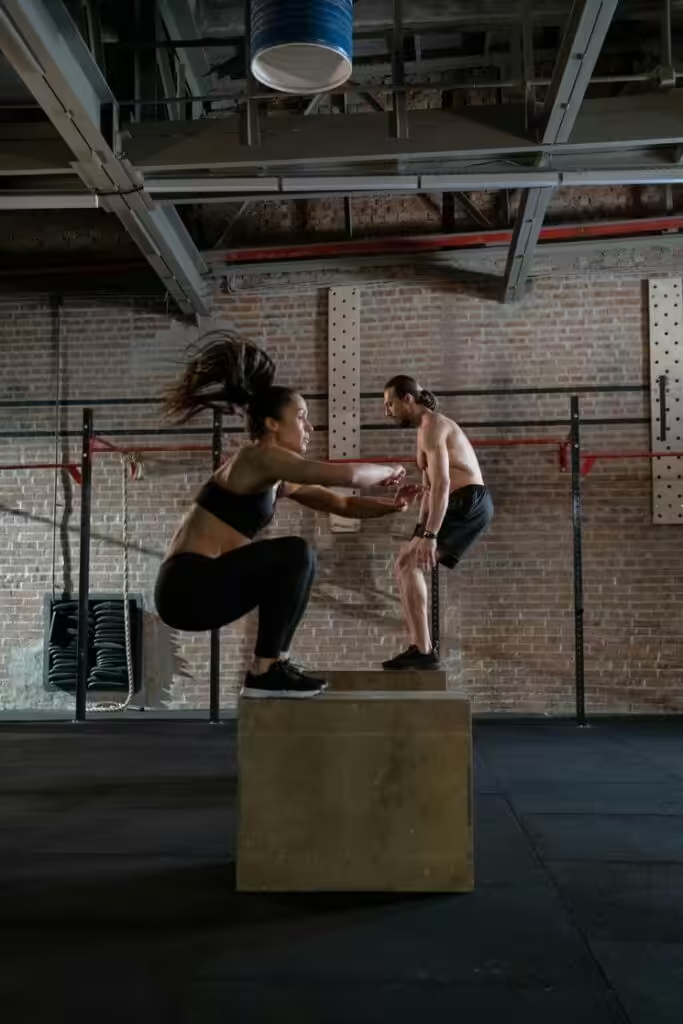
Short intervals are effective but demanding, so begin with low-impact, beginner-level intervals rather than advanced jump-heavy sessions.
Example starter HIIT block (after a proper warm-up):
- 30 seconds brisk walk or light jog on the treadmill
- 60–90 seconds very easy walk
- Repeat 6–8 times
You can apply the same structure to the bike, rower, or elliptical.
Steady-State Cardio (Running, Jogging, or Walking)
Steady cardio is perfect for beginners who want to build endurance without spiking intensity. Start with 20–30 minutes of easy treadmill walking or light jogging where you can still hold a conversation.
Circuit Training

Circuit training strings several exercises together with minimal rest, which keeps your heart rate up while you build strength. It’s a smart option on days when you want to move but don’t have much time.
If you like this style, here’s a 5-exercise circuit workout program ideal for beginners.
Yoga and Mobility Work
Yoga and basic mobility drills help your body recover between lifting sessions. They reduce stiffness, improve posture, and help you feel better in and out of the gym.
You can add a short yoga or stretching session 1–2 times per week or use a 5–10-minute mobility flow as part of your warm-up.
How to Adjust This Routine for Muscle Growth
Muscle growth for beginners still comes from the basics—consistent full-body training, progressive overload, and enough food and sleep.
You can use the 3-day gym plan above and focus on:
- Slow, controlled reps (2–3 seconds on the way down, smooth push or pull on the way up).
- Adding a little weight, a few reps, or an extra set every 1–2 weeks when the workout starts feeling easy.
- Getting close to fatigue while still keeping 1–3 “good” reps in reserve at the end of each set.
If you enjoy lifting and recover well after a couple of months, you can slowly move toward a Push/Pull/Legs or upper/lower split. For now, full-body sessions will build muscle faster than trying to copy advanced bodybuilding programs.
For more upper-body inspiration, try these chest workouts for beginners and plug 1–2 of those exercises into your weekly plan.
Pro Tips for Your First Weeks in the Gym
Start slow: Begin with lighter weights and fewer sets than you think you need. Finishing your workout with energy left is better than overdoing it once and needing a week to recover.
Focus on form: Ask a trainer to check your technique or film a quick clip (if allowed) to see your own form. Clean reps beat heavy, messy ones every time.
Be consistent, not perfect: Three decent workouts each week will always beat one “perfect” workout every now and then.
Build mental strength: There will be days when you don’t feel motivated. Show up anyway and do a lighter version of your routine—you’re training your brain as much as your muscles.
Dial in your nutrition: Aim for balanced meals with protein, complex carbs, and healthy fats. Eating enough protein helps your muscles recover and grow.
Stay hydrated: Keep a water bottle with you and sip throughout your workout. Dehydration makes training feel harder than it needs to be.
Rest and recover: Take your rest days seriously. Light walking, mobility, or stretching is fine, but your body needs downtime to adapt to your new routine.
Prioritize sleep: Aim for 7–9 hours of quality sleep. Sleep is where most of the actual muscle repair and growth happens.
Listen to your body: Normal muscle soreness is okay. Sharp, sudden, or joint pain is not. Stop any exercise that hurts and swap it for a similar pattern that feels better.
Enjoy the process: Track small wins—an extra rep, a slightly heavier weight, better balance, or more confidence walking into the gym.
FAQs
How long should a beginner gym workout be?
Most beginners do well with 45–60-minute gym sessions, including warm-up and cool-down. If you’re short on time, focus on 4–5 main exercises and skip the extras.
Is 3 days a week enough for a beginner?
Yes—3 full-body strength workouts per week are more than enough to build strength, lose fat, and feel better, especially in your first year of lifting.
Should beginners use machines or free weights?
Both work, but machines are often easier and safer for complete beginners. They guide your path of motion and help you feel the right muscles working. Dumbbells and bodyweight can then teach you control and balance.
How much weight should a beginner lift?
Pick a weight you can lift with good form while leaving 2–3 reps in reserve. If you can do more than the top of the rep range easily, increase slightly next time. If you can’t hit the minimum reps, lower the weight.
Can I lose weight and build muscle at the same time?
Beginners can often lose fat and gain muscle at once, especially when they strength train, hit their protein intake, and keep a slight calorie deficit. Over time, your progress will lean more toward one goal or the other depending on how you eat and train.
Final Thoughts
A beginner gym workout routine doesn’t have to be complicated to work. A few smart, repeatable full-body sessions each week—plus walking, good food, and solid sleep—can change your strength, energy, and confidence in a matter of months.
Start with the simple 3-day plan above, adjust the weights to your level, and give yourself time to learn. Consistency, not perfection, is what will take you from feeling lost in the gym to feeling at home there.