
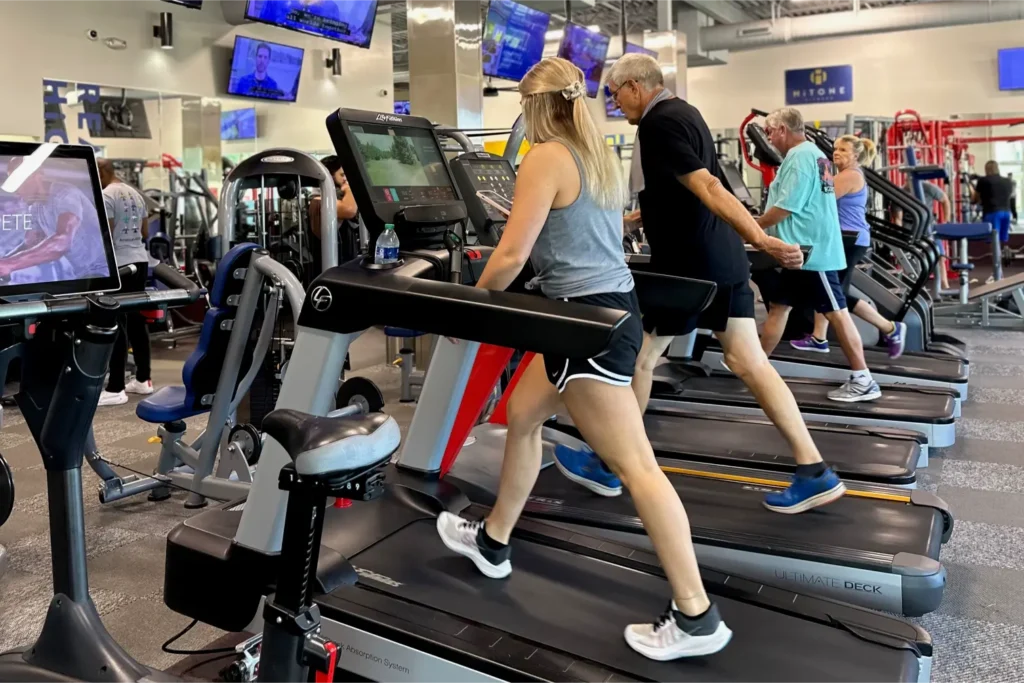
You can do cardio after leg day if the session is easy enough to support recovery instead of adding more lower-body fatigue. The best choice is usually low-impact cardio, such as walking, cycling, swimming, or the elliptical, done at a controlled pace for 10–30 minutes.
Key Takeaways
- Soreness often feels worse 24–48 hours after leg day, so the day after your workout may not be the hardest recovery window.
- If cardio changes your stride, posture, or movement quality, switch from running to walking, cycling, swimming, or the elliptical.
- For muscle growth or strength, do your leg workout first and keep cardio afterward short, easy, and low impact.
- If cardio feels awful for several days after every leg workout, your leg-day volume may be too high.
- Most people only need 20–30 minutes of easy cardio after leg day. More is not always better.
- Recovery tools can help, but sleep, food, hydration, and light movement matter more.
Can You Do Cardio After Leg Day?
Yes, you can do cardio after leg day, but the right answer depends on how hard you trained, how sore you are, and what type of cardio you choose. Cardio after leg day should feel like recovery or light conditioning, not like another leg workout.
The mistake is treating all cardio the same. A 15-minute walk after squats is not the same as hill sprints, jump-heavy HIIT, or 45 minutes on the stair climber. One can help you loosen up. The other can bury your legs when they already need time to recover.
A good rule is simple: if your cardio makes your legs feel warmer and looser, it is probably helping. If it makes your legs feel heavier, changes your form, or hurts your next workout, it was too much.
If cardio follows up a HIIT leg workout, it’s best to just rest. Here’s 3 HIIT routines for legs from beginner to advanced.
Use This Decision Scale Before Choosing Cardio After Leg Day
The best cardio after leg day is not chosen by habit. It is chosen by recovery status. Before you run, bike, row, or climb stairs, check how your legs move.
| How Your Legs Feel | Best Cardio Choice | What to Avoid |
|---|---|---|
| Mild soreness, normal walking, normal stairs | 20–30 minutes of walking, cycling, elliptical, or swimming | Turning an easy session into intervals |
| Heavy legs, tight quads, slow warm-up | 10–20 minutes of walking or easy bike work | Running, stair climber, sprints, or plyometrics |
| Soreness peaks 24–48 hours after leg day | Low-impact cardio with a longer warm-up | Assuming the second day means you are fully recovered |
| Sharp pain, altered stride, limping, joint discomfort | Rest, mobility, or a short walk if it feels comfortable | Pushing through cardio to “flush it out” |
| Endurance goal, race prep, or high weekly mileage | Separate hard runs from heavy leg days when possible | Stacking heavy squats and hard runs without recovery space |
| Muscle growth or strength goal | Lift first, then use short low-impact cardio afterward | Doing hard cardio before heavy leg training |
Best Cardio After Leg Day, Ranked by Recovery Cost
The best options after leg day are the ones that raise your heart rate without adding much impact, eccentric loading, or extra soreness. Think of cardio after leg day as a recovery-cost decision.
| Cardio Type | Recovery Cost | Best Use | Watch Out For |
|---|---|---|---|
| Walking | Lowest | Sore legs, recovery days, beginners, fat-loss consistency | Steep hills if your quads or calves are already cooked |
| Stationary bike | Low | Controlled aerobic work with minimal impact | High resistance that turns the ride into another quad session |
| Elliptical | Low to moderate | Low-impact cardio when walking feels too easy | Too much resistance or incline when glutes and quads are sore |
| Swimming | Low | Full-body cardio with less joint stress | Hard kick sets after calf, hamstring, or quad-heavy training |
| Rowing | Moderate | Conditioning when soreness is mild and technique is clean | Heavy leg drive after squats, deadlifts, or lunges |
| Light jogging | Moderate to high | Runners with mild soreness and normal stride mechanics | Running when soreness changes your stride |
| Stair climber, sprints, HIIT | Highest | Better saved for fresh-leg days | Adding more leg fatigue when recovery is the goal |
Walking
Walking is usually the safest cardio after leg day because it improves circulation without forcing your legs through hard impact or high resistance. It is also easy to adjust. You can slow down, shorten the route, or stop if soreness feels worse.
For most people, 10–30 minutes of walking is enough after a heavy leg workout.
Stationary Bike
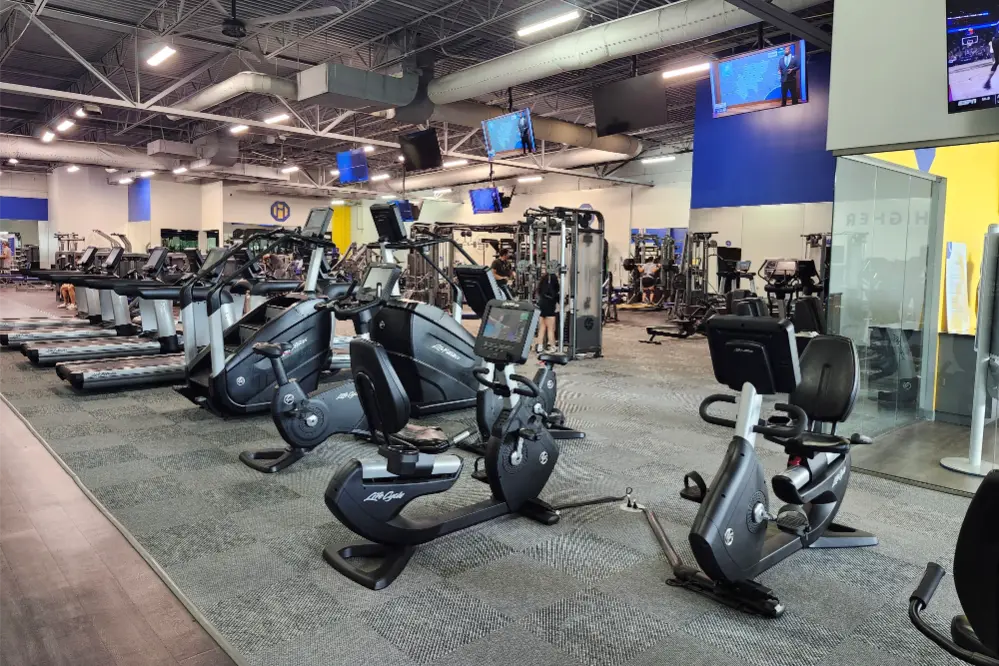
The stationary bike is one of the best choices if your legs feel stiff but your joints feel fine. Keep the resistance low and the cadence smooth. The goal is blood flow, not a quad burn.
If the bike starts to feel like another leg exercise, reduce the resistance or end the session.
Elliptical
The elliptical can work well because it removes most of the impact from running. It is a solid option when you want more movement than walking but do not want the joint stress of jogging.
Keep the resistance moderate or low. High resistance can make the elliptical feel like a second glute and quad workout.
Swimming
Swimming is low impact and can be useful when your legs feel beat up from squats, lunges, or deadlifts. Keep the effort smooth and controlled.
Avoid turning the swim into hard kick intervals if your calves, quads, or hamstrings are sore.
Rowing
Rowing is not as easy on the legs as many people think. A strong rowing stroke uses the quads, glutes, hamstrings, and back, so it can add more lower-body stress after leg day.
Use rowing only when soreness is mild and your technique stays clean.
Light Jogging or Running
You can run after leg day, but running has a higher recovery cost than walking, cycling, or swimming. It adds impact, repeated ground contact, and more demand on sore muscles.
If soreness changes your stride, do not run. Switch to walking, cycling, or the elliptical instead. A run that changes your mechanics can turn a recovery day into a compensation problem.
Cardio Before or After Leg Day?
For strength, muscle growth, and better leg workout performance, cardio is usually better after leg day. A short warm-up before lifting is fine, but a full cardio session before squats, deadlifts, lunges, or leg presses can reduce the quality of your lifting session.
A 2025 randomized controlled trial on concurrent training found that both cardio-first and weights-first groups improved fitness, but the group that performed resistance training before endurance training showed stronger improvements in body composition, maximum strength, explosive strength, and muscular endurance.
The practical takeaway is clear: if legs are the priority, train legs first. Then use cardio as a short finisher, cooldown, or recovery tool.
If endurance is your main goal, the answer can change. Runners, cyclists, and hybrid athletes may place cardio first or separate cardio and lifting by several hours. That is a programming decision, not a rule that applies to everyone.
Can You Do Cardio the Day After Leg Day?
Yes, you can do cardio the day after leg day, but do not assume the next day is always the worst day. Delayed onset muscle soreness, or DOMS, often feels stronger 24–48 hours after training.
That means Tuesday may feel fine after a Monday leg workout, while Wednesday feels much heavier. Plan cardio based on how your legs move that day, not how you expected them to feel.
If your legs feel heavy but your movement is normal, easy cardio may help you loosen up. If your stride changes, stairs feel painful, or the warm-up makes you feel worse, keep the session short or rest.
Does Cardio After Leg Day Kill Muscle Gains?
Cardio after leg day does not automatically kill muscle gains. The risk comes from doing too much cardio, choosing high-impact cardio, or training hard enough that your legs cannot recover before the next session.
Cardio interferes with gains when it competes with recovery. A short walk after leg day is not the same recovery demand as sprint intervals or a long run. The more intense and repetitive the cardio is, the more carefully you need to plan it around heavy lower-body training.
If your goal is muscle growth, keep post-leg-day cardio low impact and moderate. If your goal is endurance, separate hard cardio and heavy leg work when possible. If your goal is general fitness, choose the option that lets you stay consistent without dragging soreness into every workout.
Benefits of Doing Cardio After Leg Day
The main benefit of cardio after leg day is not punishment or extra toughness. It is controlled movement. The right cardio can help you stay active without turning recovery into another stressor.
- Better circulation: Easy movement increases blood flow to tired muscles and can reduce the heavy, locked-up feeling after training.
- Less stiffness: Walking, cycling, and light mobility can help your legs feel less tight after hard squats, lunges, or deadlifts.
- More consistency: Low-impact cardio lets you keep moving on recovery days without forcing another intense workout.
- Calorie burn without high impact: Easy cardio can support fat-loss goals while keeping recovery manageable.
- Post-workout energy use: Resistance training and cardio can contribute to EPOC, but that does not mean harder cardio is always better after leg day.
Cardio to Avoid After Heavy Leg Day
Some cardio options are better saved for days when your legs are fresh. After heavy leg day, avoid cardio that adds impact, high resistance, or explosive lower-body work.
- Sprints: High force, high speed, and high hamstring demand make sprints a poor match for sore legs.
- Hill runs: Uphill running loads the calves, glutes, and quads more than flat easy running.
- Stair climber: It looks like cardio, but after leg day it can feel like more lunges and step-ups.
- Jump-heavy HIIT: Burpees, jump squats, box jumps, and mountain climbers can add more soreness and impact.
- Long runs: Long-distance running after heavy lower-body training can work for conditioned runners, but it should be programmed, not added randomly.
How Long Should Cardio Be After Leg Day?
For most people, cardio after leg day should last 10–30 minutes. The right duration depends on soreness, fitness level, and the goal of the session.
- 10–15 minutes: Best when your legs are sore, heavy, or stiff.
- 20–30 minutes: Best for most low-impact recovery or fat-loss sessions.
- 30–40 minutes: Better for conditioned athletes using low-impact cardio and recovering well.
Use a simple effort scale. Aim for 4–6 out of 10. You should feel warm and slightly challenged, but you should not feel like your legs are being tested again.
If Cardio Feels Awful, Your Leg Workout May Be Too Much
If you struggle to do any cardio for two, three, or four days after every leg workout, the cardio may not be the real issue. Your leg workout may be too much for your current recovery capacity.
This is common when leg day has too many hard sets, too much load, too many exercises, or too much soreness-producing volume. You do not need to destroy your legs every week to make progress.
Try adjusting one variable at a time:
- Reduce total sets for squats, lunges, leg presses, or deadlifts.
- Lower the weight slightly and keep reps cleaner.
- Separate quad-dominant and hamstring/glute-dominant work across the week.
- Avoid adding hard cardio on the same day as your highest-volume leg session.
- Track soreness, sleep, and performance so you can see patterns.
If your current leg workouts leave you wrecked every time, try a more controlled structure like our 30-minute leg workout plan (youtube video included).
How to Recover Faster After Cardio and Leg Day
Recovery works best when you treat it like a hierarchy. Start with the basics before relying on recovery tools.
1. Sleep, Food, and Hydration Come First
Your body repairs muscle tissue and restores energy when you sleep, eat enough, and stay hydrated. If those basics are off, stretching, foam rolling, compression, and recovery gadgets will not fix the problem.
After leg day, prioritize protein for muscle repair and carbohydrates to restore training energy. If you sweat heavily, include fluids and electrolytes.
2. Use Light Movement
Light movement is often better than sitting still all day after a hard lower-body workout. Walking, easy cycling, and gentle mobility can help your legs feel less stiff.
A simple recovery session can be:
- Five to 10 minutes of easy bike riding or walking
- One to two minutes of light foam rolling per tight area
- Five to 10 slow mobility reps for hips, quads, hamstrings, and calves
3. Use Recovery Tools as Extras
Foam rollers, massage tools, compression boots, and similar tools can help some people feel better. They should support recovery, not replace the basics.
If a recovery tool helps you move better without adding fatigue, it can be useful. If it becomes a replacement for sleep, food, hydration, and smart programming, it will not solve the real problem.
You can do cardio after leg day if the session is easy enough to support recovery instead of adding more lower-body fatigue. The best choice is usually low-impact cardio, such as walking, cycling, swimming, or the elliptical, done at a controlled pace for 10–30 minutes.
Key Takeaways
- Soreness often feels worse 24–48 hours after leg day, so the day after your workout may not be the hardest recovery window.
- If cardio changes your stride, posture, or movement quality, switch from running to walking, cycling, swimming, or the elliptical.
- For muscle growth or strength, do your leg workout first and keep cardio afterward short, easy, and low impact.
- If cardio feels awful for several days after every leg workout, your leg-day volume may be too high.
- Most people only need 20–30 minutes of easy cardio after leg day. More is not always better.
- Recovery tools can help, but sleep, food, hydration, and light movement matter more.
Can You Do Cardio After Leg Day?
Yes, you can do cardio after leg day, but the right answer depends on how hard you trained, how sore you are, and what type of cardio you choose. Cardio after leg day should feel like recovery or light conditioning, not like another leg workout.
The mistake is treating all cardio the same. A 15-minute walk after squats is not the same as hill sprints, jump-heavy HIIT, or 45 minutes on the stair climber. One can help you loosen up. The other can bury your legs when they already need time to recover.
A good rule is simple: if your cardio makes your legs feel warmer and looser, it is probably helping. If it makes your legs feel heavier, changes your form, or hurts your next workout, it was too much.
Use This Decision Scale Before Choosing Cardio After Leg Day
The best cardio after leg day is not chosen by habit. It is chosen by recovery status. Before you run, bike, row, or climb stairs, check how your legs move.
| How Your Legs Feel | Best Cardio Choice | What to Avoid |
|---|---|---|
| Mild soreness, normal walking, normal stairs | 20–30 minutes of walking, cycling, elliptical, or swimming | Turning an easy session into intervals |
| Heavy legs, tight quads, slow warm-up | 10–20 minutes of walking or easy bike work | Running, stair climber, sprints, or plyometrics |
| Soreness peaks 24–48 hours after leg day | Low-impact cardio with a longer warm-up | Assuming the second day means you are fully recovered |
| Sharp pain, altered stride, limping, joint discomfort | Rest, mobility, or a short walk if it feels comfortable | Pushing through cardio to “flush it out” |
| Endurance goal, race prep, or high weekly mileage | Separate hard runs from heavy leg days when possible | Stacking heavy squats and hard runs without recovery space |
| Muscle growth or strength goal | Lift first, then use short low-impact cardio afterward | Doing hard cardio before heavy leg training |
Best Cardio After Leg Day, Ranked by Recovery Cost
The best options after leg day are the ones that raise your heart rate without adding much impact, eccentric loading, or extra soreness. Think of cardio after leg day as a recovery-cost decision.
| Cardio Type | Recovery Cost | Best Use | Watch Out For |
|---|---|---|---|
| Walking | Lowest | Sore legs, recovery days, beginners, fat-loss consistency | Steep hills if your quads or calves are already cooked |
| Stationary bike | Low | Controlled aerobic work with minimal impact | High resistance that turns the ride into another quad session |
| Elliptical | Low to moderate | Low-impact cardio when walking feels too easy | Too much resistance or incline when glutes and quads are sore |
| Swimming | Low | Full-body cardio with less joint stress | Hard kick sets after calf, hamstring, or quad-heavy training |
| Rowing | Moderate | Conditioning when soreness is mild and technique is clean | Heavy leg drive after squats, deadlifts, or lunges |
| Light jogging | Moderate to high | Runners with mild soreness and normal stride mechanics | Running when soreness changes your stride |
| Stair climber, sprints, HIIT | Highest | Better saved for fresh-leg days | Adding more leg fatigue when recovery is the goal |
Walking
Walking is usually the safest cardio after leg day because it improves circulation without forcing your legs through hard impact or high resistance. It is also easy to adjust. You can slow down, shorten the route, or stop if soreness feels worse.
For most people, 10–30 minutes of walking is enough after a heavy leg workout.
Stationary Bike
The stationary bike is one of the best choices if your legs feel stiff but your joints feel fine. Keep the resistance low and the cadence smooth. The goal is blood flow, not a quad burn.
If the bike starts to feel like another leg exercise, reduce the resistance or end the session.
Elliptical
The elliptical can work well because it removes most of the impact from running. It is a solid option when you want more movement than walking but do not want the joint stress of jogging.
Keep the resistance moderate or low. High resistance can make the elliptical feel like a second glute and quad workout.
Swimming
Swimming is low impact and can be useful when your legs feel beat up from squats, lunges, or deadlifts. Keep the effort smooth and controlled.
Avoid turning the swim into hard kick intervals if your calves, quads, or hamstrings are sore.
Rowing
Rowing is not as easy on the legs as many people think. A strong rowing stroke uses the quads, glutes, hamstrings, and back, so it can add more lower-body stress after leg day.
Use rowing only when soreness is mild and your technique stays clean.
Light Jogging or Running
You can run after leg day, but running has a higher recovery cost than walking, cycling, or swimming. It adds impact, repeated ground contact, and more demand on sore muscles.
If soreness changes your stride, do not run. Switch to walking, cycling, or the elliptical instead. A run that changes your mechanics can turn a recovery day into a compensation problem.
Cardio Before or After Leg Day?
For strength, muscle growth, and better leg workout performance, cardio is usually better after leg day. A short warm-up before lifting is fine, but a full cardio session before squats, deadlifts, lunges, or leg presses can reduce the quality of your lifting session.
A 2025 randomized controlled trial on concurrent training found that both cardio-first and weights-first groups improved fitness, but the group that performed resistance training before endurance training showed stronger improvements in body composition, maximum strength, explosive strength, and muscular endurance.
The practical takeaway is clear: if legs are the priority, train legs first. Then use cardio as a short finisher, cooldown, or recovery tool.
If endurance is your main goal, the answer can change. Runners, cyclists, and hybrid athletes may place cardio first or separate cardio and lifting by several hours. That is a programming decision, not a rule that applies to everyone.
Can You Do Cardio the Day After Leg Day?
Yes, you can do cardio the day after leg day, but do not assume the next day is always the worst day. Delayed onset muscle soreness, or DOMS, often feels stronger 24–48 hours after training.
That means Tuesday may feel fine after a Monday leg workout, while Wednesday feels much heavier. Plan cardio based on how your legs move that day, not how you expected them to feel.
If your legs feel heavy but your movement is normal, easy cardio may help you loosen up. If your stride changes, stairs feel painful, or the warm-up makes you feel worse, keep the session short or rest.
Does Cardio After Leg Day Kill Muscle Gains?
Cardio after leg day does not automatically kill muscle gains. The risk comes from doing too much cardio, choosing high-impact cardio, or training hard enough that your legs cannot recover before the next session.
Cardio interferes with gains when it competes with recovery. A short walk after leg day is not the same recovery demand as sprint intervals or a long run. The more intense and repetitive the cardio is, the more carefully you need to plan it around heavy lower-body training.
If your goal is muscle growth, keep post-leg-day cardio low impact and moderate. If your goal is endurance, separate hard cardio and heavy leg work when possible. If your goal is general fitness, choose the option that lets you stay consistent without dragging soreness into every workout.
Benefits of Doing Cardio After Leg Day
The main benefit of cardio after leg day is not punishment or extra toughness. It is controlled movement. The right cardio can help you stay active without turning recovery into another stressor.
- Better circulation: Easy movement increases blood flow to tired muscles and can reduce the heavy, locked-up feeling after training.
- Less stiffness: Walking, cycling, and light mobility can help your legs feel less tight after hard squats, lunges, or deadlifts.
- More consistency: Low-impact cardio lets you keep moving on recovery days without forcing another intense workout.
- Calorie burn without high impact: Easy cardio can support fat-loss goals while keeping recovery manageable.
- Post-workout energy use: Resistance training and cardio can contribute to EPOC, but that does not mean harder cardio is always better after leg day.
Cardio to Avoid After Heavy Leg Day
Some cardio options are better saved for days when your legs are fresh. After heavy leg day, avoid cardio that adds impact, high resistance, or explosive lower-body work.
- Sprints: High force, high speed, and high hamstring demand make sprints a poor match for sore legs.
- Hill runs: Uphill running loads the calves, glutes, and quads more than flat easy running.
- Stair climber: It looks like cardio, but after leg day it can feel like more lunges and step-ups.
- Jump-heavy HIIT: Burpees, jump squats, box jumps, and mountain climbers can add more soreness and impact.
- Long runs: Long-distance running after heavy lower-body training can work for conditioned runners, but it should be programmed, not added randomly.
How Long Should Cardio Be After Leg Day?
For most people, cardio after leg day should last 10–30 minutes. The right duration depends on soreness, fitness level, and the goal of the session.
- 10–15 minutes: Best when your legs are sore, heavy, or stiff.
- 20–30 minutes: Best for most low-impact recovery or fat-loss sessions.
- 30–40 minutes: Better for conditioned athletes using low-impact cardio and recovering well.
Use a simple effort scale. Aim for 4–6 out of 10. You should feel warm and slightly challenged, but you should not feel like your legs are being tested again.
If Cardio Feels Awful, Your Leg Workout May Be Too Much
If you struggle to do any cardio for two, three, or four days after every leg workout, the cardio may not be the real issue. Your leg workout may be too much for your current recovery capacity.
This is common when leg day has too many hard sets, too much load, too many exercises, or too much soreness-producing volume. You do not need to destroy your legs every week to make progress.
Try adjusting one variable at a time:
- Reduce total sets for squats, lunges, leg presses, or deadlifts.
- Lower the weight slightly and keep reps cleaner.
- Separate quad-dominant and hamstring/glute-dominant work across the week.
- Avoid adding hard cardio on the same day as your highest-volume leg session.
- Track soreness, sleep, and performance so you can see patterns.
If your current leg workouts leave you wrecked every time, try a more controlled structure like our 30-minute leg workout plan (youtube video included).
How to Recover Faster After Cardio and Leg Day
Recovery works best when you treat it like a hierarchy. Start with the basics before relying on recovery tools.
1. Sleep, Food, and Hydration Come First
Your body repairs muscle tissue and restores energy when you sleep, eat enough, and stay hydrated. If those basics are off, stretching, foam rolling, compression, and recovery gadgets will not fix the problem.
After leg day, prioritize protein for muscle repair and carbohydrates to restore training energy. If you sweat heavily, include fluids and electrolytes.
2. Use Light Movement
Light movement is often better than sitting still all day after a hard lower-body workout. Walking, easy cycling, and gentle mobility can help your legs feel less stiff.
A simple recovery session can be:
- Five to 10 minutes of easy bike riding or walking
- One to two minutes of light foam rolling per tight area
- Five to 10 slow mobility reps for hips, quads, hamstrings, and calves
3. Use Recovery Tools as Extras
Foam rollers, massage tools, compression boots, and similar tools can help some people feel better. They should support recovery, not replace the basics.
If a recovery tool helps you move better without adding fatigue, it can be useful. If it becomes a replacement for sleep, food, hydration, and smart programming, it will not solve the real problem.
FAQs
How Do I Know If Cardio After Leg Day Is Too Much?
Cardio is too much if your legs feel worse after warming up, your stride changes, your joints hurt, or your next workout suffers. A good post-leg-day cardio session should leave you feeling looser or about the same, not more drained.
Should Runners Do Cardio After Leg Day?
Runners can do cardio after leg day, but hard runs should be planned carefully around heavy lower-body training. If you have a long run, speed work, or hill session coming up, keep leg-day volume lower or separate the hard sessions by more time.
Is Cycling Better Than Running After Leg Day?
Cycling is usually easier to control after leg day because it has less impact than running. Keep the resistance low. If you turn the bike into a hard climb or sprint session, it can still add too much quad fatigue.
Why Are My Legs More Sore Two Days After Leg Day?
That is common with delayed onset muscle soreness. Soreness can feel stronger 24–48 hours after training, especially after squats, lunges, deadlifts, or high-volume leg work. Use that second-day soreness to adjust cardio intensity instead of forcing the plan.
Should Cardio After Leg Day Be Zone 2?
Zone 2 can work well after leg day if your legs move normally and the session stays easy. If your heart rate is low but your legs feel heavy, stiff, or sloppy, reduce the duration or choose walking instead.Longer sessions are not automatically better if they make your next workout worse.