
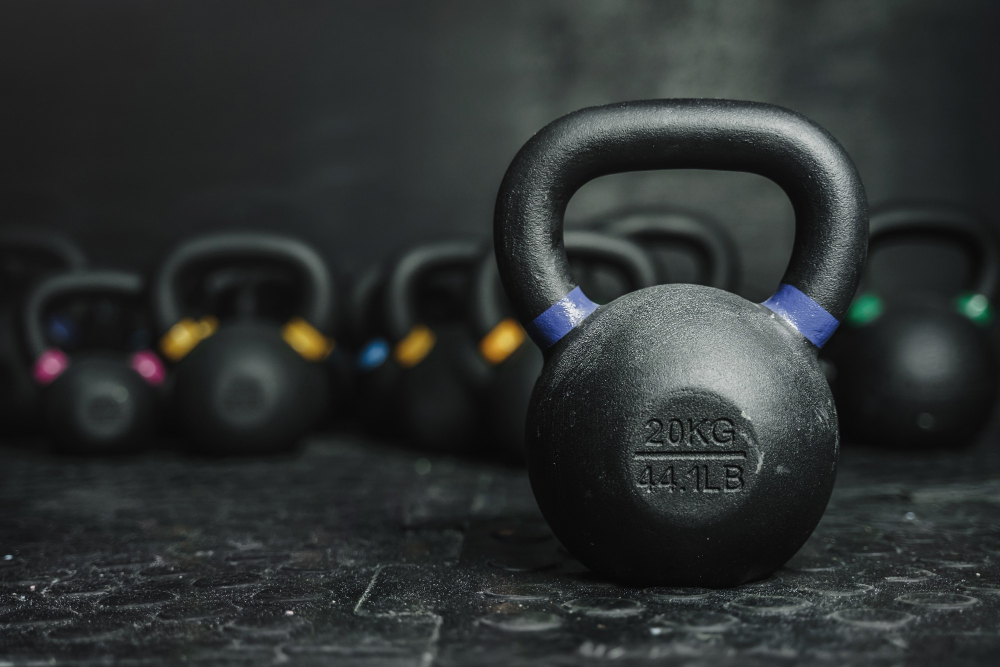
Rolling already gives you plenty of mat time, but it doesn’t always give you the strength, grip, and conditioning you need to stay sharp late into the round. A focused BJJ kettlebell workout can help you build stronger hips, a more reliable grip, and cardio that holds up when the scramble gets messy.
Key Takeaways
- Pick one or two kettlebell weights that feel “heavy but honest” – usually 8–12 kg for new lifters and 12–20 kg for those with a strength base.
- Build your BJJ strength around a small group of moves: swings, Turkish get-ups, clean and press, goblet squats, rows, snatches, and arm bars.
- Run one strength-focused kettlebell day and one conditioning circuit each week, adjusting sets and reps based on how hard you’re rolling.
- Use barbells to raise your overall strength ceiling when you have access to a gym, and kettlebells to sharpen movement, grip, and mat-ready conditioning.
- Keep kettlebell sessions under about 45 minutes, prioritize clean technique, and scale back when fatigue from BJJ starts to pile up.
Why Kettlebells Work So Well for BJJ
BJJ is awkward and unpredictable. You frame, post, bridge, and scramble from angles you would never see in a straight barbell lift. Kettlebell training fits that reality because it:
- Loads your hips and grip in explosive swing-style movements, similar to bridges, hip escapes, and takedown entries.
- Demands core stability and shoulder control when the bell is overhead or off to the side, like framing, posting, and fighting grips.
- Lets you move around the bell instead of just straight up and down, which feels closer to scrambling and changing levels.
- Works well in short, focused sessions, making it easier to fit around a busy BJJ schedule.
How Heavy Should Your Kettlebell Be for BJJ?
You want a weight that feels “heavy but honest” – it forces you to concentrate, but doesn’t destroy your technique after a few reps. As a simple guideline for most people:
| Who it’s for | Suggested weight | Notes |
|---|---|---|
| New to lifting | 8–12 kg (18–26 lb) | Focus on form, not load. |
| Some strength base | 12–20 kg (26–44 lb) | Heavier for swings, lighter for get-ups. |
If you’re unsure, choose the lighter option first. Clean technique carries over to your BJJ game much better than grinding through sloppy reps.
Essential Kettlebell Exercises for BJJ
Plenty of kettlebell moves look cool on social media, but you don’t need a circus act to get better on the mats. These exercises cover the big needs for BJJ: grip, hips, core, and conditioning.
1. Kettlebell Swings
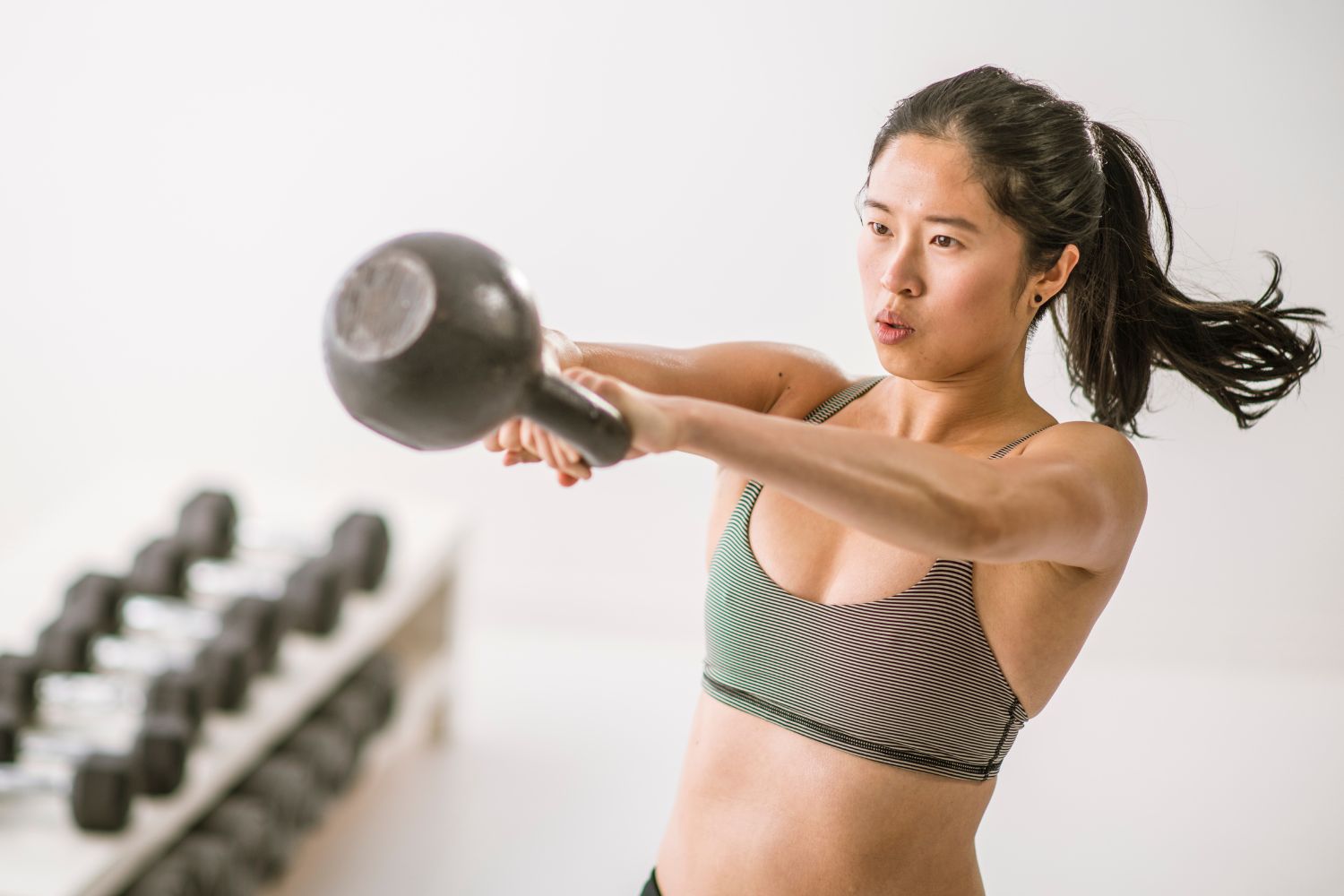
Kettlebell swings are a staple for explosive hip power and conditioning. Swings target your glutes, hamstrings, and lower back, which supports stronger bridges, faster hip escapes, and better takedown defense. They also train your grip every time you keep hold of the bell through the arc.
2. Turkish Get-Up
The Turkish get-up is all about controlled movement under load from the floor to standing and back down again. It builds shoulder stability, core strength, and body awareness – all things you feel when you stand up in base, maintain posture while passing, or work out of tight positions.
3. Kettlebell Clean and Press
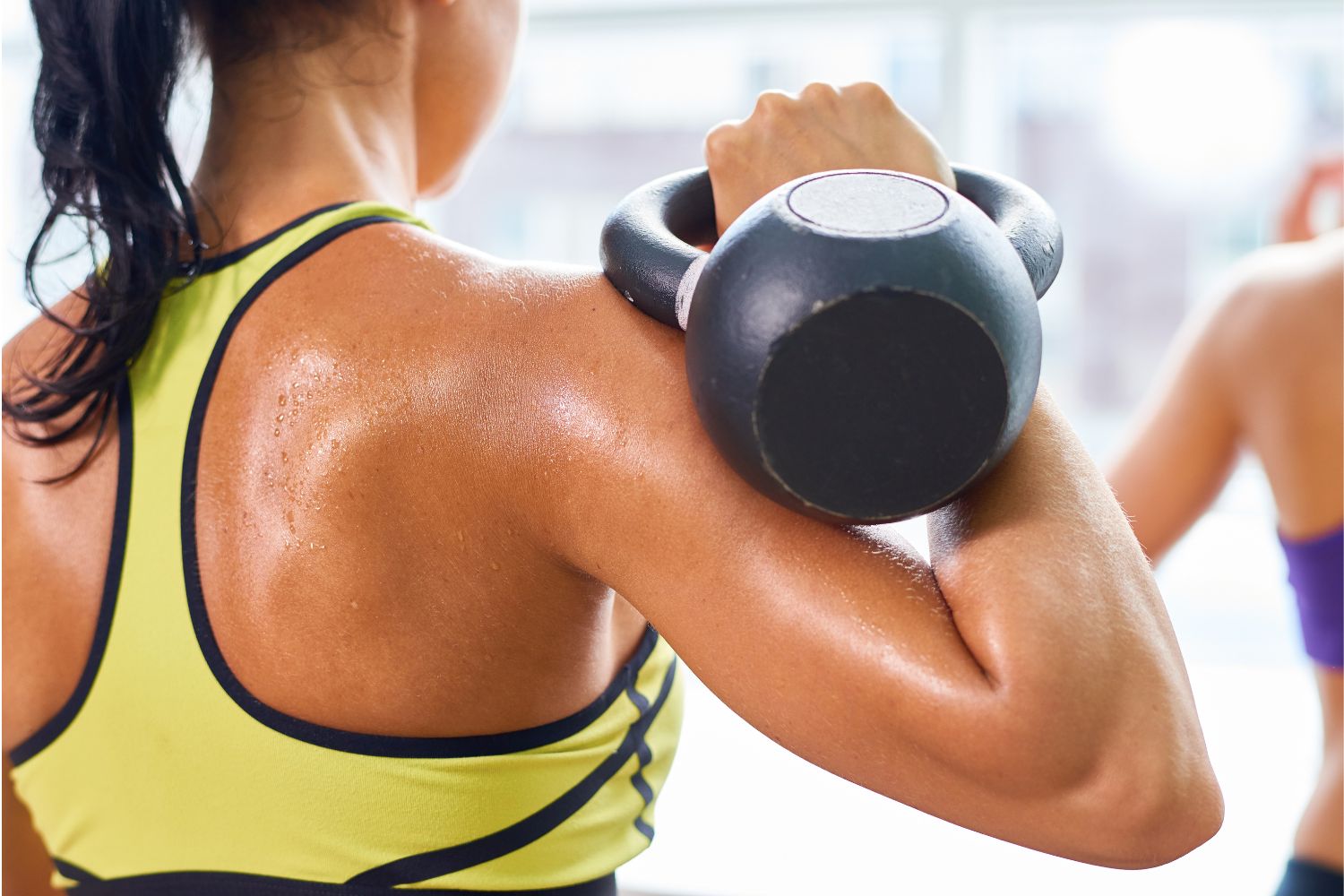
The clean powers the bell up using your hips and traps, while the press builds shoulder stability, triceps strength, and core tension. Together, they support strong frames, steady top pressure, and repeatable power when you fight for grips or finish takedowns.
4. Kettlebell Goblet Squat
Goblet squats train your quads, glutes, and core while teaching you to stay upright. That translates to better base for takedowns, stronger posture when you’re passing, and more control when you drop your level to kill hooks or defend sweeps.
5. Kettlebell Rows
Rows build your lats, upper back, and grip – the muscles that help you pull opponents in, break grips, and control the upper body in clinch and top positions. Perform them with strict control so you build useful strength instead of just swinging the weight around.
6. Kettlebell Snatch
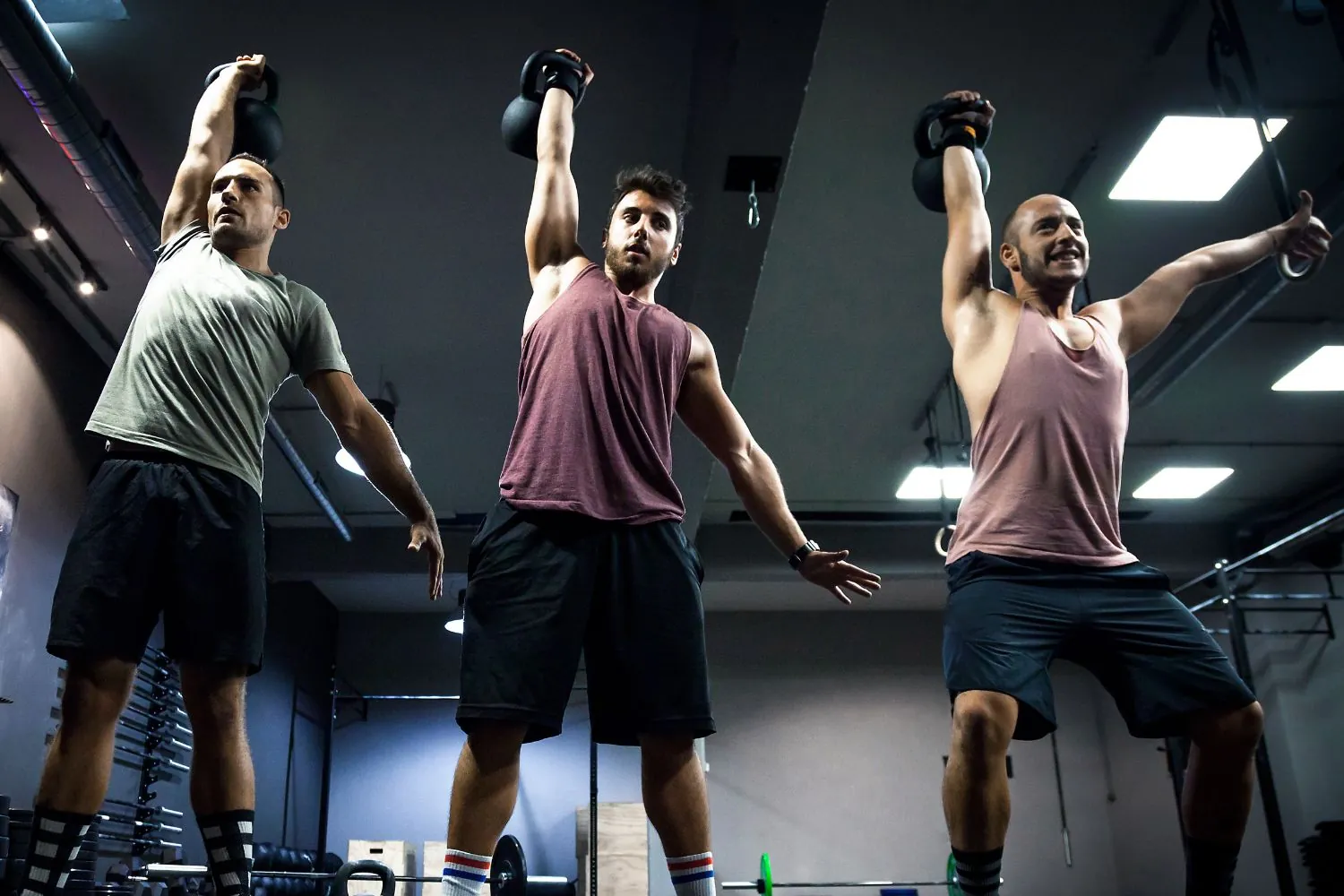
The kettlebell snatch is an explosive full-body movement that challenges your shoulders, back, hips, and grip while demanding serious conditioning. It mimics the fast bursts you feel during scrambles and hard grip fights.
7. Kettlebell Arm Bar (Mobility Drill)
The kettlebell arm bar is a slow, controlled drill that opens your chest and shoulders while teaching them to stabilize under load. Think of it as joint armor that helps you tolerate awkward positions when framing, posting, or defending submissions.
BJJ Kettlebell Workouts You Can Start Today
There are a lot of ways to combine these movements. To keep things simple, start with two types of sessions:
- One strength-focused workout on a non-sparring day.
- One conditioning-focused circuit that keeps the heart rate high without punishing your joints.
Adjust sets, reps, and rest periods based on how hard your BJJ training is that week.
Strength-Focused BJJ Kettlebell Workout
Do this once or twice per week on days when you’re not pushing hard on the mats.
Warm-Up (5–10 minutes)
- Arm circles, hip circles, and light bodyweight squats.
- 10–15 light kettlebell swings.
- 5–6 slow kettlebell halos in each direction.
- Power Block (3–4 sets)
- 6–8 reps per side of kettlebell clean and press or kettlebell snatch.
- Rest 60–90 seconds between sets and focus on crisp, explosive reps.
- Strength Block (3–4 sets)
- 8–10 reps of goblet squats or single-arm kettlebell rows per side.
- Alternate between squats and rows from workout to workout to keep upper and lower body balanced.
- Core and Control (2–3 sets)
- 3–5 reps per side of Turkish get-ups.
- Move slowly and stay in control during each transition.
- Finisher (Optional – 3 rounds)
- 20–30 seconds of kettlebell swings, followed by 30–40 seconds of easy walking or light movement.
- Keep technique sharp rather than chasing exhaustion.
Cooldown (5 minutes)
- Light stretching for hips, hamstrings, and chest.
- 1–2 slow kettlebell arm bars per side without forcing the range.
Conditioning-Focused BJJ Kettlebell Circuit
This type of BJJ kettlebell workout keeps your heart rate up and challenges your grip and core under fatigue. Use a moderate weight that you can control even when tired.
How It Works
Pick 5–6 kettlebell exercises and perform them back-to-back with as little rest as you can manage while keeping good form. After the last exercise, rest 60–90 seconds. That’s one round. Repeat for 3–5 rounds.
Sample BJJ Kettlebell Circuit
| Exercise | Reps | What it targets |
|---|---|---|
| Kettlebell Swings | 15 | Hip drive, grip, posterior chain. |
| Goblet Squats | 10 | Base, balance, lower body strength. |
| Clean and Press | 6 / side | Full-body power, shoulder endurance. |
| Kettlebell Rows | 8 / side | Lats, grip, pulling strength. |
| Turkish Get-Up | 1 / side | Core control, shoulder resilience. |
| Kettlebell Snatches | 8–10 / side | Full-body conditioning under fatigue. |
Rest 60–90 seconds. Repeat 3–5 rounds.
You can swap exercises based on your focus. For more grip fatigue, add bottom-up presses or farmer carries. For more core work, rotate in windmills or anti-rotation holds. Keep the flow tight and stop each set before your form breaks down.
Minimalist Two-Move BJJ Kettlebell Session
On busy days, you can still get useful work in with just two exercises and one kettlebell.
- Turkish Get-Ups – 2–3 reps per side, switching sides each rep.
- Swings – 10–15 reps.
Alternate these two exercises for 15–20 minutes. Take small breaks as needed and let the quality of your movement dictate when you stop.
Barbell vs Kettlebell for BJJ Workout
Barbells are excellent for building raw strength with big lifts like squats, deadlifts, and presses. If you want to raise your overall strength ceiling for takedowns, sprawls, and heavy top pressure, barbell work can help a lot.
Barbell Pros:
- Easy to progressively overload with small weight jumps.
- Ideal for developing high levels of total-body strength.
- Great for building a strong base, especially for heavier grapplers.
Barbell Cons:
- Usually requires access to a full gym or home setup.
- Less carryover to unstable, awkward positions if you only use straight-bar lifts.
- Can be less forgiving on joints when technique or fatigue isn’t managed well.
Kettlebell Pros:
- Builds grip, core stability, and shoulder control in dynamic positions.
- Excellent for conditioning and endurance under fatigue.
- Can be used in small spaces with minimal equipment.
- Matches the flow and unpredictability of rolling more closely than many traditional lifts.
Kettlebell Cons:
- Harder to build absolute max strength compared to heavy barbell work.
- Good technique takes practice, especially in ballistic movements.
- Weight jumps between bells are less precise than adding plates to a bar.
Best approach: use barbells to build your overall strength ceiling when you have the equipment, and use kettlebells to sharpen movement quality, grip, and mat-ready conditioning.
How to Fit Kettlebell Training Into Your BJJ Week
If you’re training BJJ three to five times per week, treat kettlebell work as support, not the main event. A simple structure could look like this:
- Two short kettlebell sessions on non-consecutive days.
- Strength-focused work on days when rolling is lighter or more technical.
- Conditioning circuits on days with less intense sparring, or earlier in the day if you roll at night.
Keep most sessions under 45 minutes. If you’re feeling run down, reduce the weight, rounds, or exercise selection. The goal is to show up to class feeling better, not drained.
Safety Tips for BJJ Kettlebell Workouts
- Warm up your shoulders, hips, and spine before heavy swings or get-ups.
- Get comfortable with basic hinge and squat patterns using bodyweight if you’re new to lifting.
- Avoid pushing to failure right before hard sparring sessions.
- Stop any exercise that causes sharp pain instead of normal muscular effort.
- If you have existing injuries, speak with a coach or qualified professional before loading those areas.
Final Thoughts
A well-structured BJJ kettlebell workout can build powerful hips, strong grips, durable shoulders, and conditioning that carries over directly to the mats. You don’t need a long list of fancy movements; a handful of proven exercises and a consistent plan are more than enough. Start with manageable sessions, stay technical, and adjust based on how your body feels after class.
FAQ
What weight should I use for a BJJ kettlebell workout?
Pick a bell that you can control with solid form, but that starts to feel challenging after several reps. Most people do well starting in the 8–16 kg (18–35 lb) range and adjusting from there. Use lighter bells for technical work like Turkish get-ups and arm bars, and heavier bells for swings and squats.
What’s the best way to fit kettlebell workouts around BJJ classes?
If you roll three to five times per week, aim for two short kettlebell sessions on non-consecutive days. Do strength-focused work on lighter training days or earlier in the day if you have evening classes. Keep the sessions relatively short so you can recover and still feel sharp on the mats.
Are kettlebells a good option if I mainly train at home?
Yes. Kettlebells take up very little space, are quiet, and can be used for nearly every major movement pattern. For BJJ athletes who train at home, a small set of bells can provide strength work, conditioning, and mobility without needing a full gym setup.