
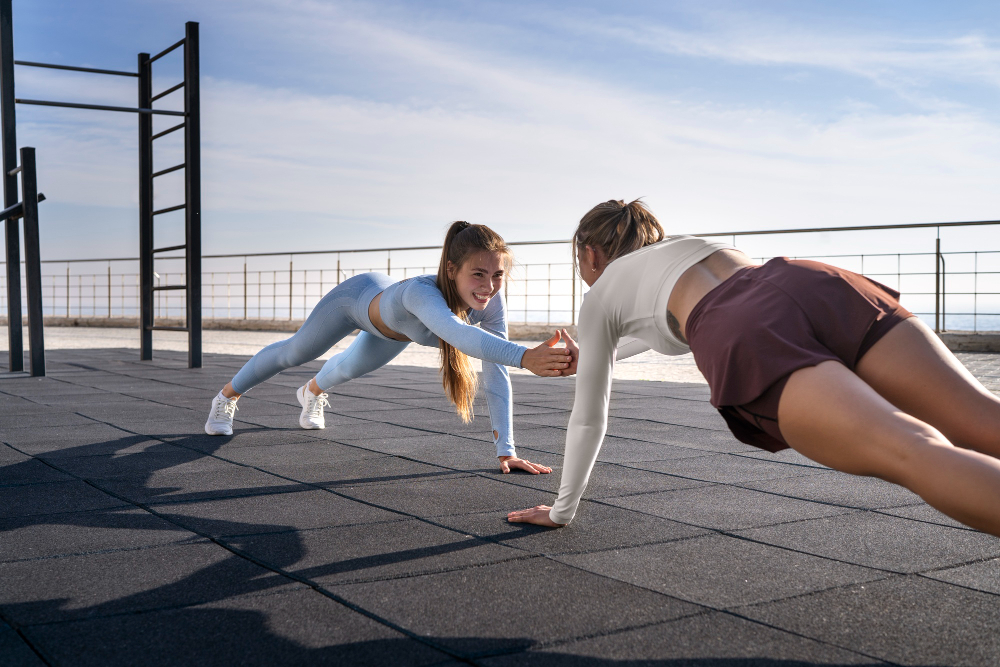
If you are choosing between calisthenics and yoga, this guide breaks down the real benefits, results, and downsides that most comparisons skip. The goal is simple, help you choose the option that truly fits your body, your mindset, and your daily routine.
Key Takeaways
- Calisthenics focuses on strength, muscle definition, and body control
- Yoga prioritizes flexibility, balance, recovery, and mental calm
- Calisthenics is better for muscle growth and calorie burn
- Yoga is better for flexibility, stress reduction, and joint health
- Calisthenics has a steeper learning curve and higher injury risk for beginners
- Yoga is more accessible and safer for most beginners
What is Calisthenics
Calisthenics is a training style built around bodyweight movements. Compared to traditional weight lifting, calisthenics athletes usually develop a leaner, more athletic physique with visible muscle definition.
Basic Calisthenics Exercises
Calisthenics is built around a few core movements that train the entire body.
- Push-ups for chest, shoulders, and triceps
- Pull-ups for back, biceps, and grip
- Squats for quads, glutes, and core
- Dips for chest, shoulders, and triceps
- Planks for core, lower back, and stabilizers
Each exercise can be scaled up or down.
- Can’t do a push-up yet? Start on your knees or on an incline
- Are pull-ups too easy? Switch to wider grips, pause reps, one-arm progressions, or Muscle-ups
These movements are the foundation of calisthenics. Once you master them, you adapt the difficulty to your level and goals.
Benefits of Calisthenics
Calisthenics stands out because of its simplicity and efficiency.
- Minimal equipment is needed. In most cases, your body is enough. If you want to expand options, a pull-up bar or dip station is easy to find, especially in public parks.
- You can train almost anywhere. Home workouts, outdoor sessions, or a basic school gym all work without changing your routine.
- It builds true functional strength and body control. Moving your full body through space, like in a pull-up, demands more coordination and strength than machine-based exercises.
- Progress stays interesting because of the wide range of exercise variations. Instead of adding weight endlessly, you increase difficulty through leverage, tempo, and advanced movements.
Limitations of Calisthenics
Calisthenics delivers strong results, but it comes with limitations that matter depending on your goal.
- It is harder to maximize muscle size. If building big muscles is your top priority, traditional weight training will usually get you there faster.
- The learning curve can be challenging for beginners. Proper form is essential, and many people must start with regressions like negative reps or incline movements, which can feel slow and frustrating at first.
- Muscle isolation is limited. Smaller muscles, such as rear delts or hamstrings, are trained indirectly through compound movements rather than with targeted isolation work.
- Plateaus are common once the basics are mastered. To keep progressing, you often need advanced variations, much higher volume, or added weight.
What is Yoga
Yoga is a mind-body practice that combines physical postures, breathing techniques, and intentional relaxation. It improves physical performance while also supporting mental clarity and emotional balance.
Most people notice better flexibility, more strength, improved balance, and a stronger ability to stay calm and focused, both during workouts and daily life.
Benefits of Yoga
Yoga delivers benefits that go beyond appearance or performance.
- Improves flexibility and mobility. Regular stretching increases joint range of motion and reduces stiffness, which helps with daily movement and injury prevention.
- Builds gentle strength and endurance. Holding poses develops muscular endurance, especially in the core, legs, and stabilizing muscles.
- Enhances balance and coordination. Single leg poses and controlled transitions train body awareness and coordination.
- Helps manage stress and emotions. Breathing techniques and mindful movement calm the nervous system and lower stress levels.
- Supports posture and joint health. Yoga strengthens postural muscles and encourages better alignment, which can reduce aches and imbalances.
Different Types of Yoga
Yoga comes in many styles, each with a different focus.
- Hatha Yoga: Slow paced and beginner friendly
- Vinyasa Yoga: Flowing movements linked with breath
- Yin Yoga: Very slow with deep, long held stretches
- Power Yoga: Faster and more strength focused
Which Yoga Styles Are Closest to Calisthenics?
Power yoga comes closest to calisthenics because it relies heavily on bodyweight strength, control, and sustained effort.
Poses like planks, chaturangas, and arm balances demand muscular engagement similar to calisthenics movements, but with less emphasis on maximal strength and more on flow and endurance.
Limitations of Yoga
Yoga offers balance and control, but it has clear limitations depending on your goals.
- Limited muscle and strength gains. Yoga will not build large muscles or significantly increase your ability to lift heavy objects.
- Not ideal for cardio fitness. If improving cardiovascular endurance or burning high calories is your main goal, activities like running, cycling, or HIIT are more effective.
- Progress can feel slow. Strength gains may plateau earlier than with calisthenics, although flexibility and balance usually keep improving over time.
- Good instruction matters. Proper form is essential, especially for beginners. While online videos help, working with a qualified instructor early on reduces injury risk and builds better foundations.
If you are looking for yoga classes in Brunswick, Irmo, or Sanford, visit HiTone Fitness to access group yoga classes, gym facilities, and recovery-focused amenities.
Calisthenics vs Yoga – Side by Side
| Aspect | Calisthenics | Yoga |
| Primary focus | Strength, control, skill progression | Mobility, balance, mental calm |
| Muscle building | Moderate, lean muscle | Low, mostly endurance |
| Flexibility gains | Limited, improves slowly | High, core benefit |
| Cardio impact | Moderate to high, depending on style | Low in most styles |
| Equipment needed | None to minimal | None to minimal |
| Learning curve | Steep for beginners | Gentler entry point |
| Mental focus | Concentration and discipline | Mindfulness and relaxation |
| Best for | Strength-focused, active lifestyles | Stress reduction, joint health |
Which Is Harder, Calisthenics or Yoga?
For most people, calisthenics feels harder.
It demands higher levels of strength, endurance, and body control, especially in movements like pull-ups, dips, and push-up variations.
Yoga can also be challenging, but in a different way. Many people struggle to:
- Hold positions for extended periods
- Stay relaxed while breathing correctly
- Remain patient with slow, subtle progress
Injury Risk and Safety Comparison
Calisthenics generally carries a higher injury risk for beginners.
The reason is simple, you are placing your full bodyweight on joints and connective tissue, especially the:
- Wrists
- Elbows
- Shoulders
Poor form or rushing progress can quickly lead to overuse injuries.
Yoga is usually safer, but it is not risk-free. Injuries often happen when people:
- Force flexibility too quickly
- Stretch past safe limits
- Copy advanced poses without preparation
Yoga vs Calisthenics – Which One to Choose?
This choice depends less on trends and more on what you actually want from training. Below is a clear breakdown based on common goals.
Weight Loss
Calisthenics burns more calories than yoga in most cases.
- A 155 lb person can burn around 200 calories in 60 minutes of Hatha yoga
- The same person can burn around 600 calories during 60 minutes of vigorous calisthenics
That said, neither option guarantees weight loss on its own.
Fat loss depends primarily on:
- A slight calorie deficit
- Consistent nutrition habits
- Additional cardio-focused activity
Training supports weight loss, but diet decides it.
Muscle Growth
Calisthenics is clearly better for building muscle than yoga.
You will not grow muscle as fast as with heavy weights or isolation machines, but calisthenics can still produce impressive athletic physiques through progressive overload and skill development.
Yoga can help tone muscles and improve endurance, but muscle growth is not its main purpose.
Flexibility
Yoga is far superior for flexibility.
Some advanced calisthenics movements require excellent mobility, but flexibility is a secondary outcome, not the focus. Yoga consistently improves joint range of motion, muscle length, and overall mobility.
Recovery
Yoga is better for recovery.
Gentle styles like Hatha or Yin yoga are ideal after intense workouts. They improve circulation, reduce stiffness, and calm the nervous system.
Calisthenics is a full workout, not active recovery, especially for beginners.
Athletic Performance
Both help, but in different ways.
- Calisthenics improves strength, explosiveness, coordination, and muscular endurance
- Yoga improves flexibility, balance, body awareness, and movement efficiency
If You’re a Complete Beginner
Your preference matters more than perfection.
- Choose calisthenics if your goal is lean muscle, strength, and visible physical progress
- Choose yoga if you want to stay active, reduce stress, and enjoy structured group sessions
The best program is the one you will stick to consistently.
For Different Age Groups
Different stages of life benefit from different priorities.
- Teens and young adults, calisthenics builds strength, coordination, and body control
- Adults in their 30s and 40s, a mix works well, calisthenics for strength, yoga for recovery
- For 50+ and older individuals, yoga is often a better foundation for joint health, balance, and mobility
Can You Combine Calisthenics and Yoga?
Yes, you can combine calisthenics and yoga to get the best of both worlds. Strength training builds power and muscle, while yoga improves mobility, recovery, and mental focus.
When structured correctly, the two complement each other instead of competing.
Pros and Cons of Doing Calisthenics and Yoga Together
Pros
- Improved mobility and flexibility, which supports better calisthenics performance
- Faster recovery between hard training sessions
- Lower injury risk thanks to healthier joints and better movement quality
- Better body awareness, helping you maintain form under fatigue
- Mental balance, yoga helps offset the intensity of strength-focused training
Cons
- Maximum muscle growth is still limited, weights remain superior for size
- Cardio conditioning is moderate. Endurance sports or HIIT outperform both
- Progress requires structure, without planning, you may feel stalled or tired
Should You Do Yoga or Calisthenics First?
If done on the same day, calisthenics should come first.
Calisthenics demands more strength, power, and nervous system output. Doing yoga first can reduce energy levels and make strength work feel sluggish.
That said, the ideal setup is separating them.
Use yoga on rest days or recovery days rather than stacking both into one session.
Weekly Routine Example
Here is a simple structure that works for most people:
- Monday, Calisthenics (upper body focus)
- Tuesday, Yoga (Hatha or Yin, recovery focused)
- Wednesday, Calisthenics (lower body and core)
- Thursday, Yoga (mobility and breathing)
- Friday, Calisthenics (full body or skills)
- Saturday, Optional light yoga or active recovery
- Sunday, Rest
FAQ
Can yoga build muscle like calisthenics?
No. Yoga builds muscle endurance and tone, not the same level of strength or muscle size as calisthenics. Holding poses strengthens muscles, but calisthenics applies a higher mechanical load and progressive difficulty, which leads to more visible muscle development.
Can calisthenics improve flexibility?
Yes, but to a limited extent. Calisthenics improves flexibility as a byproduct of moving through full ranges of motion. However, it does not target flexibility as directly or consistently as yoga does.
Is yoga enough exercise on its own?
It depends on your goal. Yoga is enough if your focus is mobility, stress management, and general movement. If you want significant strength gains, fat loss, or cardiovascular improvement, yoga works best when combined with other training.
Do I need equipment for either?
No equipment is required for either practice. Calisthenics may benefit from a pull-up bar or dip station, but they are optional. Yoga only requires a mat and enough space to move comfortably.