For a long time, free weights were the foundation of getting bigger and stronger. Compound movements were a must-do. Then machines entered the picture. Gradually, training shifted toward isolation-focused workouts, and many lifters began questioning whether free weights were still necessary.
So, when it comes to free weights vs machines, are we truly at a point where machines can do it all, or do free weights still deserve their place in a solid training program?
The short answer is this, both work. You can build muscle and strength using either approach. But each of them brings unique benefits that we are going to discuss here
Key Takeaways
- Both free weights and machines work for building muscle and strength
- Free weights excel at overall strength
- Machines are better for isolation work
- If your goal is muscle growth, either option can work
- If your goal is strength, free weights should be the foundation
Overview of Free Weights
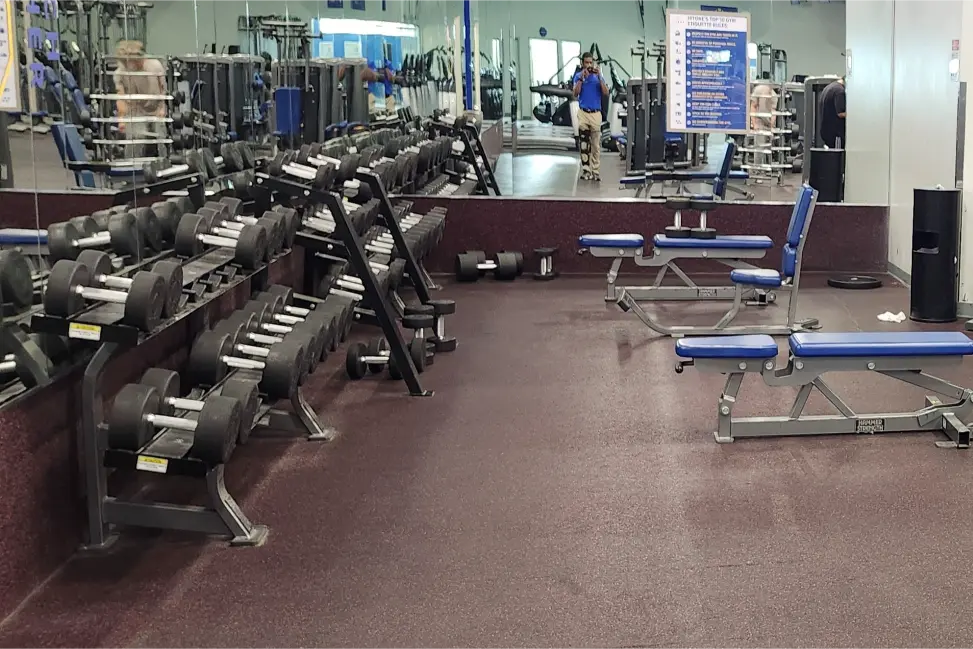
Free weights are any training tools that allow you to move the load freely through space. The weight is not attached to a track, a cable, or a fixed path. You control every part of the movement.
A free-weight workout can include:
- Dumbbells
- Barbells
- Kettlebells
- Weight plates
Because free weights allow a full and unrestricted range of motion, many lifters find them more challenging. That challenge comes from a few key demands:
- You must control the weight path from start to finish
- You rely on coordination to keep the movement smooth
- You need balance and stabilization to stay in the proper position
Here’s the dumbbell vs barbell comparison as bench press equipment.
What Are Weight Machines?
Weight machines are designed to guide your movement and provide external stability. Because of this added stability, machines are often used for isolation work and controlled loading.
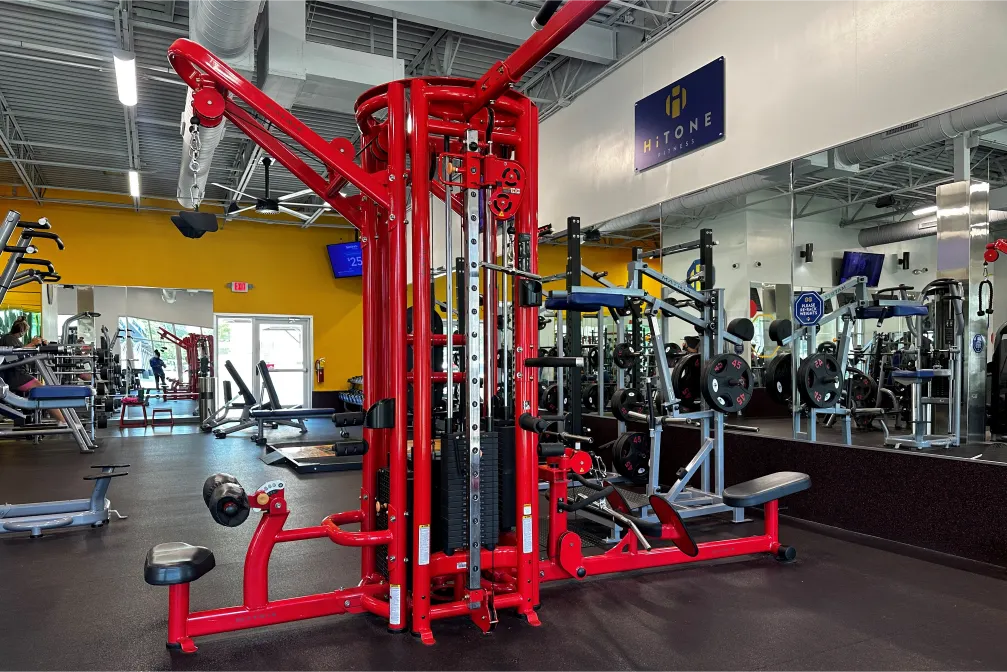
There are several common types of weight machines you will find in most gyms.
- Selectorized Machines: Use a weight stack and pin system to adjust resistance quickly and easily.
- Plate-Loaded Machines: Require weight plates to be added manually, similar to a barbell, while still guiding the movement.
- Cable Machines: Use pulleys and cables to create resistance and keep constant tension throughout the movement. Check out our cable machine program for the upper body.
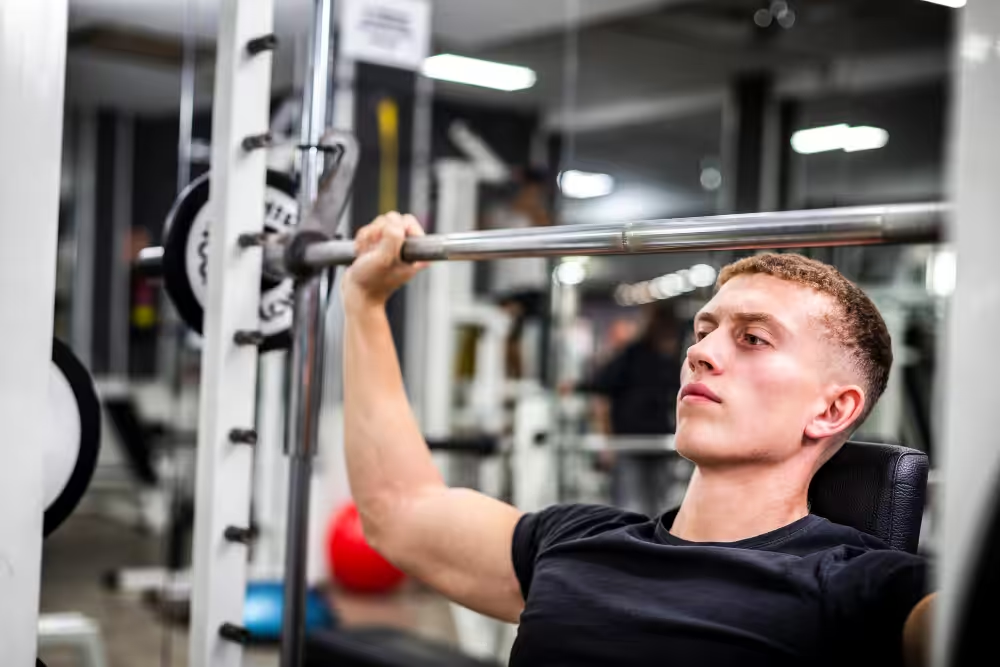
- Smith Machine: Uses a barbell fixed on rails, allowing heavy loading with a controlled bar path.
In comparison to free weights, machines:
- Provide better muscle isolation
- Require less stabilization from supporting muscles
Key Differences Between Free Weights and Machines (Quick Comparison)
| Aspect | Free Weights | Weight Machines |
| Range of Motion | Natural and unrestricted | Fixed or guided |
| Muscle Activation | Engages multiple muscle groups at once | Focuses on specific target muscles |
| Balance and Coordination | Strongly required | Minimal requirement |
| Safety Without Spotter | Lower, especially with heavy lifts | Higher, safer to train alone |
| Strength Development | Better for overall and functional strength | Supports strength, but with less carryover |
| Training to Fatigue | Harder without assistance | Easier and safer |
Benefits of Free Weights
When comparing free weights vs machines, free weights are better for developing overall strength and movement quality. These benefits are the main reason many lifters continue to prioritize them in their training.
Greater Muscle Activation and Stabilizer Engagement
Free weights generally create higher overall muscle activation, especially during compound movements that involve multiple joints and muscle groups at once.
Because the weight is not supported by a machine, your body must stabilize every rep. This places continuous demand on supporting muscles, including:
- Core muscles
- Lower back
- Obliques
- Deep stabilizers around the joints
This does not mean free weights will give you visible abs by default, but they do build a stronger core.
Read Next: Resistance Bands vs Free Weights – Which One Actually Works Better?
Better Functional Strength
Free weights are highly effective for developing functional strength. If your goal is strength that carries over to daily activities or physically demanding tasks, you should go with free weights.
Improvements in Sports and Athletic Performance
When training for explosiveness, speed, or power, free weights are essential.
Movements like squats, deadlifts, presses, and Olympic-style lifts allow you to generate force freely and dynamically.
Machines are useful for muscle development, but they lack the freedom and coordination required for improving athletic qualities.
Suitable for Home Gym
Free weights are often the better option for home gyms.
With a single barbell or a small set of dumbbells, you can train:
- Upper body
- Lower body
- Core
- Full-body movements
Machines take up space and usually serve one purpose. For example, cable machines work well for certain exercises, but they become limiting when you want to train areas like the chest, shoulders, or legs.
Benefits of Weight Machines
Weight machines are a popular choice for a reason.
Safer and Great for Beginners
Because machines operate within a limited and guided range of motion, they are generally more beginner-friendly. This is especially helpful for exercises that require precise technique or involve heavier loads.
If you are uncomfortable performing lifts like the bench press alone, or you prefer not to rely on a spotter, machines provide a safer alternative.
Hack squats and leg presses are exercises to try on machines.
Muscle Isolation for Hypertrophy
Machines make it easier to isolate specific muscles and keep tension exactly where you want it. This is valuable when building a well-balanced physique or correcting muscular imbalances.
If your primary goal is aesthetic development and not athletic performance or functional strength, a machine-based routine can be effective when programmed properly.
Easier to Train to Fatigue
Reaching muscle fatigue is important for maximizing training results, but it can be difficult to push close to failure with free weights, especially without a spotter.
Machines allow you to train hard with less risk. Exercises performed on selectorized machines or the Smith machine often feel safer at higher effort levels, making it easier to push close to your limits without hesitation.
Free Weights vs Machines – Which is Better for Building Muscles?
If your main goal is building muscle, both free weights and machines can get the job done. Muscle growth depends more on training volume, intensity, and consistency than on the equipment itself.
That said, each option shines in different situations.
When Machines May Be Better
Machines are better when muscle growth is the top priority and control and safety matter most.
They work especially well for:
- High-volume training, where fatigue management and consistent reps are important
- Isolation phases, when you want to focus on a specific muscle group
- Safer overload, allowing you to push close to failure without worrying about balance or a spotter
Read Next: Free Weights vs Dumbbells vs Machines
When Free Weights May Be Better
Free weights are often more effective when your goal is to build overall size and strength across multiple muscle groups.
They are particularly useful for:
- Compound lifts, such as squats, deadlifts, presses, and rows
- Total muscle mass development, by involving several muscles in a single movement
Free Weights vs Machines for Strength
When the goal is getting stronger, go with free weights.
Barbell lifts allow you to handle heavier loads while developing skill-based strength. Movements like squats, deadlifts, presses, and rows train multiple muscle groups at once and require coordination, balance, and control. This combination is what drives long-term strength progression.
Machines can be a better starting point for beginners. They help you learn basic movement patterns, apply resistance safely, and build confidence without being overwhelmed by technique.
How to Choose Between Machines and Free Weights
If you are still unsure which option fits you best, the choice becomes much easier when you look at your preferences, goals, and comfort level.
Choose Machines If:
- You want to build muscle without focusing on complex compound lifts
- You are uncomfortable lifting heavy weights without a spotter
- You prefer guided movements that reduce balance and coordination demands
Choose Free Weights If:
- You want to build functional strength alongside muscle
- You enjoy compound movements and full-body exercises
- You want strength that carries over to athletic or real-world situations
Combine Both for the Best Results
Using both free weights and machines is often the most effective approach.
A common strategy is to:
- Start your workout with free weights for compound movements
- Finish with machines to target smaller muscle groups
That said, there are no strict rules. It is perfectly fine to train chest on machines and use free weights for biceps or triceps. The key is to adjust your training to what feels effective and sustainable for you.
FAQ
Should beginners avoid free weights altogether?
No, as long as proper form is learned and respected. Starting with manageable weights and progressing gradually is far more important than avoiding free weights entirely.
Can you build muscle without doing compound lifts?
Yes, muscle growth is possible without compound lifts. Machines and isolation exercises can still provide enough tension and volume to stimulate muscle growth.
Can you mix free weights and machines in the same workout?
Yes, and it is highly recommended. This allows you to benefit from both overall strength work and focused muscle training.
What is better for a home gym?
Free weights are the better option for most home gyms. With a small setup of dumbbells or a barbell, you can train your entire body using compound and isolation movements. Machines take up more space and usually serve a limited number of exercises.