
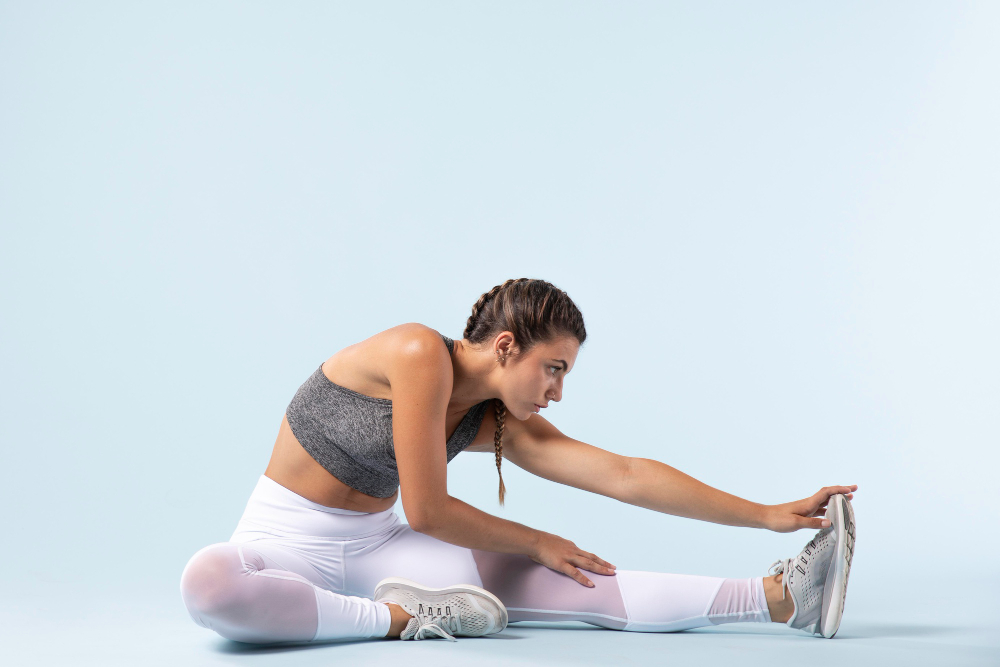
At first glance, yoga vs stretching seems like an easy comparison and similar principles. But looks can be misleading. Stretching usually focuses on lengthening one muscle at a time, while yoga requires strength, control, and full-body engagement inside those same positions.
This is where gym-goers, athletes, and beginners often get it wrong. Lifters may skip yoga, thinking stretching is enough. Runners may stretch regularly but ignore mobility and control. This guide breaks it all down, so you can clearly understand the difference between yoga and stretching, and learn how to use both to improve how you move, train, and recover.
Key Takeaways
- Yoga and stretching are not the same, even if they look similar.
- Stretching is a supportive movement, not a replacement for training. It helps with recovery, stiffness, and basic flexibility, but it does not build strength or conditioning.
- Yoga is active movement training. It challenges balance, joint stability, and muscle engagement, which is why it often feels harder than stretching.
- Timing matters. Dynamic stretching works best before workouts, static stretching after workouts, and yoga fits well on rest days or as a separate mobility session.
The Difference Between Yoga and Stretching (What Actually Separates Them)
Once you look at what your body is actually doing, the difference becomes very clear.
Isolated Muscle Work vs Integrated Movement
Stretching usually targets one muscle or muscle group at a time. You stretch your hamstrings, your calves, or your shoulders, then move on.
Yoga works differently. Even when a pose looks like a stretch, your body is:
- Supporting your weight
- Stabilizing multiple joints
- Coordinating several muscle groups at once
Instead of isolating muscles, yoga trains them to work together.
Passive vs Active Engagement
Most stretching is passive. You move into a position and hold it until the muscle relaxes.
Yoga is active. You are not just hanging out in a pose. You are:
- Engaging muscles to hold alignment
- Controlling your breathing
- Actively supporting your joints
This is why yoga often feels harder than it looks.
Mind-Body vs Muscle-Only Focus
Stretching is mostly about the muscles. You focus on how tight it feels and when to ease off.
Yoga adds another layer. You are constantly aware of:
- Body position
- Balance and control
- Breathing rhythm
That mental engagement is a key part of the practice.
Why Intent Matters More Than Appearance
Two people can look like they are doing the same movement. One is stretching. The other is practicing yoga. The difference is intent.
Stretching aims to lengthen tissue.
Yoga aims to strengthen, control, and move well through that length.
That intent changes how your body adapts, and why yoga and stretching are not interchangeable, even when they look similar.
What Is Stretching?
Stretching supports how you train, recover, and move day to day. And it’s one of the most common movement practices in fitness, yet it is often misunderstood. Most people stretch because it feels good, or because they were told they should. In reality, stretching has a specific purpose, and it works best when used in the right context.
Does Stretching Count as Exercise?
No, stretching doesn’t count as exercise.
There is not enough demand on your muscles, heart, or nervous system to replace strength training or cardio. But stretching is a great supportive movement since it can help by:
- Improving range of motion
- Reducing muscle stiffness
- Supporting recovery between workouts
Where Stretching Fits Into a Gym Routine
Stretching works best in these cases:
- Before workouts, dynamic stretching can help prepare joints and muscles
- After workouts, static stretching can support recovery
- On rest days, light stretching can reduce stiffness without adding fatigue
Types of Stretching
The type of stretching you choose should match what your body needs at that moment. Understanding the difference also makes it easier to see how yoga vs static stretching serve very different roles in a fitness routine.
Static stretching is what most people picture when they think of stretching. You move into a position and hold it for 20 to 60 seconds. This works best after workouts or on recovery days, when your goal is to relax tight muscles and improve flexibility over time.
Dynamic stretching uses controlled movement instead of long holds. Movements like leg swings, arm circles, or walking lunges. These ones are ideal before training, because they warm up muscles and joints without reducing strength or power.
Stretching for Tight Muscles & Recovery
Stretching for tight muscles can help reduce discomfort, especially when tightness comes from training volume or long hours of sitting.
The most common problem areas include:
- Hips, from sitting and lower body training
- Hamstrings, from running and lifting
- Shoulders and upper back, from desk posture and pressing movements
The benefits of stretching show up in different ways.
- Short term: You may feel looser and more comfortable.
- Long term: Consistent stretching can improve range of motion, support better posture, and make everyday movement feel easier.
What Is Yoga?
Yoga is a structured movement practice that challenges strength, control, and coordination at the same time.
Is Yoga Just Stretching?
No, yoga is not just stretching.
This myth exists because some yoga poses look similar to common stretches. A forward fold looks like a hamstring stretch. A lunge looks like a hip flexor stretch. But how your body works in those positions is very different.
Yoga requires you to:
- Support your own body weight
- Maintain balance and alignment
- Actively engage multiple muscle groups
Instead of relaxing into a position, you are working inside it. That is what turns yoga into movement training rather than simple stretching.
Is Yoga Good for Stretching?
Yes, yoga is good for stretching, but it does more than just lengthen muscles.
The breath helps your body relax, while strength and control allow you to move safely through a larger range of motion. This combination improves flexibility without relying on passive force.
Benefits of Yoga Beyond Flexibility
Flexibility is only one piece of the puzzle. The benefits of yoga extend well beyond stretching and include:
- Strength development, especially in stabilizing muscles
- Balance and stability, which support lifting and athletic movement
- Stress regulation, through controlled breathing and focus
- Body awareness and control, which improve movement quality
Yoga vs Stretching for Flexibility – Which One Works Better?
Stretching builds passive flexibility. You move a muscle into a lengthened position and hold it there. This can increase the range of motion, especially when muscles feel tight or restricted.
Yoga builds active flexibility. You are not just reaching a position, you are supporting and controlling it.
Stretching alone is often enough when:
- You need quick relief from tight muscles
- You are cooling down after a workout
- Your movement demands are low
Yoga is usually more effective when:
- You want lasting flexibility
- You need better control through full ranges of motion
- You train regularly and want your flexibility to carry over into lifting, running, or sports
Yoga, Mobility, and Movement Quality
Flexibility gets most of the attention, but mobility is what actually determines how well you move. Mobility is not just about how far a joint can go, but how well you can control that range during real movement.
Does Yoga Help With Mobility?
Yes, yoga helps with mobility.
Yoga improves mobility by focusing on joint control. In many poses, you are moving a joint through its range of motion while supporting your own body weight. That forces surrounding muscles to engage and stabilize.
It also builds strength through a range of motion. Yoga teaches your body to stay strong in deeper ranges, which is what mobility really is.
Does Stretching Help With Mobility?
Stretching can help with mobility, but only to a point. It mainly affects muscle length, not how well your joints are controlled.
Where stretching falls short is control. You may gain range of motion, but if the surrounding muscles are not strong enough to support that range, the mobility does not fully carry over into training or daily movement.
Best Yoga for Stretching (What Styles & Classes to Look For)
If your goal is to loosen up and move better, here are the best yoga types for stretching.
Flow-Based Classes
Flow-based classes move smoothly from one pose to the next. These classes are effective because they:
- Warm muscles gradually
- Move joints through full ranges of motion
- Combine flexibility with light strength
Slower, Strength-Focused Yoga
Slower yoga styles that hold poses for longer periods can be very effective for stretching. The added strength requirement helps you control deeper positions, rather than collapsing into them.
These classes are ideal if you want:
- Longer stretch time
- Better joint stability
- Improved body awareness
When Should You Stretch vs When Should You Do Yoga?
The timing affects how your body responds and how much benefit you actually get.
Before workouts, your goal is to prepare, not relax.
- Dynamic stretching works best to warm up joints and muscles
- Long static holds are better avoided before lifting or cardio
- Short, active yoga flows can work if they stay light and controlled
After workouts, the focus shifts to recovery.
- Static stretching can help muscles relax and reduce post-workout tightness
- Slower yoga sessions can support mobility and breathing after hard sessions
On rest days, both approaches can be useful.
- Light stretching can reduce stiffness without adding fatigue
- Gentle or slow yoga can improve circulation and movement quality
A simple weekly approach could look like this:
- Stretch briefly after most workouts
- Use yoga one to three times per week for mobility and control
Do You Need Both Yoga and Stretching in Your Fitness Routine?
Most people will see the benefits of both. Yoga and stretching solve different problems, and using both creates a more complete movement routine.
Stretching helps you:
- Reduce muscle tightness
- Recover faster after workouts
- Maintain basic flexibility
Yoga adds what stretching cannot:
- Strength through full ranges of motion
- Better joint control and balance
- Improved movement awareness
Looking for Yoga Classes Near You?
Practicing yoga on your own can work, but guided instruction makes a real difference. A good instructor helps you move with control, use proper alignment, and get the most out of each pose without pushing too far or cutting corners.
If you are interested in structured, gym-based yoga, you can explore yoga classes at HiTone Fitness locations in Brunswick, Irmo, and Sanford. These classes are built to support real training goals while staying accessible, practical, and beginner-friendly.
FAQ
Is yoga mobility training?
Yoga can function as mobility training when it is practiced with control and intention. Many poses require you to move joints through full ranges of motion while supporting your body weight. That combination of movement and strength is what could improve mobility.
Which is better for beginners, yoga or stretching?
For most beginners, stretching is easier to start with because it is simple and familiar. Yoga becomes a better option once you master basic movements.
Is yoga harder than stretching?
Yes, yoga is generally harder than stretching. Stretching is mostly passive, while yoga requires active muscle engagement, balance, and coordination. Even slow yoga classes demand more physical and mental effort than holding static stretches.
Does yoga improve range of motion?
Yes, yoga improves range of motion by combining stretching with strength and control. Instead of just reaching a position, yoga teaches your body to move into and out of that range safely.
Is yoga good for people who sit all day?
Yoga is very effective for people who sit for long hours. It helps counter tight hips, stiff backs, and rounded shoulders.
Do you need to be flexible to start yoga?
No, flexibility is not a requirement for starting yoga. Yoga is designed to improve flexibility over time, not test how flexible you already are.