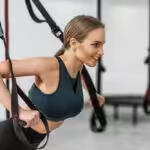
HIIT workouts for women over 50 alternate short bursts of hard effort, like squats, high knees, or mountain climbers, with brief rest periods, and every routine can be scaled from beginner to advanced. Done consistently, this style of training improves cardiovascular fitness in less time than longer, steady-paced cardio.
Key Takeaways
- Two HIIT sessions a week is enough for most women over 50, and Harvard Health advises capping high-intensity or high-impact workouts at two or three per week.
- Keep the hard intervals to 20 minutes or less per session, not counting your warm-up and cool-down.
- Move up a level only when you finish every round with good form. The routines below shorten rest as they progress, from 30:30 to 40:20 to 45:15 seconds of work to rest.
- Stop or scale back if you feel dizzy, unusually exhausted, or in pain. A session should never leave you unable to finish your intervals.
- Get medical clearance first if you have heart issues, high blood pressure, diabetes, or joint problems.
- Pair HIIT with strength training instead of relying on intervals alone, since trainers treat HIIT as one tool rather than a full program.
- If you’re new to intervals, a few coached sessions help you lock in form, which tends to slip as you tire.
Benefits of HIIT for women over 50
The biggest benefits of HIIT after 50 are better cardiovascular fitness and a complete workout in a short session. Sessions can be as short as 15 minutes, and every workout can be adjusted to your fitness level.
- Efficiency: With busy schedules and responsibilities, HIIT gives you a complete workout in a shorter time frame.
- Cardiovascular fitness: HIIT can improve cardiovascular fitness. In that eight-week study, it also shifted participants’ bodies toward using more fat at rest, although their resting metabolic rate didn’t change.
- Heart health: Harvard Health notes that small, short-term studies suggest HIIT can match or beat moderate-intensity exercise for improving blood pressure and blood sugar. In addition to HIIT and low-impact cardio, there are other cardio recovery methods at our Irmo location.
- Strength support: Moves like squats, lunges, and push-ups work your muscles as well as your heart. Adults lose muscle faster as they age, so pair HIIT with strength training to maintain strength and mobility.
How often women over 50 should do HIIT
Most women over 50 need only two HIIT sessions a week, with 20 minutes or less of hard intervals per session. A trainer interviewed by Prevention says twice a week is plenty for most people over 50, and Harvard Health advises no more than two or three high-intensity or high-impact workouts per week. The 20-minute cap covers the work intervals only, not your warm-up and cool-down. Fill the other days with strength training, since HIIT is one tool rather than a complete program.
HIIT safety tips after 50
Safe HIIT after 50 starts with medical clearance and a gradual build-up, and it means stopping when your body signals trouble.
- Seek medical advice: Get clearance from a healthcare professional before starting any new workout routine, especially if you have heart issues, high blood pressure, diabetes, joint problems, or another existing condition.
- Ease into it: For those new to HIIT, start with shorter and less intense intervals, and gradually ramp up the intensity as your fitness level increases.
- Go low-impact if needed: If jumping bothers your joints, raise the intensity through speed, resistance, or incline instead.
- Tune into your body: Be mindful of how your body feels. If you experience significant fatigue, dizziness, or discomfort, pause or adjust your workout. A session should never be painful or so draining that you can’t finish your intervals.
- Learn proper form: If you’re new to HIIT, work with a trainer for a few sessions. Form slips as you tire, and good form is key to preventing injury.
- Proper warm-up and cool-down: Begin each session with a warm-up to ready your muscles, and conclude with a cool-down to aid in recovery.
- Stay hydrated: Keep yourself well-hydrated before, during, and after your exercise sessions to prevent dehydration and promote overall health.
Beginner HIIT workout for women over 50
Start with 30 seconds of work and 30 seconds of rest, which keeps every interval manageable while you learn the movements. The full session takes 18–22 minutes.
- Warm-up: five minutes of brisk walking or light jogging
- Interval 1: 30 seconds of jumping jacks followed by 30 seconds of rest
- Interval 2: 30 seconds of squats followed by 30 seconds of rest
- Interval 3: 30 seconds of high knees followed by 30 seconds of rest
- Interval 4: 30 seconds of lunges followed by 30 seconds of rest
- Repeat the intervals 2–3 times
- Cool-down: five minutes of stretching
Intermediate HIIT workout: 40 seconds on, 20 off
Move up when you can finish every beginner round with good form. This level lengthens work to 40 seconds and cuts rest to 20, for a 22–26 minute session.
- Warm-up: five minutes of dynamic stretching
- Interval 1: 40 seconds of mountain climbers followed by 20 seconds of rest
- Interval 2: 40 seconds of lunges followed by 20 seconds of rest
- Interval 3: 40 seconds of plank jacks followed by 20 seconds of rest
- Interval 4: 40 seconds of push-ups followed by 20 seconds of rest
- Repeat the intervals 3–4 times
- Cool-down: five minutes of gentle stretching
Advanced HIIT workout: 45 seconds on, 15 off
This level is for women who already complete the intermediate routine comfortably and have no joint issues, since three of its four exercises involve jumping. The full session takes 26–30 minutes.
- Warm-up: five minutes of cardio (jogging, cycling, or jumping rope)
- Interval 1: 45 seconds of burpees followed by 15 seconds of rest
- Interval 2: 45 seconds of alternating lunges with a jump followed by 15 seconds of rest
- Interval 3: 45 seconds of spider-man push-ups followed by 15 seconds of rest
- Interval 4: 45 seconds of squat jumps followed by 15 seconds of rest
- Repeat the intervals 4–5 times
- Cool-down: five minutes of deep stretching
Solo vs. group HIIT workouts
Solo HIIT suits you if you want schedule flexibility, and group classes suit you if you want coaching on form and accountability. Both approaches have their benefits:
- Solo HIIT workouts: These allow for flexibility in scheduling and can be tailored to your personal fitness level and preferences. You can focus on your own progress and work at your own pace.
- Group HIIT classes: Participating in a group class led by an instructor can provide additional motivation and encouragement. The group dynamic can push you to work harder, and the instructor can offer guidance on form and intensity. Plus, the social aspect of group classes can make workouts more enjoyable and help you stay committed.
Group HIIT classes at HiTone Fitness Irmo
At HiTone Fitness Irmo, our instructors lead HIIT classes tailored to your fitness level and guide you through each workout so you perform every exercise safely and effectively. Here’s why you should consider joining our community:
- Expert guidance: Our instructors provide personalized attention, helping you achieve your fitness goals while minimizing the risk of injury.
- Motivation: Working out with others can boost your motivation and keep you accountable. The energy of the group can help you push through challenging workouts.
- Variety: Our classes offer a range of exercises and routines, keeping your workouts fresh. This variety also ensures that you’re challenging different muscle groups and improving overall fitness.
- Supportive community: Joining our classes means being part of a community of like-minded women who support and inspire each other. It’s an easy way to make new friends and stay motivated on your fitness journey.
To try group HIIT classes without any cost, get your 3-day free pass and see for yourself why many people fall in love with this type of workout.
Final thoughts: HIIT workouts for women over 50
HIIT gives women over 50 a time-efficient way to build cardiovascular fitness when you scale the intensity to your level, keep it to about two sessions a week, and pair it with strength training. Whether you prefer solo workouts or thrive in a group setting, start with the routine that matches your fitness today.
FAQs
Is HIIT good for women in menopause?
Yes, for most women who have medical clearance. Estrogen helps protect the heart and declines after menopause, and Mayo Clinic women’s health internist Dr. Sara Shihab told Prevention that HIIT can help improve heart health during this stage.
Does HIIT spike cortisol?
Yes, temporarily. Cortisol helps your body mobilize energy, and HIIT produces a substantial hormonal stress response, according to a 2026 study in Sports. A 2004 study comparing women in their late 20s with women in their mid-60s found a similar cortisol response to high-intensity treadmill exercise in both groups. The older women’s stress signaling took longer to settle afterward, though it recovered faster in fitter women.
Does HIIT help you lose belly fat after 50?
It can. A 2024 umbrella review in Sports Medicine found interval training reduced visceral and abdominal fat compared with not exercising, but a 2023 meta-analysis of 11 trials found HIIT no more effective than steady cardio for body fat. The format you’ll keep doing matters more than choosing HIIT over other cardio.