You can build strength across your chest, back, shoulders, and arms with a cable machine. If you have one at home or prefer machines over free weights, these 11 cable machine upper body exercises are for you.
Key Takeaways
- Pulley height changes the training angle, which can significantly affect muscle engagement.
- Most form mistakes come from using too much weight and relying on momentum.
- Single-handle exercises can help identify and correct strength imbalances between sides.
- A complete upper-body workout can be built around just a handful of cable exercises, including a press, row, pulldown, raise, curl, and extension.
How to Set Up a Cable Machine
The first step is to set the pulley to the height required for the exercise. Most cable machines have an adjustable pulley that slides up or down a vertical track and locks into place with a pin. Different exercises require different pulley positions. In the exercise breakdown below, we’ll explain exactly where to position the pulley for each movement.
Next, choose your weight by inserting the selector pin into the weight stack. Start with a lighter weight until you’re comfortable with the exercise form and can feel the target muscles working properly.
There are also a few common attachments you’ll use:
- Single handle: Great for correcting muscle imbalances.
- Rope attachment: Commonly used for triceps, shoulders, and some back exercises.
- Straight bar: Often used for curls, pushdowns, and rows.
- Lat bar: A wider bar designed primarily for lat pulldowns and seated rows.
Not sure if this equipment is right for you. Check out our breakdown of free weights vs machines.
Cable Machine Chest Exercises
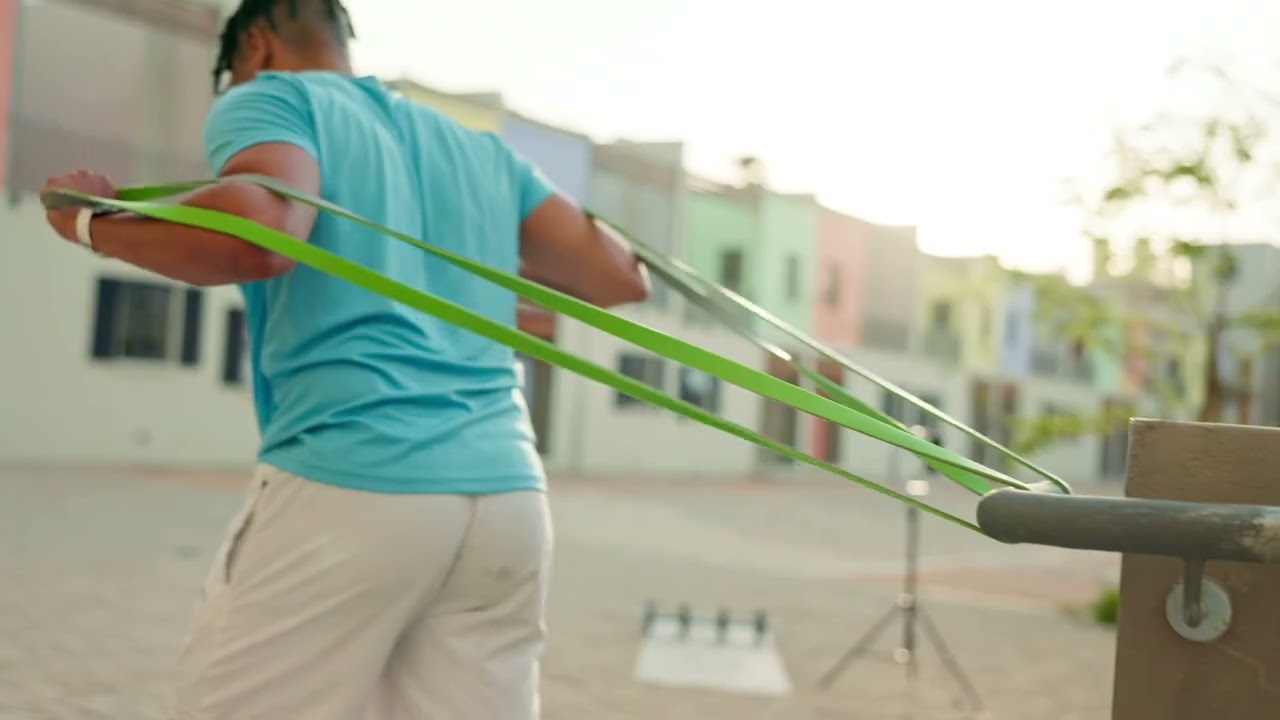
Cable machine chest exercises are primarily used for isolation work and increasing muscle pump. They won’t be effective as classic pressing movements, but they can still help build muscle and improve definition.
Cable Chest Press
The cable chest press primarily works the chest, while the shoulders and triceps assist throughout the movement.
Pulley setup: Set both pulleys to mid-height, roughly in line with your chest, and attach a single handle to each side.
How to do it:
- Stand between the pulleys and grab a handle in each hand.
- Take a small step forward and position one foot slightly in front of the other.
- Start with your hands beside your chest and your elbows bent.
- Press the handles forward until your hands meet in front of your body.
- Return slowly while maintaining control of the weight.
Technique tips:
- Keep your chest lifted and shoulders pulled down throughout the movement.
- Press in a smooth arc and squeeze your chest at the end of each repetition.
Mistake and fix:
- Letting the shoulders roll forward as you press.
- Keep your shoulder blades slightly pulled back and down during the entire movement. This helps maintain tension on the chest and reduces unnecessary stress on the shoulders.
Cable Crossover (Cable Fly)
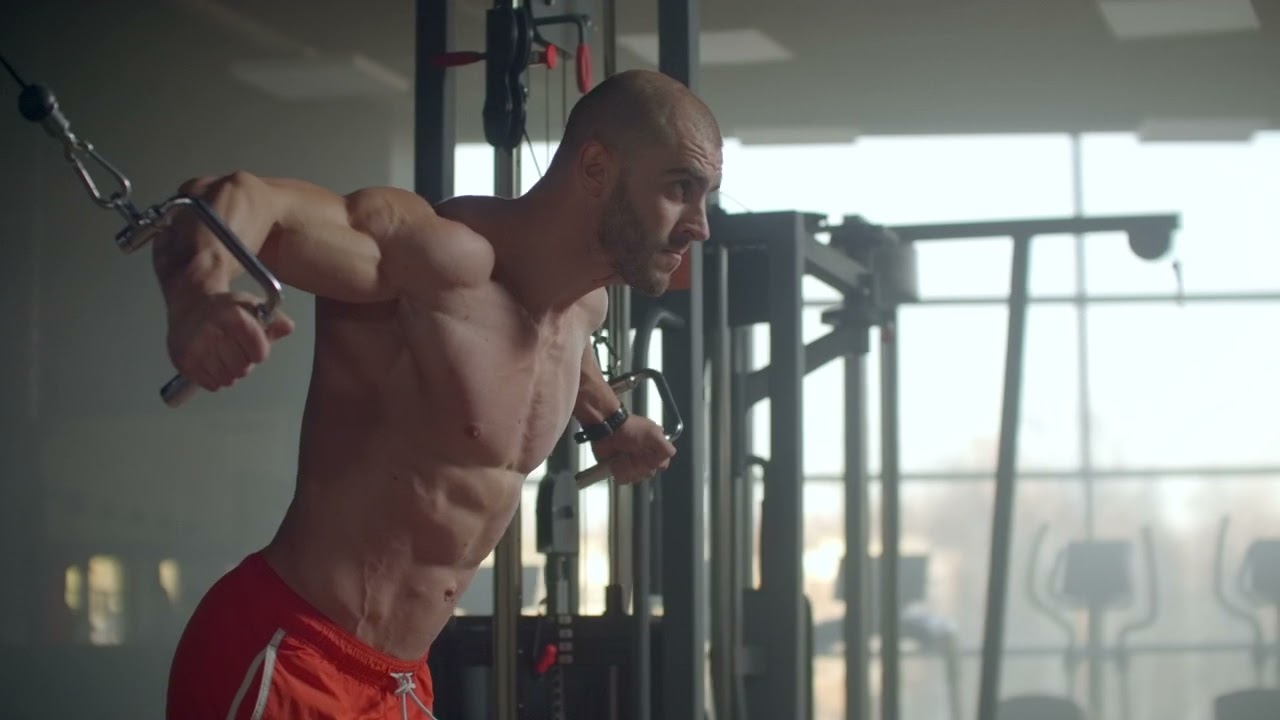
The cable crossover primarily targets the chest, with the front shoulders helping to move and stabilize the weight.
Pulley setup: Set both pulleys to a high position and attach a single handle to each side.
How to do it:
- Grab a handle in each hand and step forward until the cables are under tension.
- Position one foot slightly in front of the other for balance.
- Start with your arms out to the sides and a slight bend in your elbows.
- Bring your hands together in front of your body in a wide arc.
- Squeeze your chest at the bottom of the movement.
- Slowly return to the starting position.
Technique tips:
- Keep a slight bend in your elbows throughout the entire repetition.
- Focus on bringing your upper arms toward each other rather than pushing with your hands.
Mistake and fix:
- Turning the exercise into a press by bending and straightening the elbows.
- Lock in a small elbow bend at the start and maintain that angle throughout the movement. This keeps the tension on the chest and makes the exercise feel more like a fly than a press.
Cable Machine Back Exercises
The cable machine is a great choice for back exercises.
Lat Pulldown
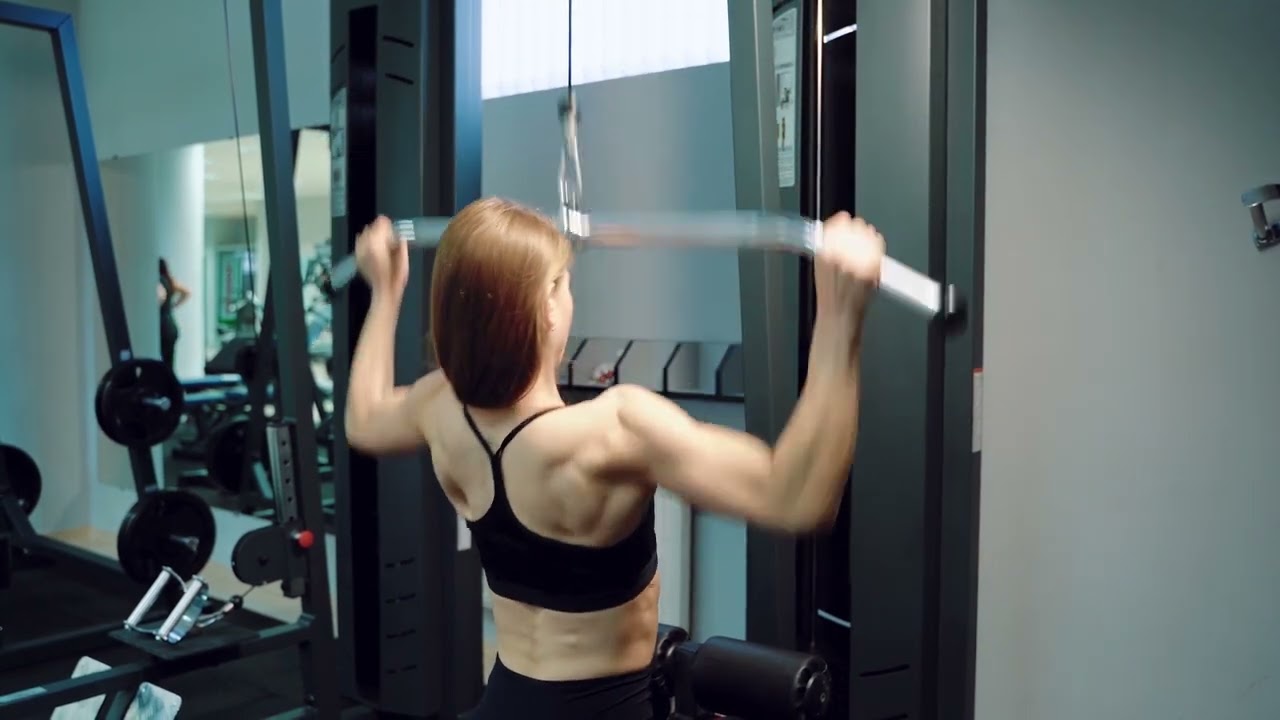
The lat pulldown primarily targets the lats, while the biceps, rear shoulders, and upper back assist during the movement.
Pulley setup: Set the pulley to a high position and attach a lat bar.
How to do it:
- Grab the bar with a grip slightly wider than shoulder-width.
- Sit upright with your chest lifted and arms fully extended.
- Pull the bar down toward your upper chest by driving your elbows down and back.
- Pause briefly when the bar reaches chest level.
- Slowly return the bar to the starting position with control.
Technique tips:
- Keep your chest up throughout the movement.
- Think about pulling with your elbows rather than your hands.
Mistake and fix:
- Leaning back excessively to create momentum during the pull.
- A slight lean is fine for advanced lifters, but beginners should focus on strict form to keep the tension on the lats.
Read Next: TRX Upper Body Exercises: 8 Moves to Build Chest, Back, and Arms
Seated Cable Row
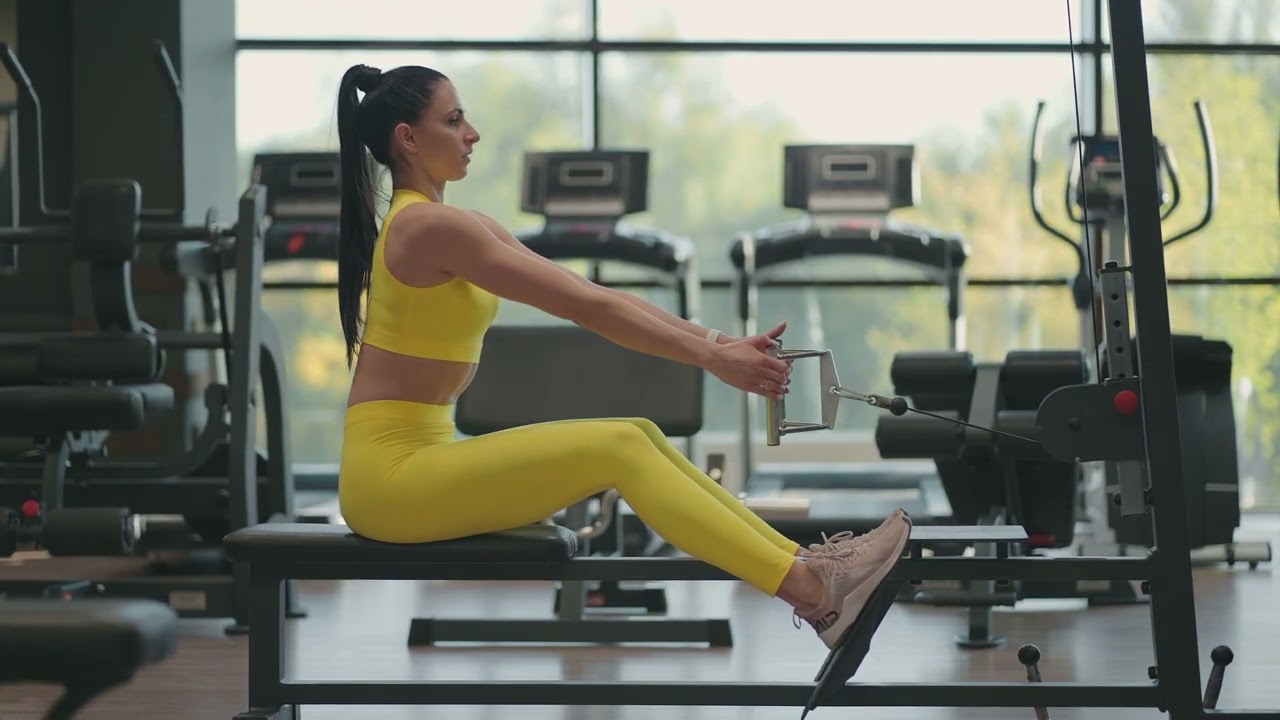
The seated cable row primarily works the middle back, while the lats, rear shoulders, and biceps assist during the movement.
Pulley setup: Set the pulley to a low position and attach a close-grip row handle or V-bar attachment.
How to do it:
- Sit on the machine and place your feet on the footrests.
- Grab the handle with both hands and sit upright with your arms fully extended.
- Pull the handle toward your lower ribs by driving your elbows back.
- Squeeze your shoulder blades together at the end of the movement.
- Slowly extend your arms and return to the starting position.
Technique tips:
- Keep your chest lifted throughout the exercise.
- Pull your elbows back close to your body rather than flaring them out.
Mistake and fix:
- Rounding the lower back and using momentum to move the weight.
- If you have to swing your body to pull the handle, reduce the weight and focus on squeezing the muscles in your upper back.
Straight-Arm Pulldown
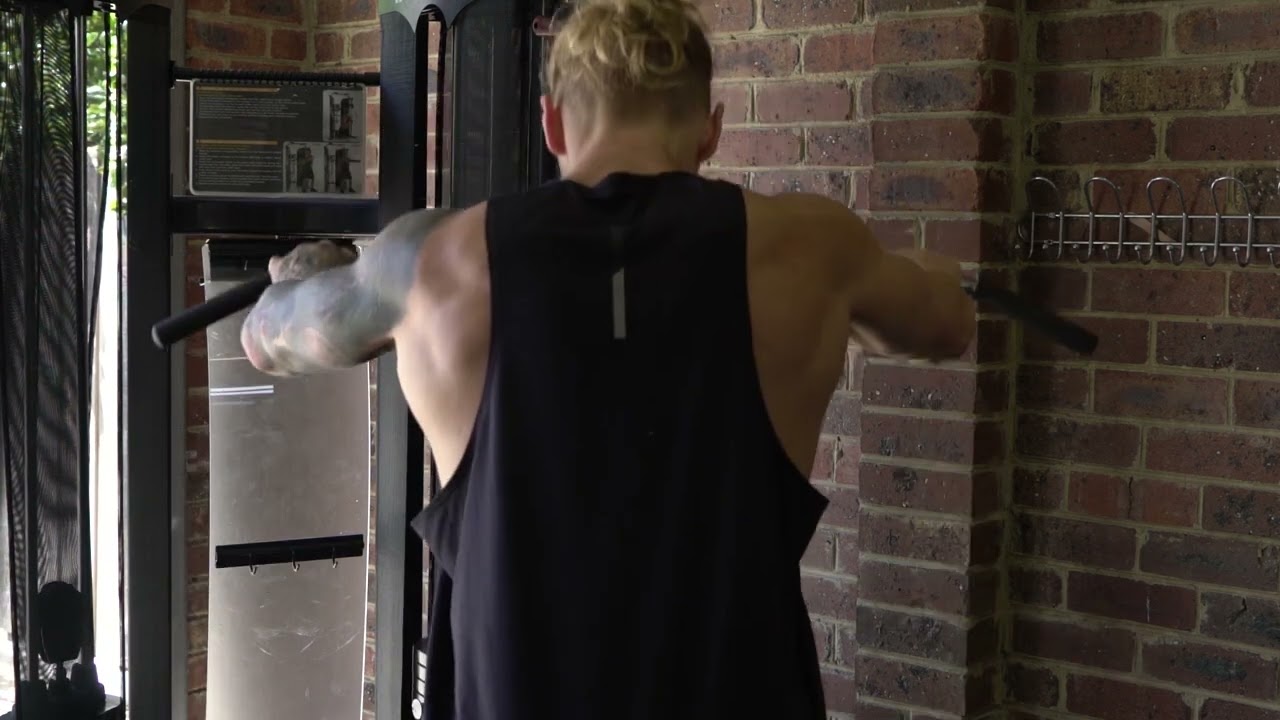
The straight-arm pulldown primarily targets the lats, while the shoulders, core, and upper back help stabilize the movement.
Pulley setup: Set the pulley to a high position and attach a straight bar or rope attachment.
How to do it:
- Stand facing the cable machine and grab the attachment with both hands.
- Take a small step back and extend your arms in front of you.
- Keep a slight bend in your elbows and brace your core.
- Pull the attachment down in an arc until your hands reach your thighs.
- Squeeze your lats at the bottom of the movement.
- Slowly return to the starting position.
Technique tips:
- Keep your arms nearly straight throughout the exercise.
- Think about pulling your shoulders down and back as you move the weight.
Mistake and fix:
- Bending the elbows too much and turning the exercise into a triceps pushdown.
- Maintain a small bend in your elbows from start to finish.
Cable Machine Shoulder Exercises
The cable machine is great for targeting shoulders, especially the side delt and rear delt, which require more precision than weight.
Cable Lateral Raise
The cable lateral raise primarily targets the side delts, while the upper traps assist with stabilization.
Pulley setup: Set the pulley to a low position and attach a single handle.
How to do it:
- Stand sideways to the cable machine with the working arm farthest from the pulley.
- Grab the handle and hold it across the front of your body.
- Keep a slight bend in your elbow and engage your core.
- Raise your arm out to the side until it reaches shoulder height.
- Pause briefly at the top of the movement.
- Slowly lower the handle back to the starting position.
Technique tips:
- Lead the movement with your elbow, not your hand.
- Raise the handle only to shoulder height to keep tension on the target muscle.
Mistake and fix:
- Shrugging the shoulders as the weight moves upward.
- Keep your shoulders pulled down throughout the exercise and focus on lifting with the side deltoid. If you can’t do this, reduce the weight.
Cable Rear Delt Fly
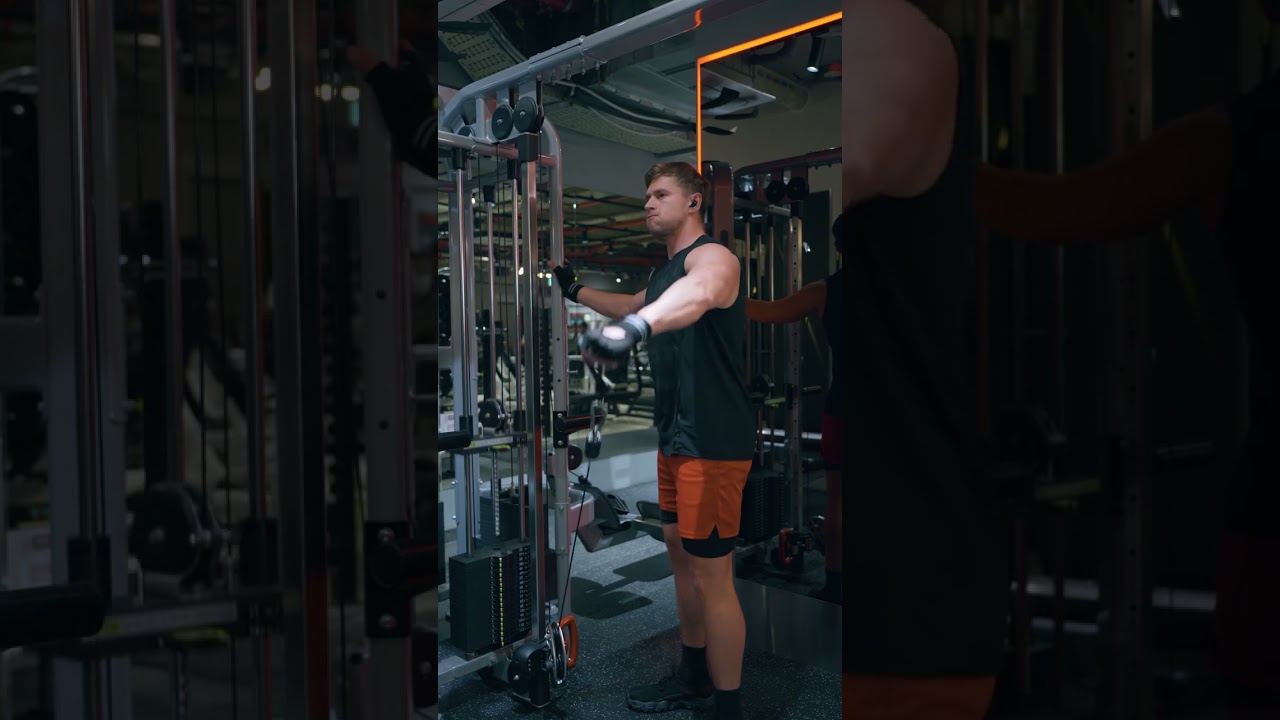
The cable rear delt fly primarily targets the rear delts, while the rhomboids and upper back muscles assist with the movement.
Pulley setup: Set the pulley to about shoulder height and attach a single handle.
How to do it:
- Stand sideways to the cable machine with the working arm farthest from the pulley.
- Grab the handle across the front of your body with your arm extended.
- Keep a slight bend in your elbow and maintain an upright posture.
- Pull the handle out and across your body until your arm is in line with your shoulder.
- Squeeze your rear delt briefly at the end of the movement.
- Slowly return to the starting position and repeat before switching sides.
Technique tips:
- Keep your chest up and shoulders down throughout the exercise.
- Lead the movement with your elbow rather than your hand.
Mistake and fix:
- Rotating the torso to help move the weight.
- Keep your torso still and reduce the weight if needed.
Cable Machine Arm Exercises
The cable machine is great when you want to target biceps and triceps.
Cable Bicep Curl
The cable bicep curl primarily targets the biceps.
Pulley setup: Set the pulley to a low position and attach a straight bar or single handle.
How to do it:
- Stand facing the cable machine and grab the attachment with an underhand grip.
- Stand upright with your arms fully extended and elbows close to your sides.
- Curl the handle toward your shoulders by bending your elbows.
- Squeeze your biceps at the top of the movement.
- Slowly lower the weight back to the starting position.
Technique tips:
- Keep your elbows pinned close to your torso.
- Control the lowering phase instead of letting the weight pull your arms down.
Mistake and fix:
- Using momentum by swinging the body to lift the weight.
- If you find yourself swinging, reduce the weight.
Cable Rope Hammer Curl
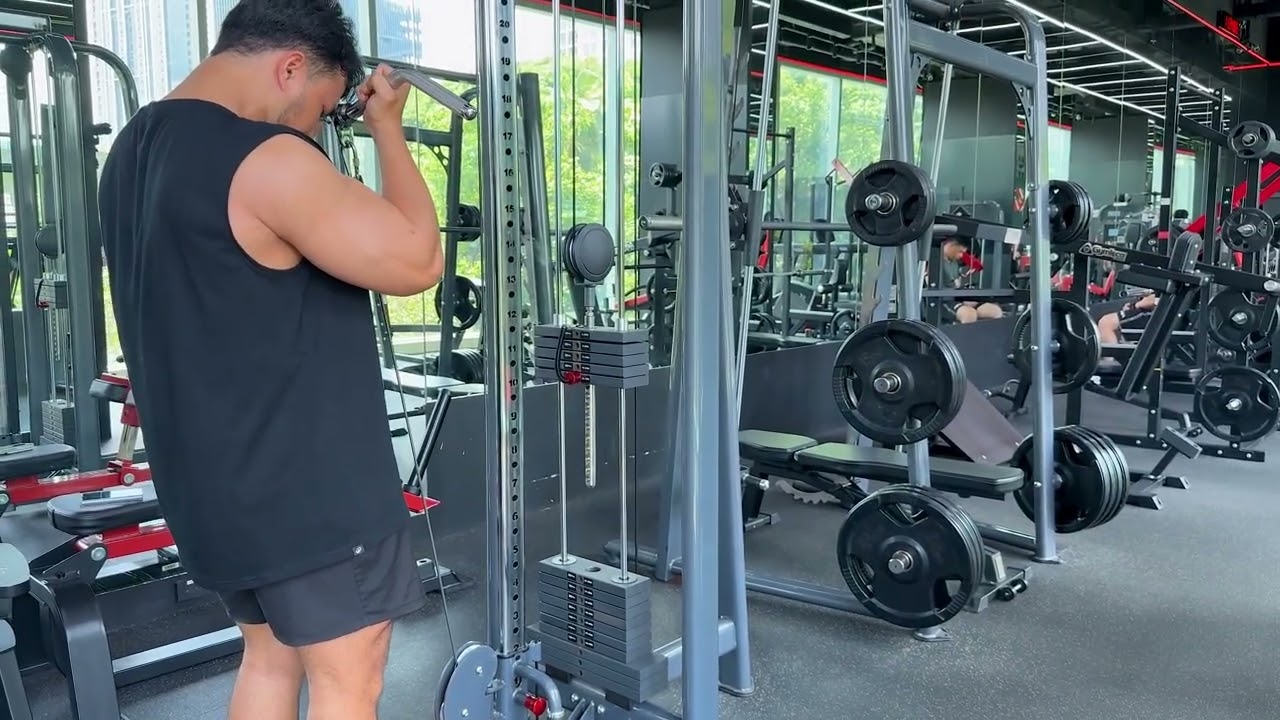
The cable rope hammer curl primarily targets the brachialis and brachioradialis, while the biceps also contribute to the movement.
Pulley setup: Set the pulley to a low position and attach a rope attachment.
How to do it:
- Stand facing the cable machine and grab the ends of the rope with a neutral grip, palms facing each other.
- Stand upright with your arms fully extended and elbows close to your sides.
- Curl the rope toward your shoulders by bending your elbows.
- As you reach the top, slightly separate the ends of the rope.
- Squeeze your arms at the top of the movement.
- Slowly lower the rope back to the starting position.
Technique tips:
- Keep your wrists neutral throughout the exercise.
- Keep your elbows fixed by your sides from start to finish.
Mistake and fix:
- Allowing the elbows to move forward as the rope comes up.
- Keep your upper arms stationary and focus on bending only at the elbows. If your elbows continue drifting forward, reduce the weight.
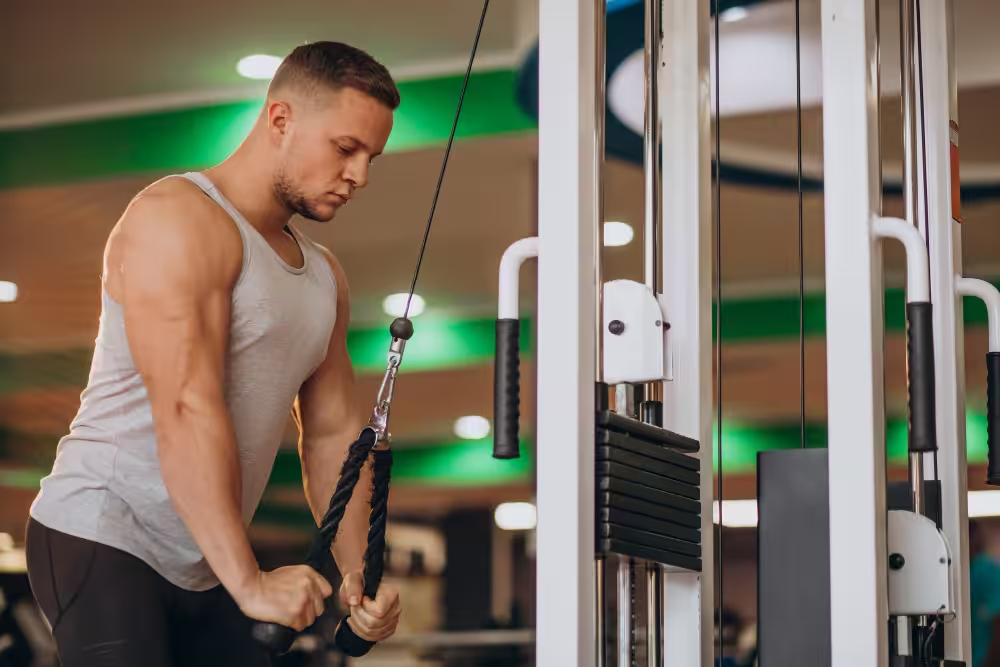
Cable Tricep Pushdown
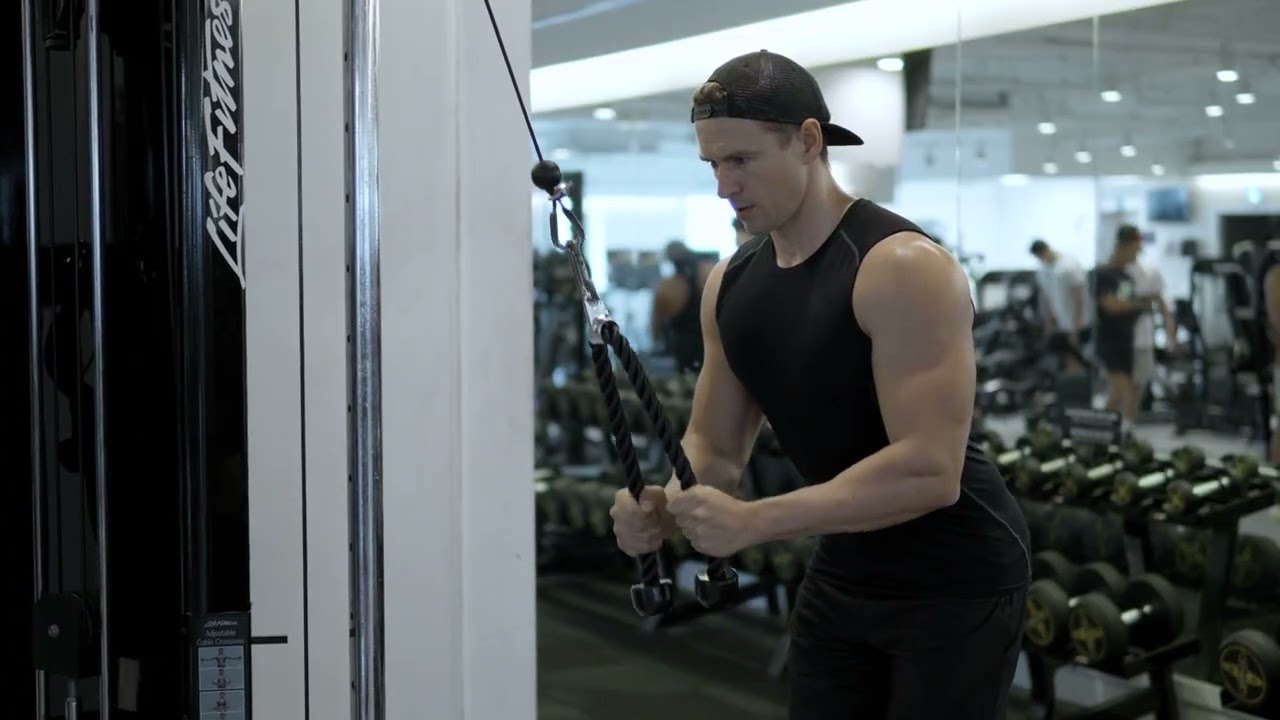
The cable tricep pushdown primarily targets the triceps.
Pulley setup: Set the pulley to a high position and attach a rope attachment or straight bar.
How to do it:
- Stand facing the cable machine and grab the attachment with both hands.
- Position your elbows close to your sides and bend your arms to about 90 degrees.
- Brace your core and keep your torso upright.
- Push the attachment down until your arms are fully extended.
- Squeeze your triceps at the bottom of the movement.
- Slowly return to the starting position.
Technique tips:
- Keep your elbows pinned close to your sides throughout the exercise.
- Fully extend your arms at the bottom of each repetition for a better contraction.
Mistake and fix:
- Using momentum by leaning over the weight to push it down.
- If you find yourself leaning forward, reduce the weight.
Cable Overhead Rope Extension
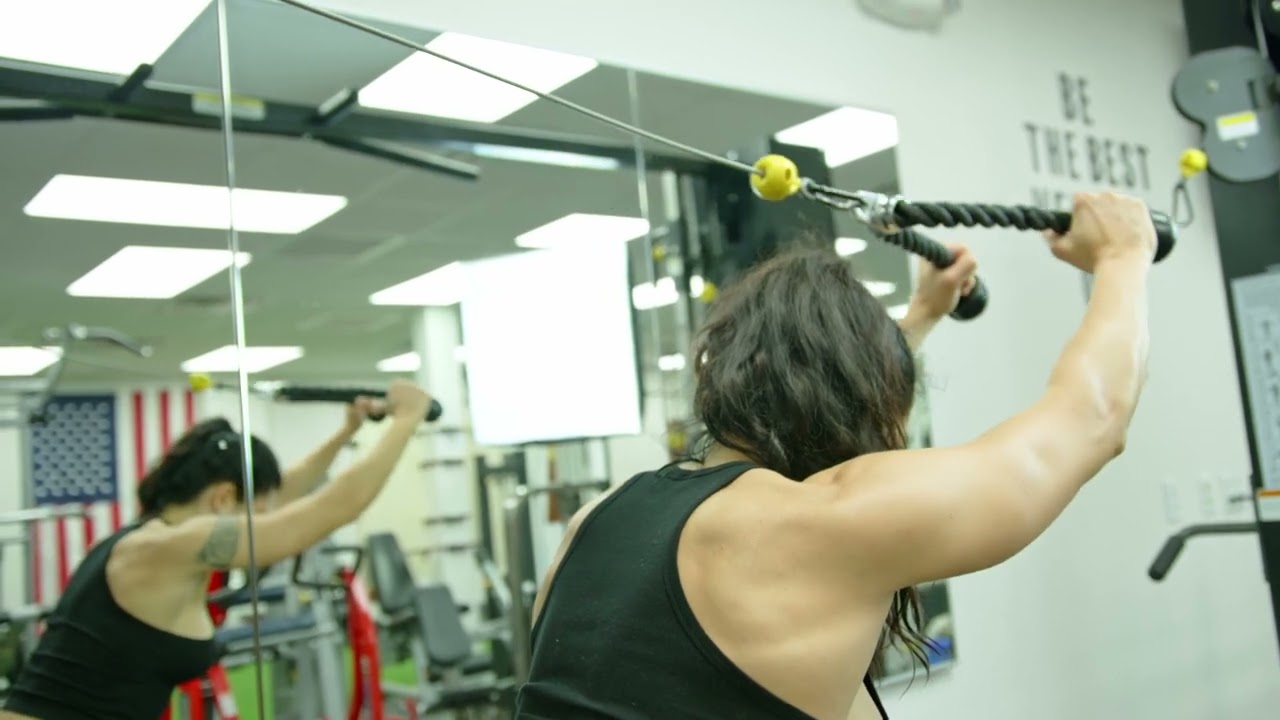
The cable overhead rope extension primarily targets the triceps, with extra emphasis on the long head.
Pulley setup: Set the pulley to a high position and attach a rope attachment.
How to do it:
- Face away from the cable machine and grab the rope with both hands.
- Bring the rope behind your head and step forward until the cable is under tension.
- Position your elbows close to your head and bend your arms.
- Extend your elbows until your arms are straight overhead.
- Squeeze your triceps at the top of the movement.
- Slowly lower the rope back behind your head.
Technique tips:
- Keep your elbows pointed forward and close to your head throughout the exercise.
- Move only at the elbow joint while keeping your upper arms in place.
Mistake and fix:
- Arching the lower back to help move the weight.
- Keep your core engaged and maintain a neutral spine throughout the movement.
If you are working out at home and have a few dumbbells, you can also do arm exercises with those. Check out:
A Simple Cable Machine Upper Body Workout
Here are two options for workouts, depending on how often you plan to do an upper-body workout.
1x Week
If you are doing an upper-body workout only once a week, it would be best to combine all exercises.
| Exercise | Sets | Reps |
| Cable Chest Press | 4 | 6-10 |
| Cable Crossover (Fly) | 2-3 | 12-15 |
| Lat Pulldown | 4 | 8-12 |
| Seated Cable Row | 3 | 8-12 |
| Straight-Arm Pulldown | 2 | 12-15 |
| Cable Lateral Raise | 3 | 12-20 |
| Cable Rear Delt Fly | 3 | 12-20 |
| Cable Bicep Curl | 3 | 8-12 |
| Cable Rope Hammer Curl | 2 | 10-15 |
| Cable Tricep Pushdown | 3 | 8-12 |
| Cable Overhead Rope Extension | 2 | 12-15 |
2x Week
If you are doing an upper-body workout twice a week, it would be best to split these exercises in this way.
Workout 1
| Exercise | Sets | Reps |
| Cable Chest Press | 4 | 6-10 |
| Lat Pulldown | 4 | 8-12 |
| Seated Cable Row | 3 | 8-12 |
| Cable Lateral Raise | 4 | 12-20 |
| Cable Bicep Curl | 3 | 8-12 |
| Cable Tricep Pushdown | 3 | 8-12 |
Workout 2
| Exercise | Sets | Reps |
| Lat Pulldown | 4 | 6-10 |
| Cable Crossover (Cable Fly) | 4 | 8-12 |
| Straight-Arm Pulldown | 3 | 12-15 |
| Cable Rear Delt Fly | 3 | 12-20 |
| Cable Rope Hammer Curl | 3 | 10-15 |
| Cable Overhead Rope Extension | 3 | 10-15 |
FAQ
Can you build muscle with just a cable machine?
Yes. Beginners can make excellent progress using only cable exercises, as long as they gradually increase the weight over time and follow a structured workout program.
Is the cable machine good for beginners?
Yes. Cable machines are beginner-friendly because they provide a controlled movement path and are easy to adjust.
How often should you train the upper body on the cable machine?
Most people can train their upper body 1 to 2 times per week. This gives your muscles enough training volume to grow while still allowing adequate recovery between workouts.