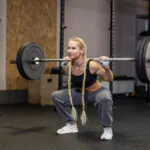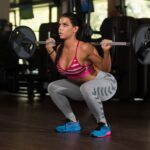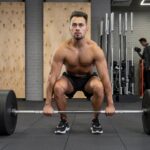

When comparing bodybuilding vs. calisthenics, bodybuilding is usually more effective for maximizing muscle size, while calisthenics is usually better for relative strength, body control, and convenience. Neither method is universally better. The right choice depends on whether your main goal is bigger muscles, better movement, easier training access, or a mix of all three.
Key Takeaways
- Progressive overload matters more than the tool. You can build muscle with weights or bodyweight if the exercises keep getting harder over time.
- Bodybuilding gives you more precision. It is easier to isolate lagging muscles, control load, and scale lower-body training with barbells, dumbbells, and machines.
- Calisthenics rewards strength-to-weight ratio. It tends to improve coordination, balance, mobility, and control faster than traditional bodybuilding-style training.
- Weighted calisthenics sits in the middle. Adding external load to pull-ups, dips, and push-ups can close much of the muscle-building gap for the upper body.
- Your lower body changes the equation. If you want maximum quad, glute, and posterior-chain growth, bodybuilding-style leg training still has the edge.
- The best long-term plan for many people is hybrid training. Use calisthenics for body control and compound upper-body work, then use weights where loading and isolation make progress easier.
Bodybuilding vs. Calisthenics: What’s the Main Difference?
The biggest difference is the training goal. Bodybuilding is built around muscle hypertrophy, symmetry, and direct muscle targeting. Calisthenics is built around moving your body through space with control, which means it places more value on coordination, relative strength, balance, and skill.
That difference changes almost everything else. Bodybuilding uses barbells, dumbbells, cables, and machines so you can load a muscle precisely and keep progressing in small jumps. Calisthenics uses your body weight, leverage, range of motion, tempo, and exercise difficulty to create overload.
| Aspect | Bodybuilding | Calisthenics |
| Primary goal | Muscle size and definition | Relative strength and body control |
| Main resistance | External load | Body weight and leverage |
| Best fit | People chasing maximum hypertrophy | People chasing athletic movement and convenience |
| Hardest part | Time, equipment, and recovery demands | Progression and lower-body loading |
Which Is More Effective for Building Muscle?
If your only goal is maximum muscle growth, bodybuilding wins. It is easier to train close to failure in stable positions, increase load in small increments, and target specific muscles that need more work.
That said, calisthenics is not “bad for hypertrophy.” It can build impressive muscle, especially in the chest, shoulders, lats, arms, and core. Push-ups, dips, chin-ups, and pull-ups are still high-value hypertrophy exercises when you do enough hard sets and keep progressing them.
This matters because matched-load research has shown that bodyweight and free-weight resistance training can produce similar hypertrophy in some contexts, especially in less advanced trainees. In practical terms, that means calisthenics can build muscle well, but bodybuilding still makes it easier to keep pushing muscle growth further, especially once your own body weight stops being challenging enough.
The upper body is where calisthenics competes best. The lower body is where bodybuilding usually pulls ahead. Squats, leg presses, Romanian deadlifts, and other loaded leg work are much easier to progress than pistol squats or high-rep bodyweight lunges.
Nutrition also matters here. Neither training style will build much muscle if your calories and protein are poor. And if you want a fuller chest rather than only general pressing strength, the upper chest still deserves direct work. That is where these dumbbell exercises for this muscle group can help.
Which Is Better for Strength?
The answer depends on what kind of strength you mean. This is where most “bodybuilding vs. calisthenics” articles get sloppy. Absolute strength, relative strength, and functional strength are not the same thing.
Absolute Strength
If you mean how much force you can produce against heavy external load, bodybuilding-style lifting has the advantage. You can load squats, presses, rows, and hinges more heavily and more predictably than bodyweight movements.
Relative Strength
If you mean how strong you are relative to your own body weight, calisthenics usually comes out ahead. Movements like pull-ups, dips, front levers, muscle-ups, and handstand work reward body control, stiffness, and efficient force production.
Functional Strength
If you mean usable strength through different positions and movement patterns, calisthenics often has the edge because the whole body has to stabilize and coordinate at once. Still, bodybuilding can absolutely build useful strength too, especially when it includes compound lifts instead of only isolation work.
So who is stronger? In raw lifting strength, bodybuilding-style training usually wins. In body control and strength-to-weight ratio, calisthenics usually wins.
Bodybuilding Physique vs. Calisthenics Physique
The physique difference is real, and it is part of the search intent here. Bodybuilding tends to produce a thicker, fuller look with more visible size in the chest, shoulders, quads, and arms. Calisthenics tends to produce a leaner, more athletic look with strong shoulders, back, arms, and midsection, but usually less total mass.
That does not mean all bodybuilders are bulky or all calisthenics athletes are light. It means the training style nudges the body in different directions. Bodybuilding rewards muscle volume and symmetry. Calisthenics rewards staying light enough to move well while still being strong.
This is also why aesthetics alone do not settle the debate. Some people want the rounder, more muscular bodybuilding look. Others want the tighter, athletic look that often comes with calisthenics. Your preferred result should guide the method.
What About Accessibility, Equipment, and Lifestyle?
Calisthenics is easier to start. You can train almost anywhere, and the barrier to entry is lower. That makes consistency easier for many people, especially beginners, travelers, and anyone who does not want to depend on a gym.
Bodybuilding is less flexible, but more scalable. Once you have access to a good gym or home setup, progression becomes simpler. You do not have to invent new exercise variations every few weeks. You can add five pounds, do an extra rep, or use a machine that targets exactly what you need.
Calisthenics also works well for a wider range of people than many assume. It is not only for advanced athletes or men chasing skills on a pull-up bar. It can be adapted for beginners, older adults, and women who want better strength, posture, and control. That is exactly why these beginner calisthenics routines for women are such a practical starting point.
Weighted Calisthenics Changes the Debate
Weighted calisthenics is the bridge between the two methods. Once you add external load to dips, pull-ups, chin-ups, or push-ups, you keep many of the movement benefits of calisthenics while improving your ability to overload the muscles for growth.
That matters because one of the biggest limits of regular calisthenics is progression. At some point, doing more reps is not the same as making the exercise meaningfully harder for hypertrophy. Weighted calisthenics solves part of that problem.
It still does not replace everything. Weighted pull-ups are great, but they do not make leg training as easy to load as barbell squats or Romanian deadlifts. They also do not give you the same level of muscle isolation as bodybuilding-style cable or machine work. Still, if you want a blend of size, strength, and athletic carryover, weighted calisthenics is one of the best places to start.
That is also why strict “either-or” thinking usually misses the point. Your aesthetic goals, performance goals, and preferences all matter more than training dogma. In many cases, the smartest answer is a blend of traditional physique development approaches rather than loyalty to only one camp.
Which One Should You Choose?
Choose bodybuilding if your priority is maximum muscle size, better muscle targeting, and easier progression. It is the better system for bringing up lagging body parts and building as much mass as your frame allows.
Choose calisthenics if your priority is body control, relative strength, flexibility, and training freedom. It is a strong fit if you want to train anywhere and care as much about movement quality as you do about appearance.
Choose both if you want the most balanced result. Use calisthenics for pull-ups, dips, push-ups, core control, and movement skill. Use bodybuilding-style lifting for legs, direct shoulder and arm work, and any muscle group that needs more precise overload.
- For size: bodybuilding
- For relative strength: calisthenics
- For convenience: calisthenics
- For balanced results: hybrid training
Final Thoughts
Bodybuilding and calisthenics are not enemies. They are two different tools. Bodybuilding is more effective for pure hypertrophy. Calisthenics is more effective for body control and strength relative to body weight. For many people, the best solution is to stop treating them like opposites and use each where it works best.
And if you want help building a plan around your goal instead of guessing your way through it, consider visiting HiTone Fitness. A good coach can help you combine muscle-building work, calisthenics progressions, and recovery into a program that actually fits your current level.
FAQs
Can Calisthenics Build as Much Muscle as Bodybuilding?
It can build a lot of muscle, especially in the upper body, but bodybuilding is still better for maximizing total muscle size. The main reason is not that calisthenics “does not work,” but that weights make overload, lower-body training, and muscle isolation easier to scale over time.
Who Is Stronger: Calisthenics Athletes or Bodybuilders?
Bodybuilders are usually stronger in terms of moving heavy external loads. Calisthenics athletes are usually stronger in terms of relative strength, body control, and skill-based movement. They are measuring different things, so the winner depends on the test.
Is Weighted Calisthenics Better Than Regular Calisthenics for Muscle Growth?
Yes, in most cases. Weighted calisthenics makes progressive overload easier, which gives you a better chance of continuing to build muscle once high-rep bodyweight work stops being challenging enough.
References
- Kikuchi N, Nakazato K. Low-load bench press and push-up induce similar muscle hypertrophy and strength gain. Journal of Exercise Science & Fitness. 2017;15(1):37–42. PMID: 29541130
- Ogawa M, et al. Effects of free weight and body mass-based resistance training on thigh muscle size, strength and intramuscular fat in healthy young and middle-aged individuals. Experimental Physiology. 2023;108(7):975–985. PMID: 37133323
- Schoenfeld BJ, Grgic J, Ogborn D, Krieger JW. Strength and hypertrophy adaptations between low- vs. high-load resistance training: a systematic review and meta-analysis. Journal of Strength and Conditioning Research. 2017;31(12):3508–3523. PMID: 28834797
- Schoenfeld BJ, Peterson MD, Ogborn D, Contreras B, Sonmez GT. Effects of low- vs. high-load resistance training on muscle strength and hypertrophy in well-trained men. Journal of Strength and Conditioning Research. 2015;29(10):2954–2963. PMID: 25853914