

When it comes to dips vs bench press, both exercises are often seen as staples for building the chest. But one is a favorite in calisthenics, while the other is a gym basic. On the other hand, both can build muscle, but they don’t do it the same way.
Key Takeaways
- Bench press is easier to progress and builds strength faster
- Dips rely on body control and shoulder stability, not load
- Dips hit the lower chest more; bench press builds total chest mass
- Dips work best as assistance, not a main strength lift
Dips vs Bench Press – The Key Difference
The main difference between dips and bench press comes down to what moves and how the load is applied.
Dips as a Bodyweight and Vertical Press
The resistance in dips depends on your bodyweight and leverage. Small changes in body position, such as leaning forward or staying more upright, can change how hard the movement feels. Adding weight is possible, but progression is still tied closely to how well you control your body.
Dips require strong shoulder and core stability. Your shoulders have to stay tight and controlled, and your core has to stay engaged to prevent swinging or excessive forward lean. If either breaks down, the rep becomes sloppy or uncomfortable.

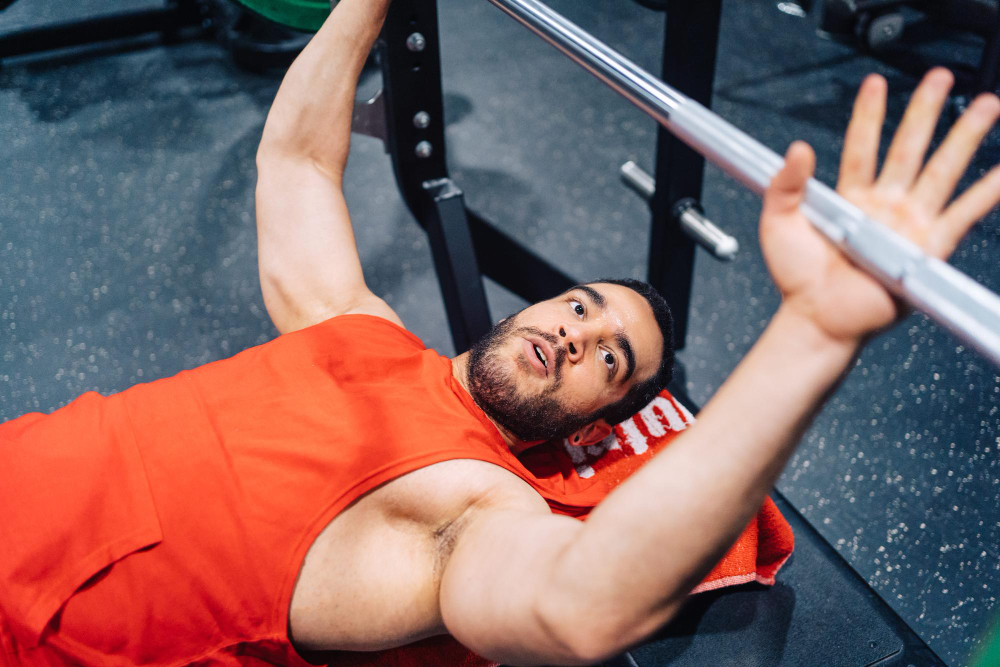
Bench Press as a Loaded and Horizontal Press
The load in the bench press is easy to control and increase. You can add weight in small, consistent steps, making progression simple to track. This is why bench press is so effective for building measurable strength over time.
Because your body is supported, the main challenge becomes moving the load. This allows you to focus on pressing strength and apply more force without worrying about controlling your position.
What Dips Work
Dips challenge several muscle groups at the same time.
- Lower chest: When performed with a slight forward lean, dips place more tension on the lower portion of the chest. This makes them useful for adding thickness and depth to the lower chest area.
- Triceps: The triceps play a major role in pressing your body back up. As fatigue sets in, triceps strength often becomes the limiting factor in a set of dips.
- Shoulder stability: Your shoulders have to stay controlled throughout the movement, especially at the bottom position. This helps develop stability around the shoulder joint when dips are performed with proper form and within a safe range of motion.
- Body control: Because you are moving your own bodyweight, dips require coordination and control. Your core and upper body have to work together to keep the movement smooth and stable.
What Bench Press Work
Bench press is one of the most effective exercises for building pressing strength and upper body size because it allows you to apply a heavy load.
- Same primary muscles as dips, with different loading: Bench press targets the chest, triceps, and shoulders, just like dips.
- Overall chest mass: Bench press does a great job of loading the entire chest. Because you can use a heavier weight, it creates strong tension across the chest muscles, which is key for building size over time.
- Triceps strength: The triceps are heavily involved, especially at the top of the lift. As the weight gets heavier, triceps strength becomes critical for locking out each rep.
- Upper body force production: Bench press trains your ability to produce force against a heavy load. This makes it one of the best movements for building raw pushing strength and tracking progress in a measurable way.
Which Is Better for Muscle Growth
Both dips and bench press can build muscle, but their effectiveness depends on how much resistance you can apply and how long you can continue progressing.
When are dips enough for muscle growth?
- Beginners with good shoulder mobility: Bodyweight dips provide enough resistance to stimulate chest and triceps growth early on.
- Bodyweight-focused training: Dips are a strong option when training without barbells or machines.
- Limited equipment setups: Parallel bars or rings are enough to load the upper body effectively.
- High-rep or controlled tempo training: Slower reps, pauses, and higher volume create strong muscle fatigue and tension.
Why does bench press build muscle faster?
- Progressive overload: Bench press allows consistent weight increases over time.
- Heavier loading: More external load creates higher mechanical tension, which drives growth.
- Long-term hypertrophy: Bench press is easier to scale as your body adapts.

Can You Do Both in One Workout
Yes, you can do both in the same workout, and for many people, this works very well when each exercise has a clear role.
Bench press should come first and be treated as the primary lift. This is where you focus on strength, heavier loading, and quality reps while you are still fresh. Fatigue management matters here, so rest properly between sets and keep your technique clean.
Dips work best as a secondary movement or finisher. After bench press, dips add extra chest and triceps volume without the need to chase heavy numbers. At this stage, control and muscle fatigue are more important than load.
What you want to avoid is maxing out both exercises in the same session. Pushing heavy bench press and then heavy weighted dips often leads to excessive fatigue and unnecessary shoulder stress.
Final Verdict
If strength is your main goal, bench press should be your priority. It allows heavier loading, clear progression, and long-term strength development that dips cannot match on their own.
If body weight exercises are the focus, dips deserve a bigger role. They challenge stability, coordination, and pressing endurance in a way bench press does not.
If chest development matters most, the smartest option is to use both intentionally.
FAQ
Are dips better than bench press for chest?
No, dips are not better, they are different. Bench press is better for building overall chest size and strength because it allows heavier and more consistent loading. Dips can be very effective for chest development, especially when done with good form.
Do dips build lower chest more?
Yes, dips tend to place more emphasis on the lower chest, especially when you lean slightly forward during the movement.
Can weighted dips replace bench press?
For most people, no. Weighted dips can build serious strength and muscle, but they are harder to progress long-term and place higher demands on the shoulders.
Are dips bad for shoulders?
Dips are not bad for shoulders by default, but they demand good mobility and control. Going too deep, losing shoulder position, or using excessive weight can cause discomfort. When done within a comfortable range of motion and with proper technique, dips can be safe and effective.