

In the floor press vs bench press debate, the floor press does look like a solid alternative at first glance. You’re still lying down, still pressing weight, and still training your chest, shoulders, and triceps. If you don’t have a bench, it feels like a smart workaround.
But here’s the truth. The floor press is not nearly as effective as the regular bench press for building your chest long-term. The reduced range of motion changes the stimulus completely, and that matters more than most people think. That said, the floor press isn’t useless. There are specific situations where it makes sense, and when used correctly
Key Takeaways
- Floor press shortens the range of motion by stopping the elbows on the floor
- Less range means less chest stretch and slower long-term chest growth
- Floor press shifts more work to the triceps and lockout
- Bench press trains the chest through a full range with continuous tension
- Floor press works as a temporary or accessory lift, not a long-term replacement
What is Floor Press
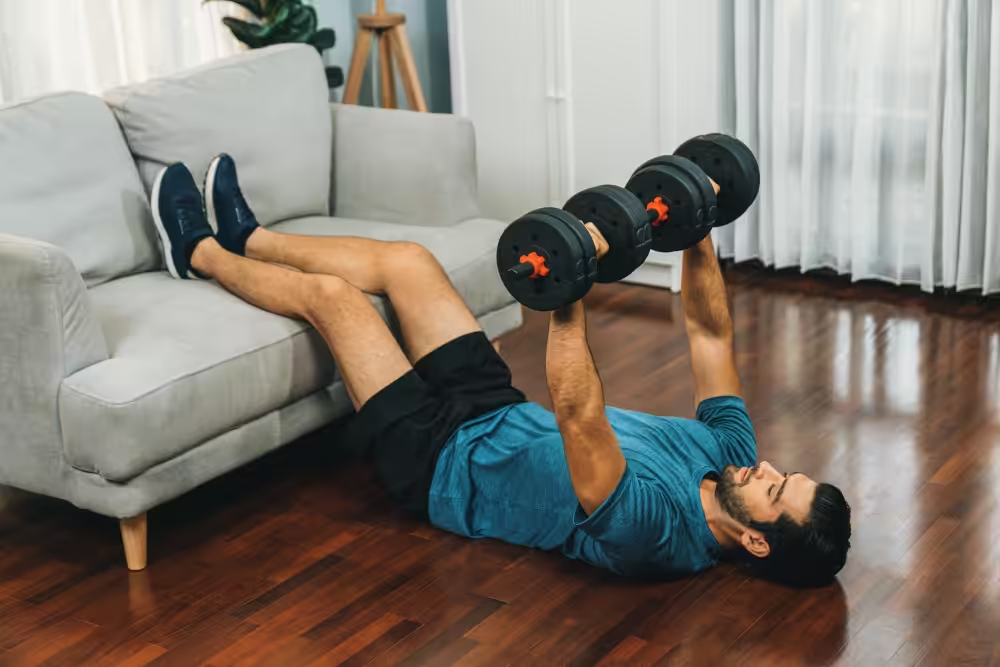
The floor press is a pressing movement where you lie flat on the floor instead of a bench and press the weight from a dead stop. Most people do it with a barbell or dumbbells, although kettlebells work too if that’s what you have.
Because the floor blocks your elbows from dropping below your torso, the movement automatically cuts the bottom portion of the press. That single detail is what makes the floor press feel very different from a bench press.
How to Perform the Floor Press
The setup is simple, but small details matter if you want it to actually do its job.
- Lie flat on the floor with your knees bent and feet planted.
- Position the barbell or dumbbells over your chest.
- Start with your elbows resting on the floor, forearms vertical.
- Brace your core and squeeze your glutes.
- Press the weight straight up until your arms are locked out.
- Lower under control until your elbows touch the floor again.
- Pause briefly, then press the next rep.
Who Usually Uses the Floor Press
Most people don’t choose the floor press because it’s better. They choose it because it’s available.
- You’ll usually see it used by:
- Home gym lifters who don’t have a bench.
- Garage lifters training with minimal equipment.
- Powerlifters working on lockout strength.
- Lifters with shoulder issues who want to limit depth.
What is Bench Press
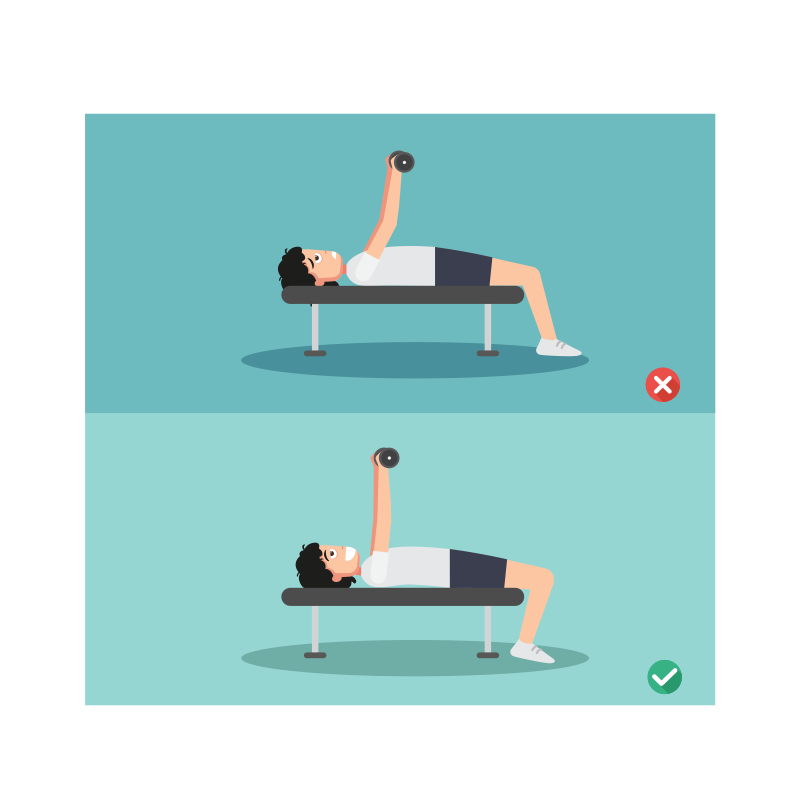
The bench press is a full-range pressing movement that allows your elbows to travel below your torso at the bottom of each rep. That extra depth is the biggest difference when you compare it to the floor press, and it completely changes the stimulus.
With a bench press, the chest gets loaded in a stretched position. This is where a lot of muscle growth happens. The floor press removes that stretch entirely, which is why it feels easier off the bottom but harder at lockout.
Here’s what the bench press does differently compared to the floor press:
- More range of motion, which means more total work per rep.
- Greater chest involvement, especially in the lower and mid range.
- Less reliance on pure lockout strength, since you’re not starting every rep from a dead stop.
- More shoulder contribution, which can be good or bad depending on technique and load.
Another key difference is tension. In the bench press, the muscles stay under tension the entire time. In the floor press, tension disappears briefly when your elbows hit the ground. That pause shifts the emphasis away from the chest and toward the triceps and upper range strength.
Read Next: Supine Press vs Bench Press
Floor Press vs Bench Press – Key Differences
| Aspect | Floor Press | Bench Press |
| Range of motion | Shortened. Elbows stop at the floor | Full range. Elbows go below the torso |
| Chest stretch | Minimal to none | Significant stretch under load |
| Muscle emphasis | Triceps and lockout strength | Chest, shoulders, and triceps |
| Bottom position | Dead stop on every rep | Continuous tension |
| Carryover to chest growth | Limited | High |
| Shoulder stress | Generally lower due to reduced depth | Higher if form and load are poor |
| Equipment needed | Barbell or dumbbells, no bench | Bench plus barbell or dumbbells |
Can You Build Muscles with the Floor Press?
Yes, you can build muscle with the floor press. But compared to the bench press, it’s a limited tool. It works, just not nearly as well if muscle growth is the goal.
What Muscles the Floor Press Targets
The floor press still trains upper body pushing muscles, but the emphasis shifts.
You’ll mainly hit:
- Triceps, especially the long head.
- Front delts, but to a smaller degree.
- Chest, mostly in the mid to upper portion of the press.
Because the elbows stop on the floor, the chest never gets loaded in its stretched position. That’s why many people feel the floor press more in their arms than their chest.
Why the Bench Press Builds Muscle Better
Here’s why bench press wins for hypertrophy:
- Longer range of motion, which increases total mechanical tension.
- Loaded stretch on the chest, a key driver of muscle growth.
- Continuous tension, with no rest at the bottom.
- Better leverage for progressive overload, especially long-term.
Muscles the Bench Press Targets
Primary muscles involved:
- Pectoralis major, both lower and mid fibers.
- Anterior deltoids, especially at the bottom.
- Triceps, assisting throughout the press.
Read Next: Bench Press vs Incline Press: Which One Should You Prioritize?
What is Better for Strenght?
If we’re talking pure, overall pressing strength, the bench press wins. No debate here.
Strength is specific. The bench press trains strength through a full range of motion, which is exactly how strength is tested, built, and transferred to other lifts. The floor press only makes you strong in the top half of the movement.
Another big issue is loading. With the floor press, handling heavy weight is awkward and often unsafe unless you have a rack or spotter. Getting a heavy bar into position from the floor is not realistic for most lifters, which automatically limits how much you can progress.
When Will I Reach the Limit with the Floor Press
This depends on who you are, how you train, and what you’re trying to get out of it. But for most people, the ceiling with the floor press shows up sooner than they expect.
If you’re new to lifting, the floor press can feel effective at first. Any pressing is a stimulus early on. But as your strength improves, progress usually slows down quickly.
Another factor is logistics. Without a rack or bench, adding weight safely becomes harder and harder. At some point, the limiting factor isn’t strength anymore, it’s setup.
That’s why the floor press works best as a temporary solution or an accessory lift. It can be useful, but it has a shelf life. And once you hit that limit, switching to a bench press or adding full range pressing becomes the obvious next step.
When You Can Use the Floor Press as an Alternative
The floor press has its place, just not as a long-term replacement. These are the situations where it actually makes sense.
- You don’t have access to a bench press: Training at home or in a basic setup? The floor press lets you keep a pressing movement in your routine instead of skipping it completely.
- You want to stay active: If you’re traveling, easing back into training, or just trying to stay consistent, the floor press gets the job done without overthinking things.
- You’re just starting out: It’s easier to control, limits depth, and usually feels more joint-friendly. That makes it a decent starting point before moving on to a full range bench press.
FAQ
Is the floor press safer for the shoulders than the bench press?
For many people, yes. The floor limits depth, which reduces stress on the shoulders at the bottom. That said, a well-performed bench press with good form is not unsafe. The floor press just removes the riskiest portion of the movement.
Should beginners start with the floor press or the bench press?
If a bench is available, beginners should start with the bench press. It teaches proper pressing mechanics through a full range. The floor press works as a temporary option when equipment or confidence is limited.
Can you do a floor press with dumbbells or kettlebells?
Yes. Dumbbells and kettlebells often feel more natural and are easier to set up, especially at home. The movement stays the same, elbows to the floor, controlled press up.
Is it normal to feel the floor press more in the triceps than the chest?
Yes. The reduced range removes the deep chest stretch, so the triceps take over. Feeling it more in your arms is expected.