In the dumbbell vs barbell bench press comparison, many people focus on which exercise is better for building strength or which one targets the chest muscles more effectively. But should the real question be which one feels better for you? Let’s take a closer look at whether there are meaningful differences between these two exercises.
Key Takeaways
- There is no “better” bench press, only the one that fits your goal and your body better.
- Barbells win for pure strength and heavy loading, dumbbells win for range of motion and chest engagement.
- If bench pressing hurts your shoulders, dumbbells are usually the smarter long-term choice.
- You can build an impressive chest and plenty of strength without ever touching a barbell.
- Using both dumbbells and barbells in your training is often the best option.
Dumbbell vs Barbell Bench Press – Key Differences in Simple Terms
For a long time, the difference felt pretty clear.
If you wanted muscle mass and serious strength, you used a barbell.
If you wanted better definition and fewer muscle imbalances, you picked dumbbells.
That way of thinking is not completely wrong, but it leaves out a lot of important details. Both exercises are effective, and both come with their own advantages. Here is what actually separates them.
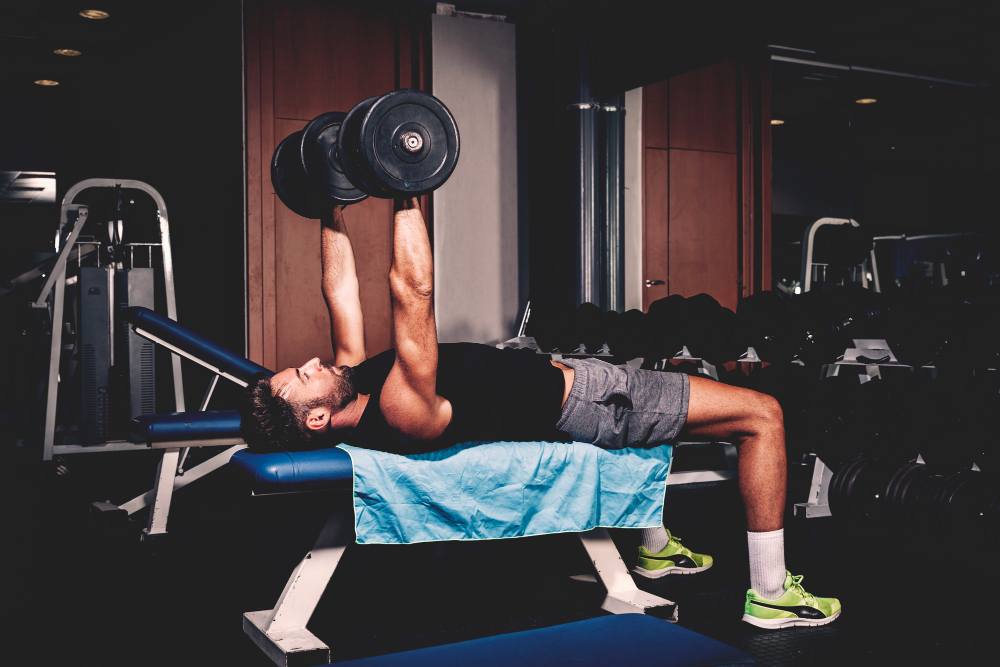
Dumbbells Offer a Greater Range of Motion
With the dumbbell bench press, you can lower the weights deeper than you can with a barbell. The barbell stops as soon as it touches your chest, and the movement ends there.
Dumbbells do not have that limitation. You can let your arms travel lower, which creates a longer range of motion. That extra depth often leads to better muscle activation and a longer time under tension, both of which could support muscle growth.
The Barbell Bench Press Is More Technical
The barbell bench press requires more attention to detail. Small things matter, like shoulder positioning, foot placement, and how well you brace your core before each rep.
Dumbbells are usually easier to get comfortable with. That does not mean you just lie down and start pressing. It means most people can find a natural movement path faster and feel the target muscles working without overthinking every part of the lift.
Difference in Muscle Activation
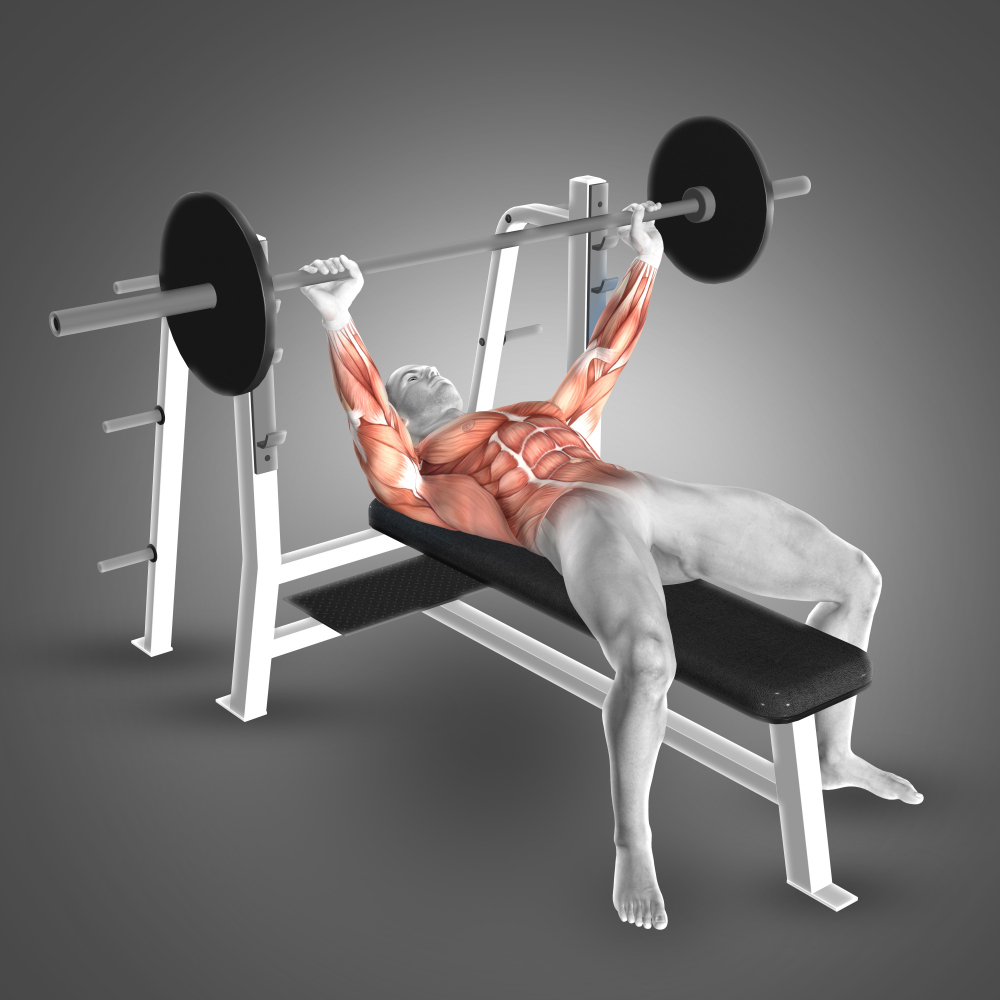
Both the barbell and dumbbell bench press primarily target the same muscle groups:
- Chest
- Triceps
- Shoulders
The difference lies in how much emphasis each exercise places on those muscles.
The barbell bench press often places more stress on the triceps, especially when heavier weights are involved. Dumbbells tend to keep more tension on the chest throughout the movement, which is why many people feel their chest working harder when using dumbbells.
When to Choose Dumbbell or Barbell Bench Press
The choice between the dumbbell and barbell bench press usually comes down to what you want to achieve.
Here is how we look at it.
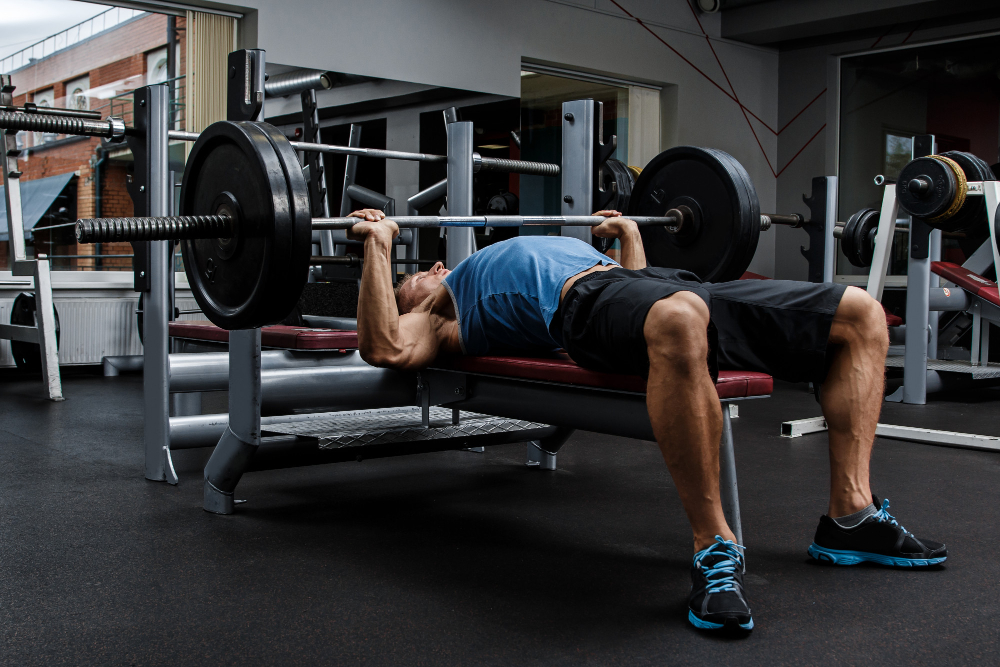
Powerlifting and Strength Building
If you are into powerlifting or focused on building maximum strength, whether for your job, personal goals, or athletic performance, the barbell bench press should be your main option.
That does not mean dumbbells are off limits. As long as you are lifting challenging weights, you can still build strength with dumbbells. Rotating them into your program from time to time can also give your shoulders and joints a break, especially since heavy barbell benching tends to place more stress on those areas.
Muscle Building and Hypertrophy
If your main goal is building a bigger, wider chest, dumbbells are more than enough. You do not need to go anywhere near a barbell if you do not want to.
That said, there is no reason to avoid the barbell completely. Switching things up once in a while can make your training feel fresh, help break through plateaus, or allow you to focus more on strength when your routine starts to feel repetitive.
Beginners and Solo Lifters
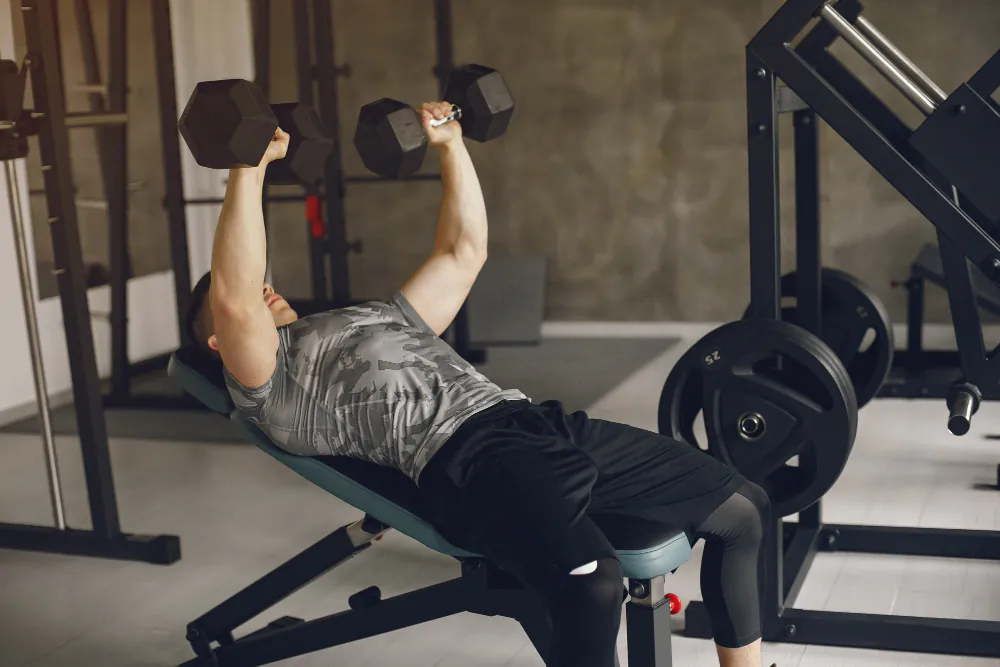
For most people, the dumbbell bench press feels more natural and easier to control than the barbell. That makes it a great choice if you are just starting out.
It is also worth thinking about whether you have someone to spot you. Beginners, and even experienced lifters, sometimes overestimate their strength or simply have an off day. Missing a rep with a barbell can quickly become a problem without a spotter.
Dumbbells are generally easier to manage near failure. You can let them down and reset. There is still a risk of injury if you are careless, but it is usually lower than failing a barbell bench press alone.
Time-Effective Full-Body Workouts
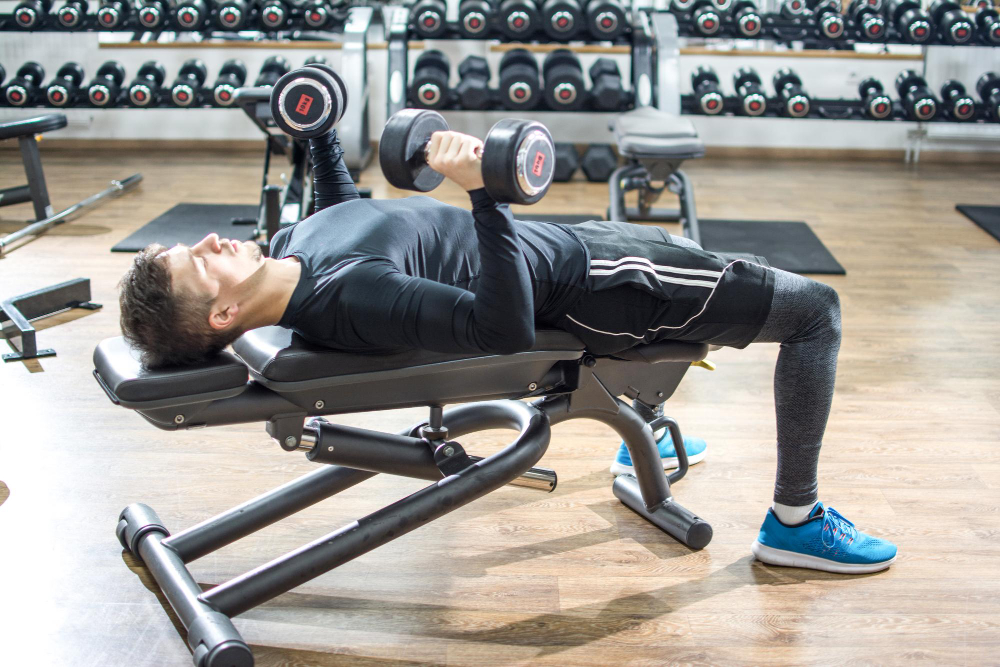
If you are short on time and trying to get more done with fewer exercises, we favor the barbell bench press because it tends to involve the triceps more than the dumbbell variation.
That said, being short on time is not a reason to rush this lift. The bench press always requires a proper warm-up and solid technique, no matter how often you perform it.
How You Feel During the Lift
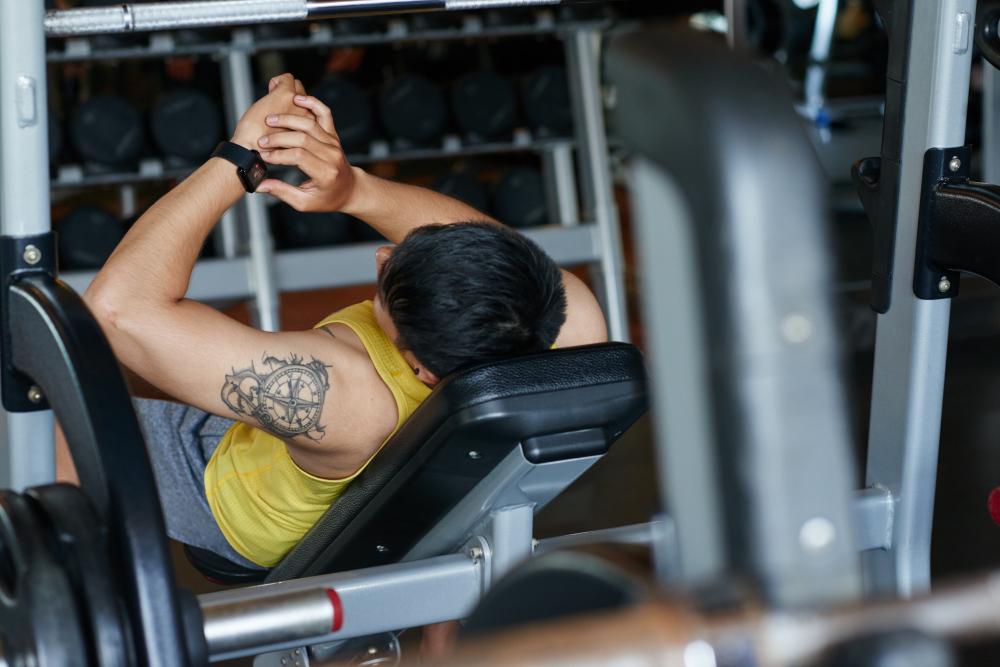
This point matters more than many people realize. Some lifters feel awkward during the barbell bench press. That can be due to previous shoulder injuries, muscle imbalances, or simply how their body is built.
If you feel noticeably better pressing dumbbells, the choice is simple. You can still build an impressive physique and develop strength without forcing yourself into a movement that does not feel comfortable.
Benefits of Dumbbell Bench Press
Here is why dumbbells are a favorite for so many lifters.
- Greater range of motion
- Easier to learn
- No spotter required
- Excellent for chest development
- More comfortable on the shoulders
- Helpful for muscle imbalances
Cons of Dumbbell Bench Press
Despite the benefits, dumbbells do have some limitations.
- Less effective for maximal strength
- Limited loading potential
- Setup becomes challenging at heavier weights
Barbell Bench Press Benefits
Many lifters swear by the barbell bench press, and there is a good reason for that.
- Excellent for building functional strength
- Ideal for athletes and powerlifters
- Effective for chest development
- Greater triceps involvement
- Allows heavier loading
Cons of Barbell Bench Press
Despite its popularity, the barbell bench press is not ideal for everyone.
- More technical and often requires a spotter
- Can feel awkward or uncomfortable for some lifters
Can You Do Both in One Workout?
Yes, you can absolutely include both the barbell and dumbbell bench press in the same workout.
The key is not treating them the same way. If you start with the barbell bench press, it makes sense to follow it up with a dumbbell variation, such as the incline dumbbell bench press, to improve overall muscle engagement.
You can also reverse the order if you want to change things up. Just keep in mind that the first exercise is usually your main lift, the one where you focus most on load and performance. Because of that, the second exercise should be done with slightly lighter weights.
That does not mean cutting the weight in half. For example, if you normally use 30-pound dumbbells for incline presses, dropping to 25 pounds is often enough after heavy barbell work.
In the end, pay attention to how fatigued you feel after the first exercise and adjust accordingly. Your performance will tell you what weight makes the most sense on that day.
Barbell Bench Press Form Tips
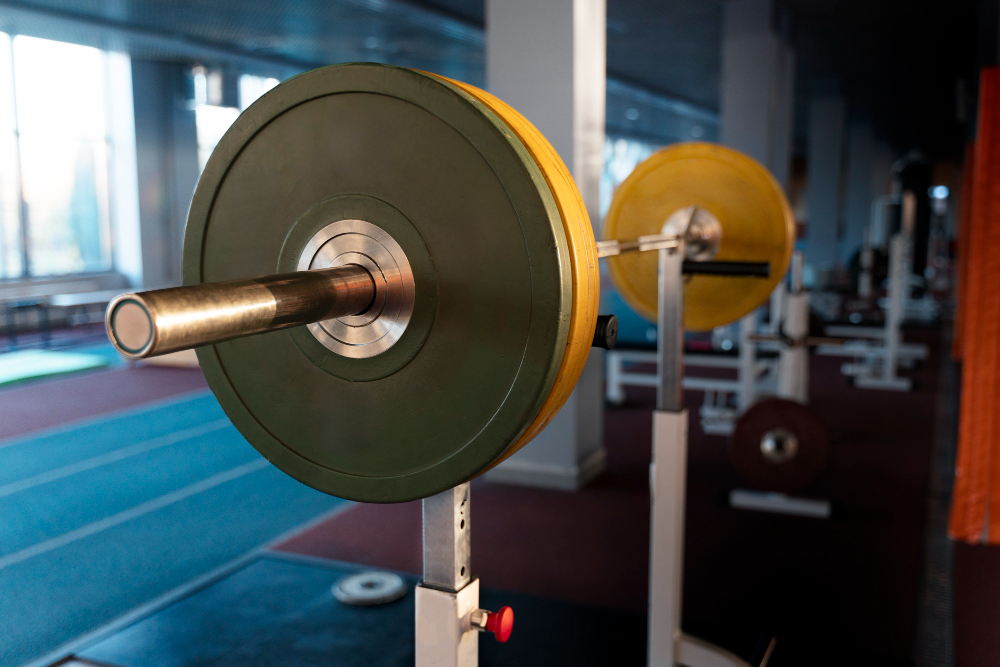
The barbell bench press looks simple, but small details make a big difference, both for performance and safety.
- Set your feet firmly on the floor: Your feet should stay planted throughout the lift. This helps with stability and allows you to generate more power.
- Retract and stabilize your shoulders: Pull your shoulder blades slightly back and down before unracking the bar. This creates a more stable pressing base and helps protect your shoulders.
- Maintain a tight core: Brace your core as if you are about to take a hit. A tight core keeps your body stable and improves force transfer during the press.
- Press in a consistent bar path: The bar should travel in a smooth and repeatable path. Don’t let your elbows flare excessively or let the bar drift too far toward your face or stomach.
Dumbbell Bench Press Form Tips
The dumbbell bench press allows more freedom of movement, but that freedom still needs control.
- Use a natural pressing path: Let your arms move in a way that feels comfortable for your shoulders. Do not force a fixed path like you would with a barbell.
- Lower the dumbbells with control: Avoid dropping too quickly at the bottom. A slow, controlled descent helps maintain tension on the chest.
- Keep your shoulders stable: Even though dumbbells allow more movement, your shoulders should stay controlled and not roll forward at the bottom of the lift.
- Focus on balance and symmetry: Make sure both arms are doing equal work.
FAQ
Which one is safer?
In most cases, the dumbbell bench press is the safer option, especially if you train alone. Dumbbells give you more freedom to adjust your arm path, which can feel better on the shoulders. We should mention that the barbell bench press is not unsafe by default, but it does carry more risk when lifting heavy without a spotter. A fixed bar path and heavier loads mean mistakes are less forgiving.
Can I do a dumbbell bench press instead of a barbell bench press?
Yes, you can. For general muscle building and a strong, well-developed chest, dumbbells can fully replace the barbell bench press. The only time the barbell becomes necessary is if your goal is powerlifting or pushing maximal strength numbers. Outside of that, dumbbells are more than enough for most lifters.
Is the barbell bench press better for building strength?
Yes, when we talk about pure strength, the barbell bench press has the edge. It allows you to move heavier loads and progress more consistently over time.
Is it normal to lift much less weight with dumbbells than with a barbell?
Yes, this is completely normal. With dumbbells, each arm works on its own, and you do not get the added stability of a barbell. Because of that, the total weight you lift will usually be lower. This does not mean you are weaker or training less effectively.