
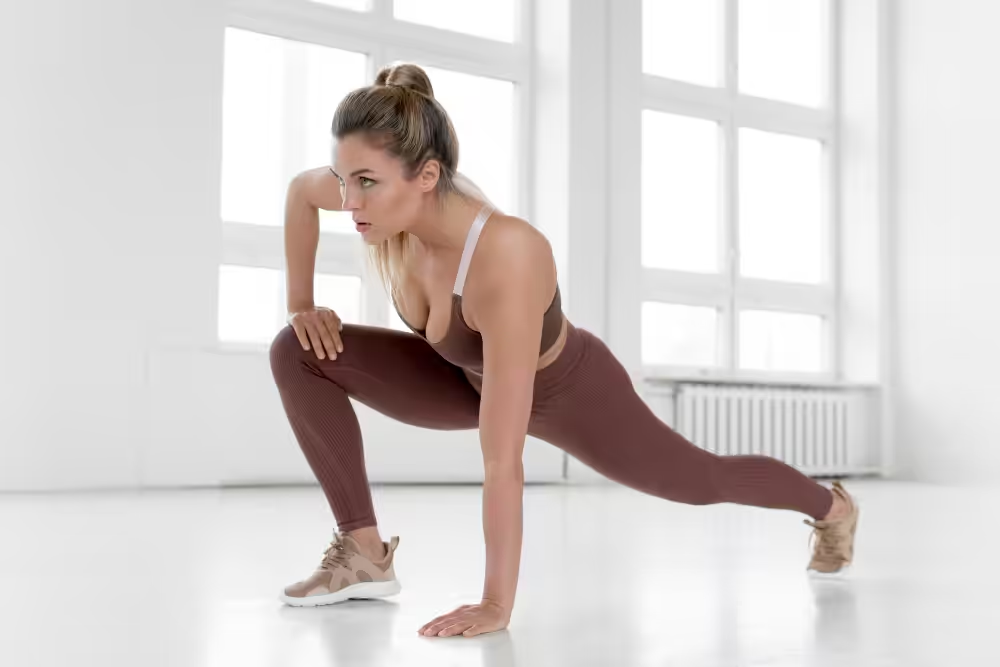
This 30-minute mobility workout offers full-body engagement and is ideal for people who spend long hours sitting, want to improve their posture, move more efficiently, or support long-term joint health.
Key Takeaways
- You don’t need to complete the full 30-minute routine every time, even 10 to 15 minutes can be beneficial when performed consistently.
- Most people should aim to do mobility training at least 3 times per week, while daily sessions are also appropriate.
- Mobility training can make everyday activities like bending, reaching, lifting, and climbing stairs feel easier.
- Regular mobility work can improve body control, stability, and movement efficiency during workouts and sports.
30-Minute Mobility Workout
This full-body 30-minute mobility workout targets key areas that are often overlooked during regular workouts. The routine can help improve posture, flexibility, joint health, movement quality, and overall mobility.
Warm-Up
| Exercise | Time | Instructions |
| Cat-Cow Stretch | 1 minute | Start on your hands and knees. Alternate between rounding and arching your back in a slow, controlled motion. |
| Dynamic Hip Flexor Stretch | 1 minute | Step one foot forward into a lunge position. Gently push your hips forward until you feel a stretch in the front of the hip. Switch sides after 30 seconds. |
| Arm Circles | 1 minute | Extend your arms out to the sides at shoulder height. Perform small controlled circles for 30 seconds, then reverse the direction for the remaining 30 seconds. |
| Leg Swings | 1 minute | Hold onto a wall or sturdy object for balance. Swing one leg forward and backward in a controlled motion. Switch legs after 30 seconds. |
| Torso Twists | 1 minute | Stand with your feet shoulder-width apart and rotate your torso from side to side. Keep your hips stable and move through a comfortable range of motion. |
List of Exercises
Glute Activation
| Exercise | Sets / Reps | Rest | Instructions |
| Clamshells | 2 sets of 15 reps per side | No rest between exercises | Lie on your side with your knees bent and feet together. Keep your feet touching as you lift your top knee, then slowly return to the starting position. |
| Bridges | 2 sets of 15 reps | No rest between exercises | Lie on your back with your knees bent and feet flat on the floor. Lift your hips toward the ceiling, squeeze your glutes at the top, then lower with control. |
Rest for 1 minute before moving to the next section.
Core Stability
| Exercise | Sets / Reps | Rest | Instructions |
| Bird Dogs | 2 sets of 15 reps per side | No rest between exercises | Start on your hands and knees. Extend one arm and the opposite leg until both are straight, then return to the starting position and alternate sides. |
| Dead Bugs | 2 sets of 15 reps per side | No rest between exercises | Lie on your back with your arms pointing toward the ceiling and your knees bent at 90 degrees. Lower one arm and the opposite leg toward the floor, then return to the starting position. |
Rest for 1 minute before moving to the next section.
Shoulder Stability
| Exercise | Sets / Reps | Rest | Instructions |
| Scapular Push-Ups | 2 sets of 15 reps | No rest between exercises | Start in a push-up position with your elbows locked. Lower your chest slightly by bringing your shoulder blades together, then push the floor away and spread your shoulder blades apart. |
| Wall Angels | 2 sets of 15 reps | No rest between exercises | Stand with your back against a wall and your arms bent at 90 degrees. Slide your arms upward and downward while keeping them in contact with the wall. |
Rest for 1 minute before moving to the next section.
Hip Mobility
| Exercise | Sets / Reps | Rest | Instructions |
| Hip Flexor Stretch | 2 sets of 30 seconds per side | No rest between exercises | Step into a lunge position and gently drive your hips forward until you feel a stretch through the front of the hip. |
| Seated Forward Fold | 2 sets of 30 seconds | No rest between exercises | Sit with your legs extended straight in front of you. Reach toward your toes while keeping your movements gentle and controlled. |
Rest for 1 minute before moving to the next section.
Cool Down
| Exercise | Time | Instructions |
| Figure Four Stretch | 1 minute per side | Lie on your back and cross one ankle over the opposite knee. Pull the supporting leg toward your chest until you feel a stretch through the glutes and hips. |
| Child’s Pose | 1 minute | Kneel on the floor, sit back toward your heels, and stretch your arms forward. Relax into the position while breathing slowly. |
| Deep Breathing | 1 minute | Sit or lie comfortably and focus on slow, controlled breaths. Inhale through your nose and exhale fully to help your body relax and recover. |
Do You Need 30 Minutes for This Workout?
No, you don’t need to complete the full 30-minute workout every time. If you don’t have time, you can shorten the routine and focus on the areas that feel the most stiff or restricted.
If you can dedicate the full 30 minutes, that’s great. But when it comes to mobility training, consistency is more important than duration. A shorter routine performed several times per week will often provide better results than one longer session once a week.
The goal is to make mobility work a regular part of your routine. Even 10 to 15 minutes can help you to see the benefits of mobility after a few weeks of consistency.
How Often to Do a Mobility Workout?
You should aim to do this mobility workout at least 3 times per week. If you already combine mobility training with weight lifting, running, sports, or other forms of exercise, 3 sessions per week are enough to see improvements in flexibility, movement quality, and joint mobility.
If mobility training is your primary and only form of exercise, you can perform this workout every day. The routine is low-impact and does not place a significant amount of stress on your muscles or joints, which makes it suitable for frequent practice.
If you’re new to mobility training, don’t be surprised if you experience mild muscle soreness after your first few sessions. This is normal, especially if certain muscles and joints haven’t been moving through their full range of motion regularly. If soreness becomes uncomfortable, reduce the number of sessions during your first week and gradually increase the frequency as your body adapts.
Benefits of Mobility Workout
The biggest benefit of mobility training is that it can make both exercise and everyday activities feel easier. While many people focus on strength or cardio, mobility often determines how comfortably and efficiently you can move throughout the day.
Some of the most noticeable benefits include:
- Less stiffness when getting up in the morning or after sitting for long periods.
- More comfortable movement during everyday tasks and recreational activities.
- Better control and stability during workouts and sports.
- Easier bending, reaching, squatting, and lifting.
- Improved posture and body awareness throughout the day.
- Greater confidence when performing physical activities that require balance and coordination.
Who Should Do a Mobility Workout?
This mobility workout can benefit almost anyone, but it may be especially helpful for:
- People who spend most of their day sitting at a desk or driving.
- Weight lifters who want to move more comfortably during exercises like squats, lunges, and overhead presses.
- Runners and athletes looking to maintain efficient movement patterns.
- Older adults who want to stay active and make everyday tasks feel easier.
- Anyone who feels stiff, tight, or restricted during daily activities.
Why Are Mobility Exercises Important?
Mobility often declines gradually, which is why many people don’t notice a problem until everyday movements start feeling more difficult. Long hours of sitting, limited physical activity, and aging can all contribute to reduced mobility over time.
Maintaining good mobility can help you stay active and move more comfortably as you get older. This is important, given reports that approximately 12% of American adults have a mobility issue that affects their ability to walk safely and climb stairs.
FAQ
Can mobility workouts replace stretching?
For most people, mobility workouts can provide many of the same benefits as stretching. But stretching primarily focuses on increasing flexibility, while mobility training combines flexibility with strength and control.
Is this workout suitable for beginners?
Yes, this workout is beginner-friendly and uses simple exercises. Move at a comfortable pace and reduce the range of motion if any exercise feels too challenging.
Should I do mobility before or after a workout?
This type of full-body mobility workout is best done on rest days. If you are doing a shorter version, you can do it after a workout as a cool-down session.