
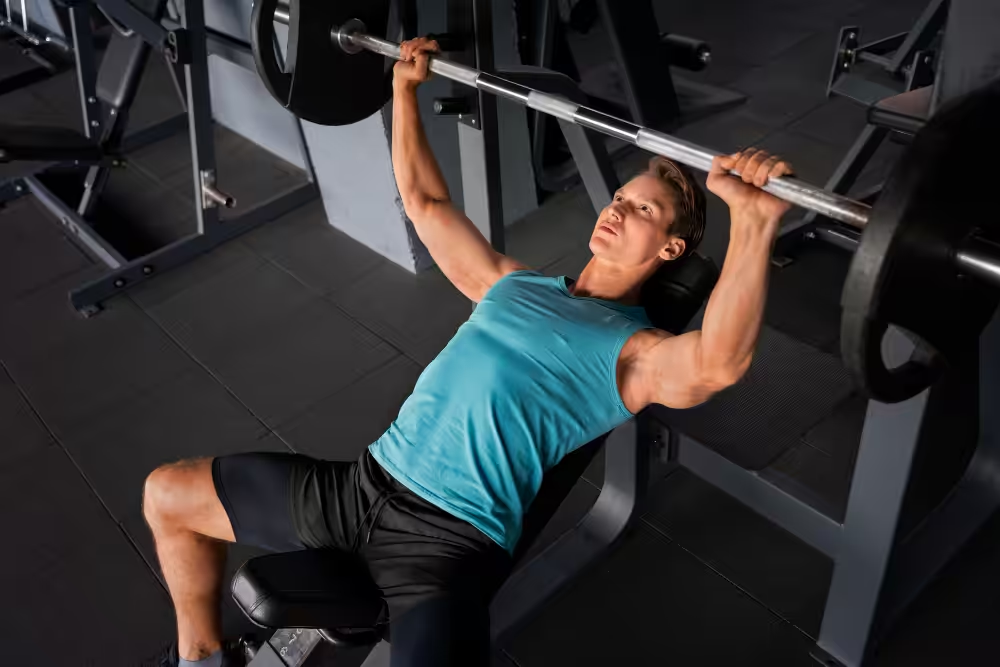
If you’ve ever wondered what the difference is between the bench press and incline press, it all comes down to angle and emphasis. A small change in bench position shifts how the chest, shoulders, and triceps share the work. That shift affects how much weight you can lift, which part of the chest gets more attention, and how each lift fits into your program.
Key Takeaways
- Flat bench builds the most chest size and strength
- The incline press is weaker because the angle puts you at a disadvantage
- Incline exists to target the upper chest, not to replace the flat bench
- Most people overuse the incline and underload the flat bench
- Flat first, incline second
What Flat and Incline Press Have in Common
Both lifts share several key similarities:
- Both are horizontal pressing movements: In each exercise, you press weight away from your body in a controlled path.
- Both train the same primary muscles: The chest is the main driver, with the shoulders and triceps assisting every rep.
- Both can build muscle and strength: When load, volume, and recovery are managed properly, either lift can produce solid results.
Because of these similarities, the choice between the flat and incline press is not about which one works and which one doesn’t. It’s about how each one emphasizes the muscles and where it fits best in your training program.
Bench Press vs Incline Press – The Key Difference
The key difference between the bench press and the incline press comes down to bench angle and load potential.
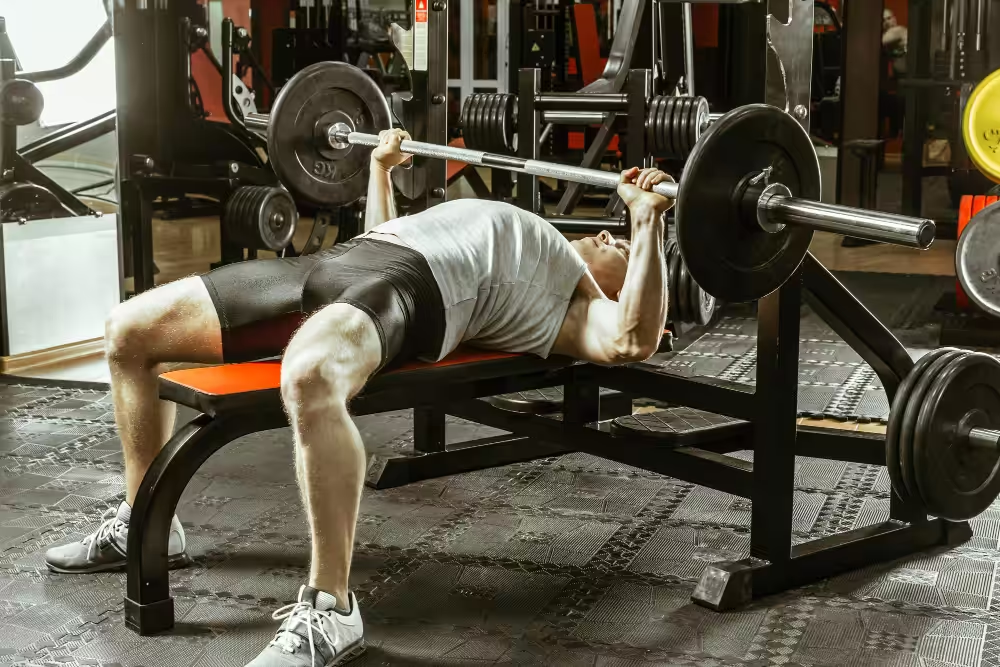
With the flat bench press, your body is positioned parallel to the floor. This allows you to use more weight and place the majority of the load directly on the chest.
With the incline press, the bench is angled upward, usually between 15 and 30 degrees. That slight incline shifts more of the work toward the upper chest and the front of the shoulders. The trade-off is that you cannot lift as much weight, and the movement feels more demanding even with lighter loads.
Read Next: Supine Press vs Bench Press
How to Do the Flat Bench Press
- Lie flat on the bench with your eyes under the bar
- Plant your feet firmly on the floor for stability
- Keep your upper back tight and chest slightly lifted
- Grip the bar slightly wider than shoulder width
- Lower the bar to the middle of your chest with control
- Keep elbows at a comfortable angle, not flared out
- Press the bar back up until arms are fully extended
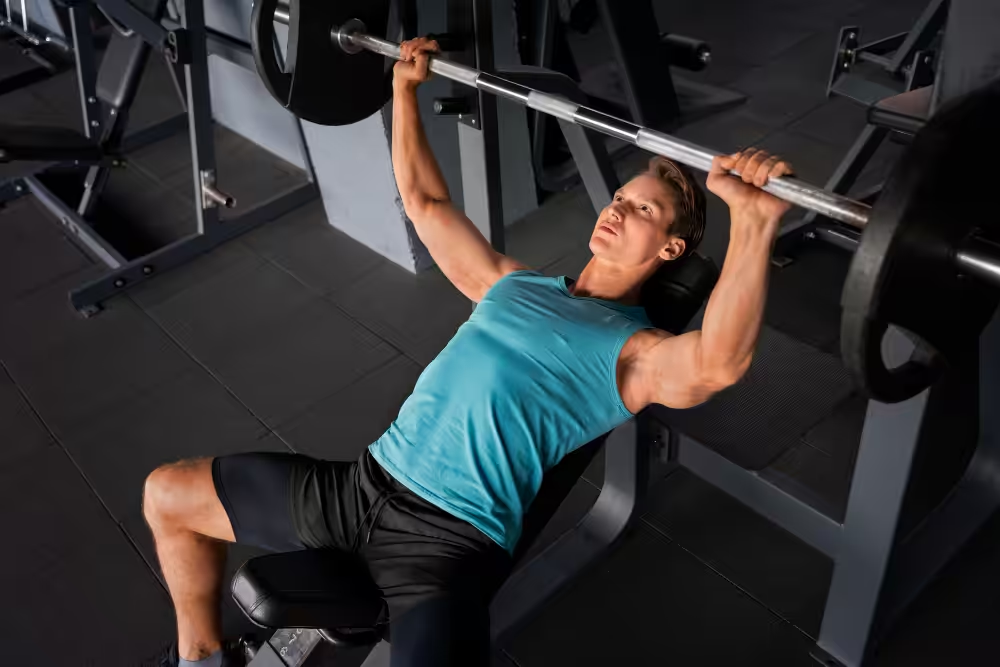
How to Do Incline Press
- Set the bench to a 15-30 degree incline
- Sit back with your feet firmly planted on the floor
- Grip the bar slightly wider than shoulder width
- Lower the bar toward the upper chest, just below the collarbone
- Keep elbows slightly tucked for better shoulder comfort
- Press the bar up smoothly without locking out aggressively
- Use lighter weight than flat bench
What Flat Bench Does Best
The flat bench press is the foundation of chest training for a reason. It allows you to press the most weight, which makes it one of the best exercises for building overall chest size and strength.
Because the bench is flat, your body is in a strong and stable position. This lets you focus on progressive overload, adding weight over time in a clear and measurable way. If your goal is to get stronger, flat bench does that better than any other chest press variation.
Flat bench also does a great job of training the entire chest, not just one specific area. While it may not isolate the upper chest as much as an incline press, it still contributes to upper chest development by building overall mass and strength.
If you want one pressing exercise to anchor your chest workouts, flat bench is the most reliable choice.
When to Do Incline Press
It’s a good choice when your upper chest is lagging and flat bench alone is not giving you the look you want. The incline angle shifts more work toward the upper portion of the chest and helps balance chest development over time.
Incline press also makes sense if flat bench bothers your shoulders. Some lifters feel more comfortable pressing at a slight incline, especially when managing joint stress or training around minor discomfort.
Tips for Better Lifts on Incline Press
Small setup and execution mistakes are what usually turn this exercise into a shoulder-dominant press instead of an upper-chest builder. Here is how to get the most out of this exercise:
- Set the bench at the right angle: The ideal incline range is 15 to 30 degrees. Above 30 degrees, the shoulders take over quickly. A simple test is this: if you feel more burn in your front delts than your chest during the set, the bench is too steep.
- Use your flat bench numbers as a reference: A good starting point is using 70 to 85 percent of your flat bench weight.
- Pay attention to where the bar touches: Lower the bar to the upper chest, just below the collarbone. If the bar drifts toward your neck, the angle is too steep. If it drops to mid-chest, you’re turning the lift back into a flat bench press.
- Check elbow and wrist position: Your forearms should stay mostly vertical at the bottom of the rep. Elbows flared too wide stress the shoulders. Elbows tucked too much turn the movement into a triceps-heavy press. A slight angle outward is ideal.
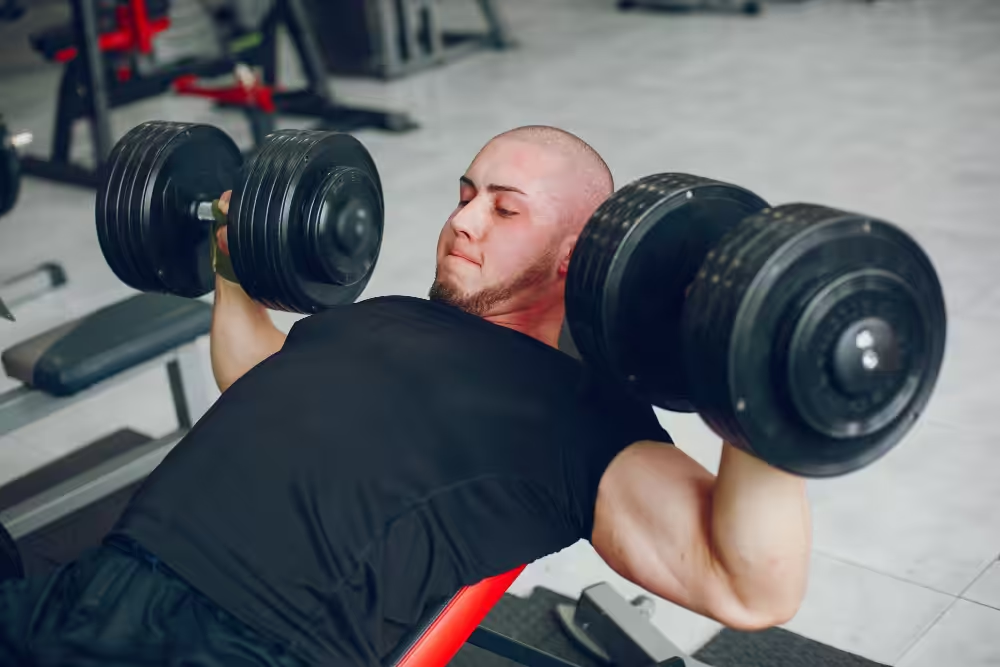
Can You Do Both in One Workout?
Yes, you can, and in many cases it makes sense.
The most effective setup is to start with flat bench press. This is where you move the most weight and focus on strength or overall chest loading. Do it while you’re fresh, with full control and proper rest between sets.
Incline press works best after flat bench, as a secondary lift. At that point, the goal is not to chase numbers but to add upper-chest volume with cleaner reps and lighter loads. This keeps the shoulders happier and improves chest balance without interfering with strength progress.
FAQ
Is an incline better than a flat bench?
No, incline is not better; it’s more specific. Flat bench is better for overall chest strength and size. An incline bench is better for targeting the upper chest and adding balance. For most people, the flat bench should be the priority, with the incline used as support.
What is the incline bench press good for?
Incline bench press is best for upper chest development and improving pressing balance. It shifts more work toward the upper chest and front shoulders, which helps fill out areas that the flat bench does not emphasize as much.
Does the flat bench work the upper chest?
Yes, it does. Flat bench works the entire chest, including the upper portion. However, it does not target the upper chest as directly as the incline press. Flat bench builds mass, incline press adds focus.
Why is the incline bench press harder?
Incline bench press feels harder because you’re working at a less efficient angle. You have less leverage, the shoulders assist more, and you cannot use as much weight as on a flat bench. That’s normal and expected, not a sign of weakness.