When people compare deadlifts and squats, the conversation almost always focuses on the difference between the two. But the real question is, should you even do them at all?
Both exercises have developed a serious reputation over the years. Some label them as risky or even dangerous. Others will tell you that these are an absolute must-do. So which side is right? That is exactly what we are going to break down in this guide. We will talk about whether these exercises are actually necessary, why they sometimes get a bad reputation, and how to decide if they belong in your routine.
Key Takeaways
- Squats target the quadriceps, while deadlifts target the posterior chain
- Both exercises build strength and power by training multiple muscle groups at the same time
- Neither exercise is required if you just want to build muscle and look fit
- Both exercises are highly recommended if you want to build functional strength and improve athletic performance
- Avoid doing both in the same workout session. Split them across different days or choose only one.
Deadlift vs Squat – What Is the Difference?
| Aspect | Deadlift | Squat |
| Primary movement pattern | Hip hinge movement | Knee-dominant movement |
| Starting position | Bar starts on the floor | Bar starts on your upper back or shoulders |
| Main muscles worked | Glutes, hamstrings, lower back | Quadriceps and glutes |
| Secondary muscles | Upper back, lats, core, forearms | Hamstrings, calves, core |
| Range of motion | Weight moves from floor to standing | Lower body moves down and up |
| Core demand | Very high – for spinal stability | High – for torso stability |
| Grip strength | Required | Not required |
| Difficulty for beginners | Moderate to high | Moderate |
Muscle Worked – Breakdown
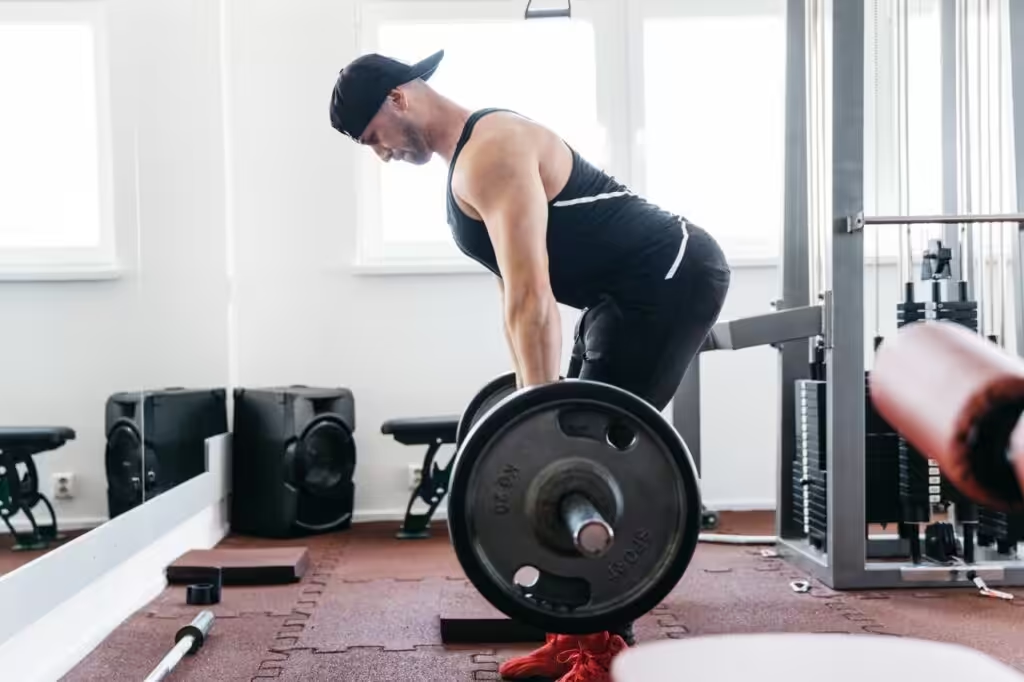
The deadlift shifts the emphasis toward the posterior chain, the group of muscles located on the back side of your body.
Primary muscles involved:
- Glutes: The main force behind hip extension as you lift the bar to a standing position.
- Hamstrings: Work together with the glutes to drive the hips forward.
- Lower back: Helps maintain spinal stability while supporting the load.
Supporting muscles:
- Upper back and lats: Keep the bar close to your body and maintain posture during the lift.
- Core: Stabilizes the spine and prevents unwanted movement.
- Forearms and grip muscles: Hold the bar throughout the lift.
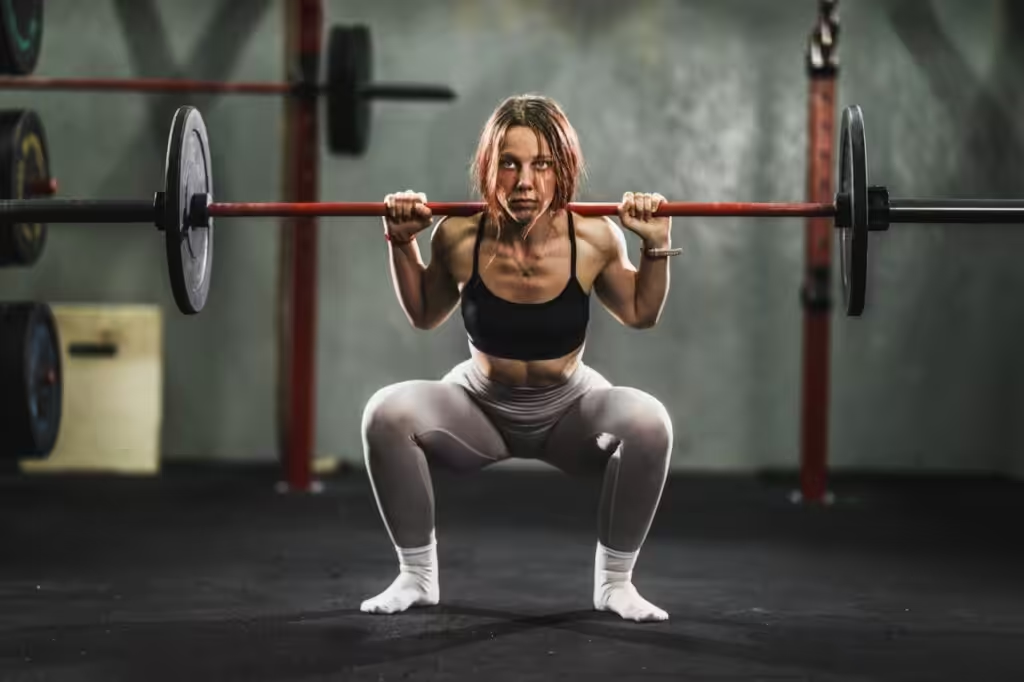
The squat is primarily a lower-body builder, with a strong focus on knee extension and leg strength.
Primary muscles involved:
- Quadriceps: The main driver of the squat. These muscles extend the knees and handle most of the work when pushing up from the bottom position.
- Glutes: Help extend the hips as you stand up, especially when coming out of deeper squats.
Supporting muscles:
- Hamstrings: Assist with hip stability and control during the descent.
- Calves: Help stabilize the ankle and maintain balance during the movement.
- Core: Stabilizes your torso and keeps the spine supported throughout the lift.
Deadlifting vs Squatting – Movement Difference
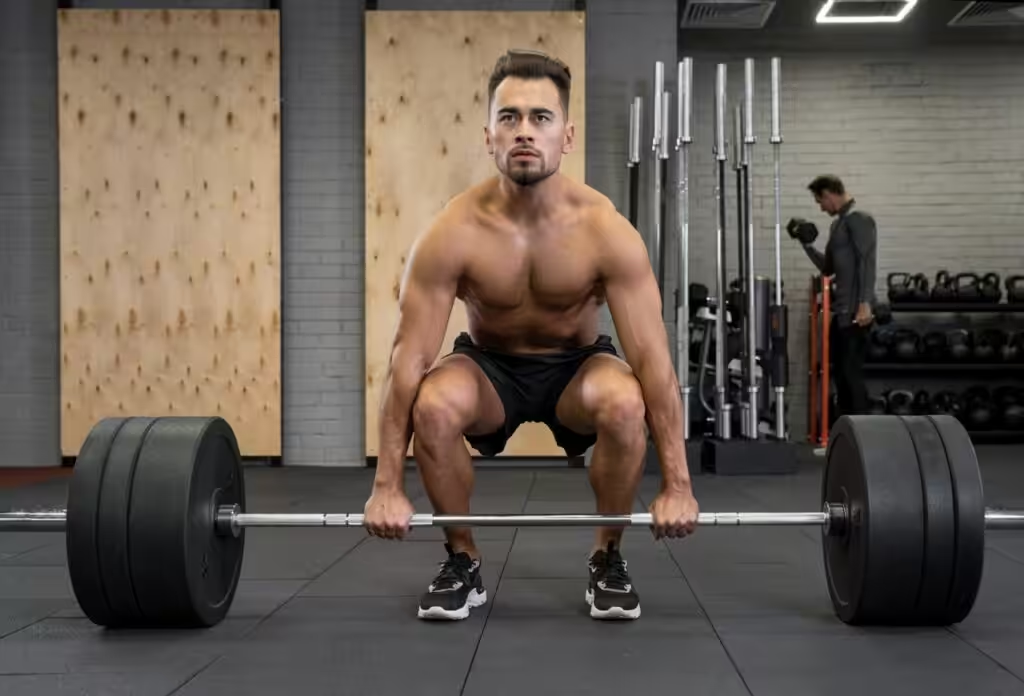
The deadlift uses a hip hinge. Instead of lowering the weight from your back, you lift it from the floor.
- The bar starts on the floor in front of your shins
- You hinge at the hips while keeping your back neutral
- Your hips move backward while your torso leans forward slightly
- Your knees bend only slightly compared to a squat
- You lift the bar by driving the hips forward and extending the body
- The lift finishes when your hips and knees are fully extended
The squat is built around bending the knees and hips together while keeping the chest fairly upright.
- The bar starts on your upper back or shoulders
- You lower your body by bending the knees and pushing the hips slightly backward
- Your torso stays relatively upright during the descent
- Your knees travel forward while your hips move down
- From the bottom position, you drive through your feet to extend the knees and hips
- The movement finishes when you return to a full standing position
Read Next: Front Squat vs Back Squat: Which Should You Be Doing?
Should You Do Deadlifts and Squats?
Instead of debating which exercise is better, what really matters is whether you should include them in your routine at all. Yes, deadlifts and squats are powerful exercises, but they are not mandatory for every single fitness goal.
When Deadlifts and Squats Are Not Necessary?
Deadlifts and squats are excellent exercises, but they are not required if your main goal is simply to build muscle and look fit.
If you are training mainly for aesthetics and you are not particularly focused on developing maximum strength or power, you can absolutely build an impressive physique using machines and other controlled exercises.
In that case, you can rely on movements like:
- Leg presses
- Hack squats
- Leg extensions
- Hamstring curls
- Cable and machine-based exercises
So if your goal is to look good, add muscle, and stay in shape, deadlifts and squats are helpful, but they are not strictly required.
When Deadlifts and Squats Are Highly Recommended?
Deadlifts and squats are highly recommended for people who want to develop functional strength, improve athletic performance, and build a body that can handle demanding physical tasks.
These exercises are especially useful if you want to:
- Improve overall strength
- Develop functional movement patterns
- Increase athletic capability
- Support sports that involve lifting, jumping, or explosive movement
- Train the body to work as a coordinated system
Because these lifts involve multiple joints and large muscle groups working together, they build strength in a way that machines often cannot fully replicate.
The Most Important Part
If you decide to include squats and deadlifts in your routine, the most important thing you can do is focus on technique.
Here is what a good approach would look like:
- Spend time learning the movement before adding heavy weight
- Progress gradually as your technique improves
- Avoid chasing numbers purely for the sake of lifting heavier
It is completely fine to challenge yourself and push your body. That is how strength improves. But you should never drift into ego lifting, where the weight becomes more important than proper form.
Which One You Should Choose?
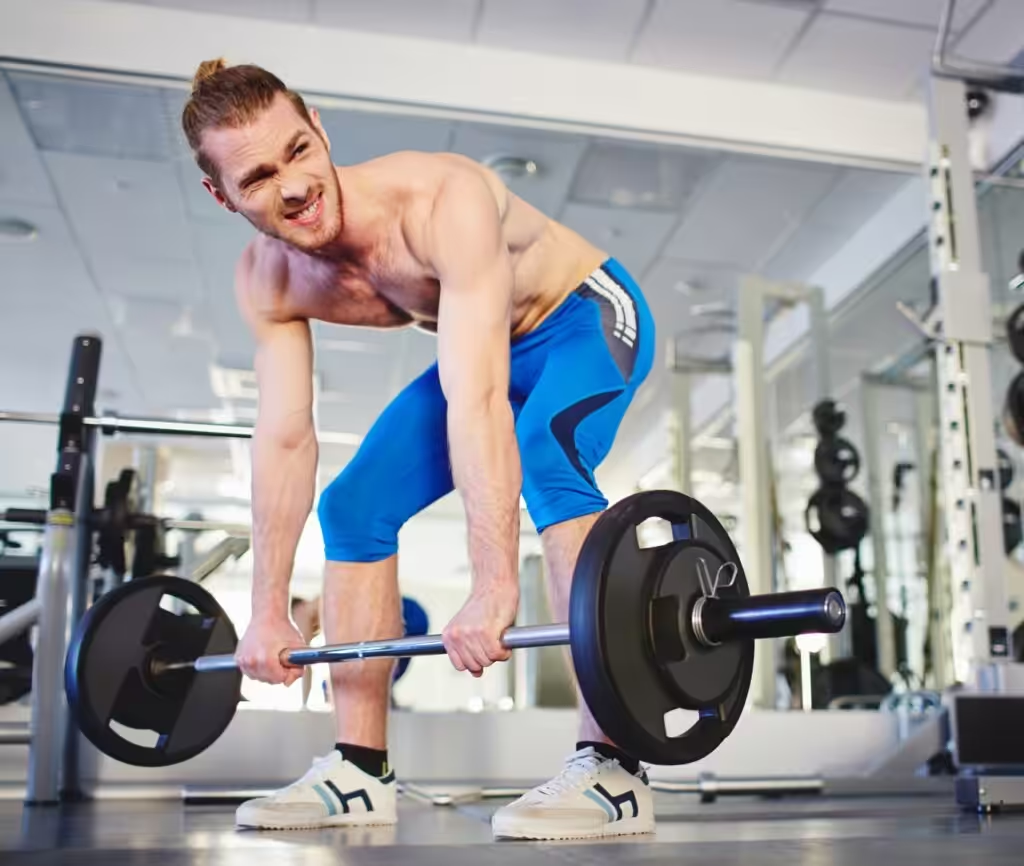
Deadlifts and squats usually should not be performed in the same workout. Both exercises are heavy compound movements that demand a lot of energy, muscle recruitment, and nervous system effort.
Doing both can leave you extremely fatigued, which often leads to poor performance later in the workout. In some cases, it can also increase the risk of injury because your form starts to break down as your body gets tired.
For that reason, most training programs follow one of two approaches.
Option 1: Split Them on Different Training Days
A common strategy is to place these exercises on different workout days based on the muscles they emphasize.
- Squats are typically programmed on leg day because they heavily target the quadriceps and overall leg development.
- Deadlifts are often placed on either leg day or back day because they strongly activate the posterior chain.
Even though deadlifts engage the back muscles, they do not fully train all areas of the back. The movement focuses heavily on the glutes, hamstrings, and lower back, while muscles like the lats, rhomboids, and mid back are only assisting.
Because of this, some people prefer not to do deadlifts on back day. The exercise consumes a lot of energy, which can make it harder to perform other important back movements like:
- Lat pulldowns
- Bent over rows
- Seated cable rows
- Pull ups
Option 2: Focus on Just One of Them
Instead of trying to include both exercises, you can choose the one that benefits your goals the most.
When deadlifts may be the better choice:
- Developing posterior chain strength
- Improving pulling power and lifting strength
- Strengthening the glutes and hamstrings
- Training movements that involve lifting objects from the ground
- Sports that require strong hip extension, such as sprinting or jumping
For example, athletes involved in sports like football, wrestling, or track often benefit greatly from deadlifts because of how much they develop hip power and total body strength.
When squats may be the better choice:
- Building strong and well-developed legs
- Improving knee-dominant strength
- Increasing lower-body muscle size
- Supporting movements like jumping, climbing, or pushing upward
- Developing balanced lower-body strength for general fitness
For example, someone whose main focus is leg development or bodybuilding style training may benefit more from consistently performing squats as their primary lower-body movement.
Trap Bar Deadlift vs Squat – Different Variation?
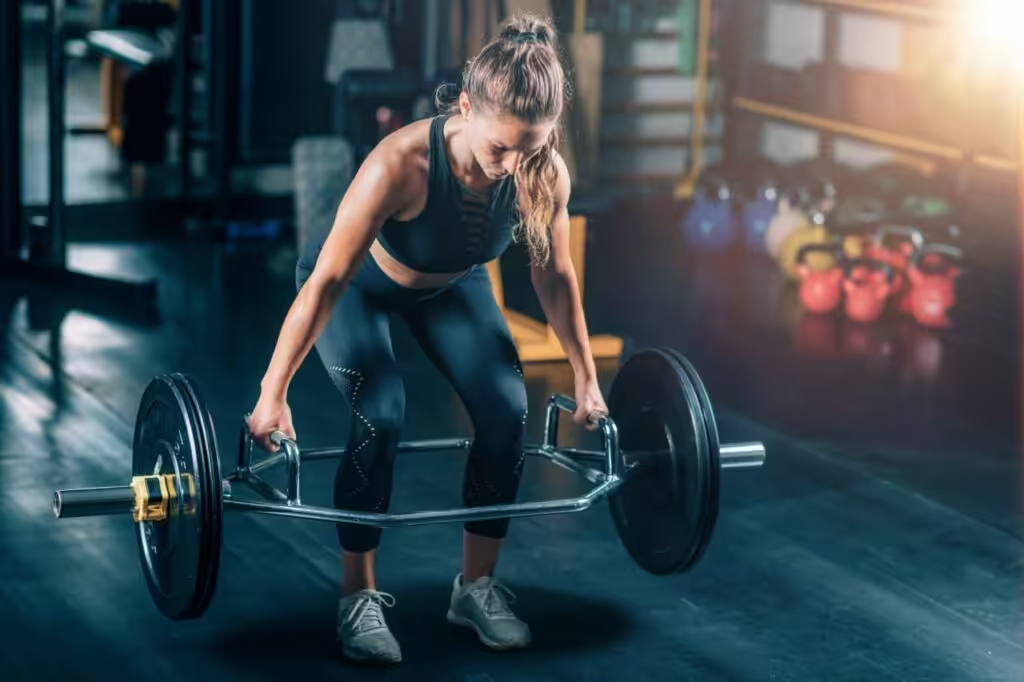
A trap bar is a hexagon-shaped bar that allows you to stand inside it while holding the handles at your sides. This setup changes the position of the weight relative to your body.
With a trap bar deadlift, the weight is centered around you instead of being in front of you. Because of this:
- Your torso stays more upright
- Your knees bend slightly more
- Your hips do not travel as far backward
- The movement feels more balanced
Many people find the trap bar deadlift easier than the barbell variation. If you are a beginner or have never really done deadlifts, then the trap bar is a great starting point.
Can You Do Squats with a Trap Bar?
Yes, you technically can perform a squat using a trap bar. Is it something people usually do? No. But if you are working out at home and don’t have a squat rack, this can be a really decent alternative.
In this variation, you hold the trap bar handles at your sides while squatting down instead of lifting the weight from the floor. This movement keeps the load centered around your body and can feel more comfortable for people who struggle with barbell positioning on their back.
Trap Bar Deadlift vs Barbell Squat
The trap bar deadlift works many of the same muscles as a regular deadlift. The main difference is that it usually feels easier, and it is easier to maintain proper form.
When compared to the barbell squat, the differences remain similar to those between the barbell deadlift and squat.
Useful Resources for Home Gyms
If you are training at home, you may not always have access to a barbell, squat rack, or full gym setup. The good news is that both squats and deadlifts can still be performed effectively using other types of equipment.
Dumbbells Deadlift vs Squat
To perform a dumbbell deadlift:
- Hold a dumbbell in each hand at your sides
- Stand with your feet about hip-width apart
- Keep your back neutral and chest slightly lifted
- Push your hips backward while lowering the dumbbells toward the floor
- Lower until you feel tension in your hamstrings
- Drive your hips forward and return to a standing position
To perform a dumbbell squat:
- Hold a dumbbell in each hand at your sides, or hold one dumbbell in front of your chest
- Stand with your feet about shoulder-width apart
- Lower your body by bending your knees and pushing your hips slightly backward
- Keep your chest upright and core engaged
- Lower until your thighs are roughly parallel to the floor
- Push through your feet to stand back up
While dumbbells are convenient, they come with some limitations:
- The weight is often limited compared to barbells
- Grip strength can become the limiting factor in deadlifts
- Holding dumbbells for squats may become uncomfortable as the weight increases
- Progressive overload can be harder if you only have a few dumbbells available
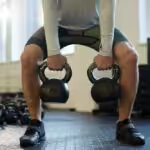
Kettlebell Deadlift vs Squat
To perform a kettlebell deadlift:
- Place the kettlebell on the floor between your feet
- Stand with your feet slightly wider than hip width
- Hinge at the hips while keeping your back neutral
- Grab the kettlebell handle with both hands
- Drive through your feet and extend your hips to lift the weight
- Return the kettlebell to the floor with controlled movement
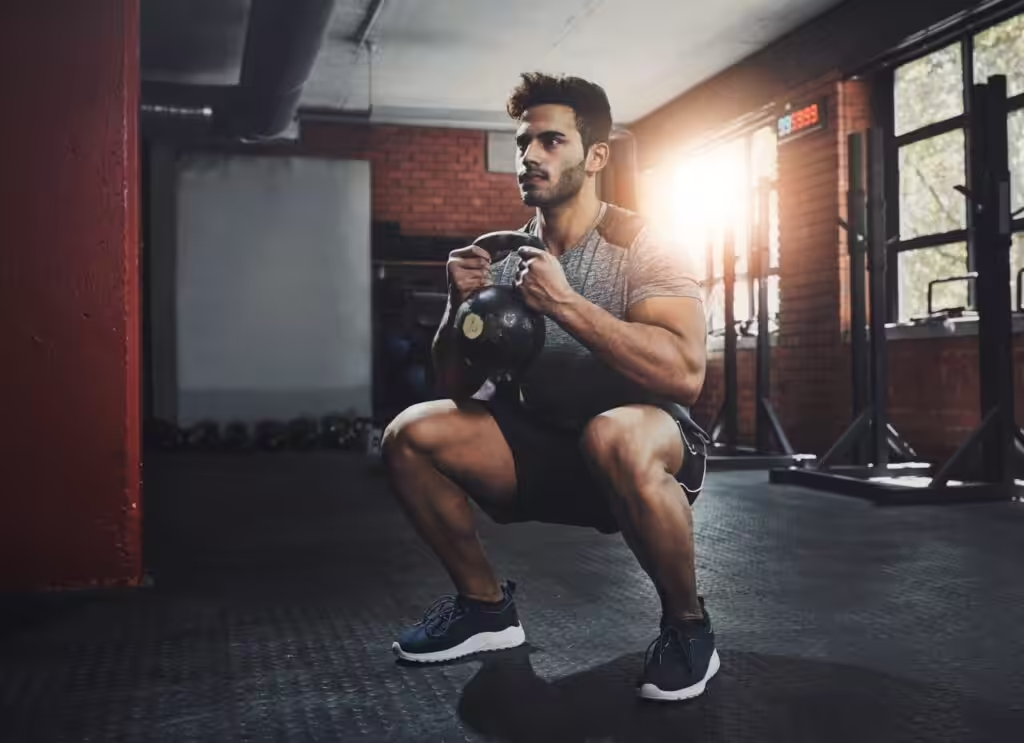
To perform a kettlebell squat:
- Hold the kettlebell with both hands in front of your chest
- Keep your elbows pointing downward and close to your body
- Lower into a squat while keeping your chest upright
- Bend your knees and hips at the same time
- Lower until your thighs reach parallel or slightly below
- Push through your feet to stand back up
Kettlebells are effective, but also come with a few drawbacks:
- Heavier kettlebells may not always be available for progressive strength training
- The goblet squat position can become uncomfortable as the weight increases
- Grip fatigue can limit kettlebell deadlifts during higher repetitions
- Training with very heavy loads is harder compared to barbell exercises
FAQ
Are squats safer than deadlifts?
Neither exercise is inherently dangerous when performed with proper form and appropriate weight. Injuries usually occur due to poor technique, ego lifting, or fatigue.
Can beginners start with deadlifts and squats?
Yes, beginners can absolutely start with both exercises. However, it is better to start with really light weights or with lighter variations, such as goblet squats or trap bar deadlifts to learn proper form before progressing to heavier barbell lifts.
Which exercise is better for building leg muscle mass?
Squats typically place greater emphasis on the quadriceps, which makes them more effective for developing larger thighs.
Are deadlifts bad for your lower back?
No, deadlifts can strengthen the lower back when performed correctly. Problems usually occur when people round their spine or try to lift a weight that is too heavy at the moment.
Should athletes prioritize squats or deadlifts?
It depends on the sport. Squats often help with jumping, acceleration, and leg drive, while deadlifts can improve hip power and pulling strength. Many athletes include both exercises.
What is the difference between a squat and a front squat?
In a front squat, the bar sits on the front of your shoulders, forcing a more upright torso and placing greater emphasis on the quadriceps and core stability. Regular squat targets the glutes and hamstrings, along with the quadriceps.
What is the difference between deadlift and front squat?
Deadlifts primarily target the glutes, hamstrings, and lower back. A front squat places more emphasis on the quadriceps while also requiring strong core and upper body stabilization.