The front squat is only a supportive exercise. The back squat is overrated. Do this if your knees hurt. Skip that if you want to avoid back pain. No wonder there’s so much confusion. But when you actually put them side by side, things are pretty simple. That’s exactly why we created this front squat vs back squat comparison, so you can stop second-guessing your workouts.
Key Takeaways
- Front squats emphasize quads and core, while back squats target glutes, hips, and allow heavier loads
- Front squats are generally harder due to balance, mobility, and core demands
- Front squats can reduce lower back stress and are often preferred if you have back discomfort
- Back squats are better for overall strength and building total lower-body power
- Both exercises have value, and combining them is often the best approach for balanced results
What Is a Front Squat?
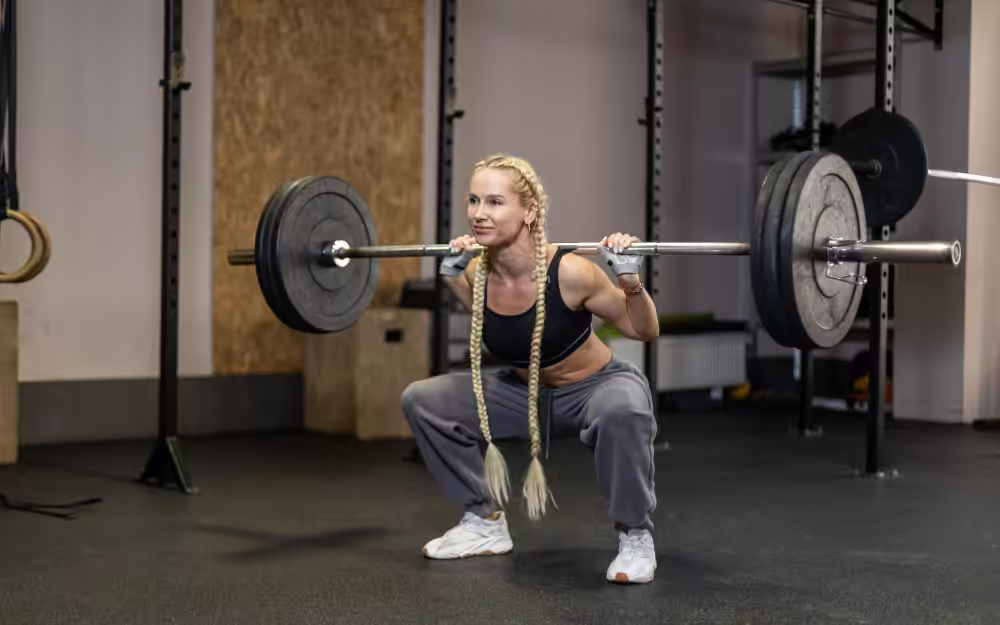
A front squat is a variation of the squat where the barbell is placed on the front of your shoulders, instead of across your upper back. This position forces you to stay more upright.
Here are tips for proper front squat form:
- Set the bar on your shoulders in the front rack position and keep your elbows high
- Step back and place your feet shoulder-width apart
- Brace your core and keep your chest up
- Lower down by bending your knees and hips together
- Keep your elbows up and heels flat as you descend
- Push through your heels to stand back up
- Reset at the top and repeat
Front Squat Bar Placement
This is usually the most challenging part of mastering this exercise. The trick with the front squat placement is to position the bar on your shoulders instead of holding the whole weight in your arms.
The front squat grip is the front rack, which is different from the grip that you are going to use for the back squat.
If you feel this position is hard on your wrist, or you can’t find a comfortable position, you can try the arms-crossed front squat.
Instead of placing your fingers under the bar, you cross your arms over it and rest your hands on top, keeping the bar pinned against your shoulders. The bar still sits on your delts, your arms just help keep it in place.
What Is a Back Squat?
A back squat is the most common squat variation where the barbell rests on your upper back, not your shoulders.
This position allows you to lift heavier weights and shift more load to your glutes and hips, while still training your quads and core.
Here are tips for proper back squat form:
- Place the bar on your upper back, across your traps
- Grip the bar firmly and pull your shoulder blades tight
- Step back and set your feet shoulder-width apart
- Brace your core and keep your chest up
- Lower down by pushing your hips back and bending your knees
- Keep your heels flat and knees tracking over your toes
- Drive through your heels to stand back up
- Reset at the top and repeat
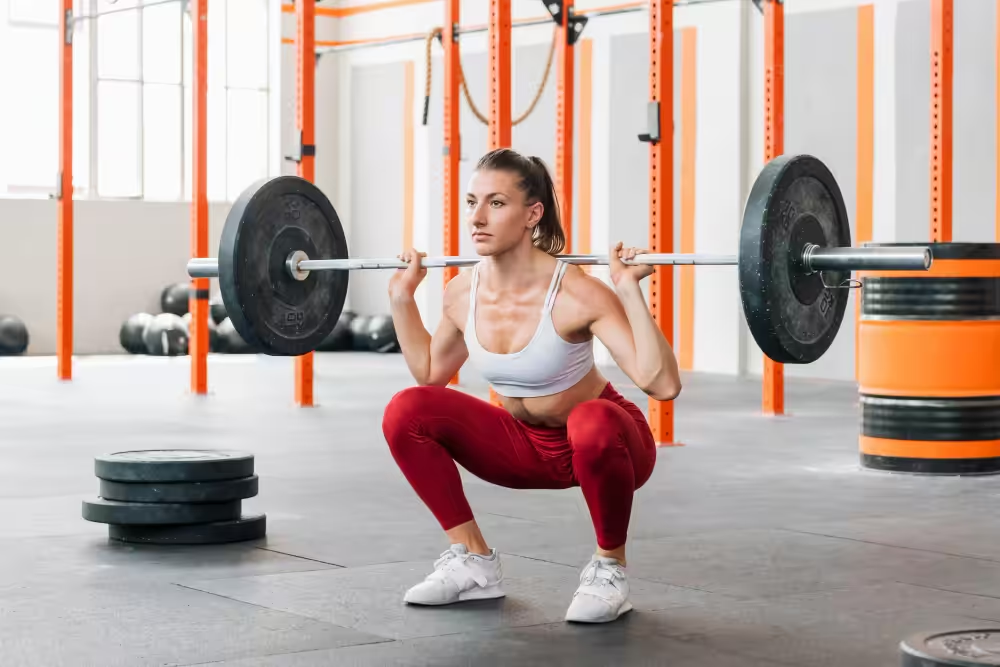
Front Squat vs Back Squat – Key Differences
The difference between front and back squat comes down to bar position, muscle focus, and how your body moves during the lift.
| Aspect | Front Squat | Back Squat |
| Bar Position | Front of shoulders (front rack) | Upper back (traps) |
| Torso Angle | More upright | Slight forward lean |
| Primary Muscles | Quads and core | Glutes, hips, and quads |
| Weight Used | Typically lighter | Typically heavier |
| Core Demand | Higher | Moderate |
| Knee Stress | Slightly higher | More balanced |
| Lower Back Load | Lower | Higher |
| Mobility Required | More (wrists, shoulders) | Less |
Benefits of Front Squats vs Back Squats
Both variations are great and bring a lot of benefits. Here are the most noticeable differences:
Front Squat Benefits
- Greater quad activation compared to back squats
- Reduces lower back stress by keeping your torso more upright
- Builds strong core stability due to the front-loaded position
- Encourages better squat form and depth
- Useful if you want to train legs without heavy spinal loading
Back Squat Benefits
- Allows you to lift more weight, which makes it ideal for strength development
- Targets glutes and hips more effectively
- Builds overall lower-body power
- Transfers well to sports and heavy compound training
- Requires less mobility compared to front squats
Are Front Squats Better for Quads?
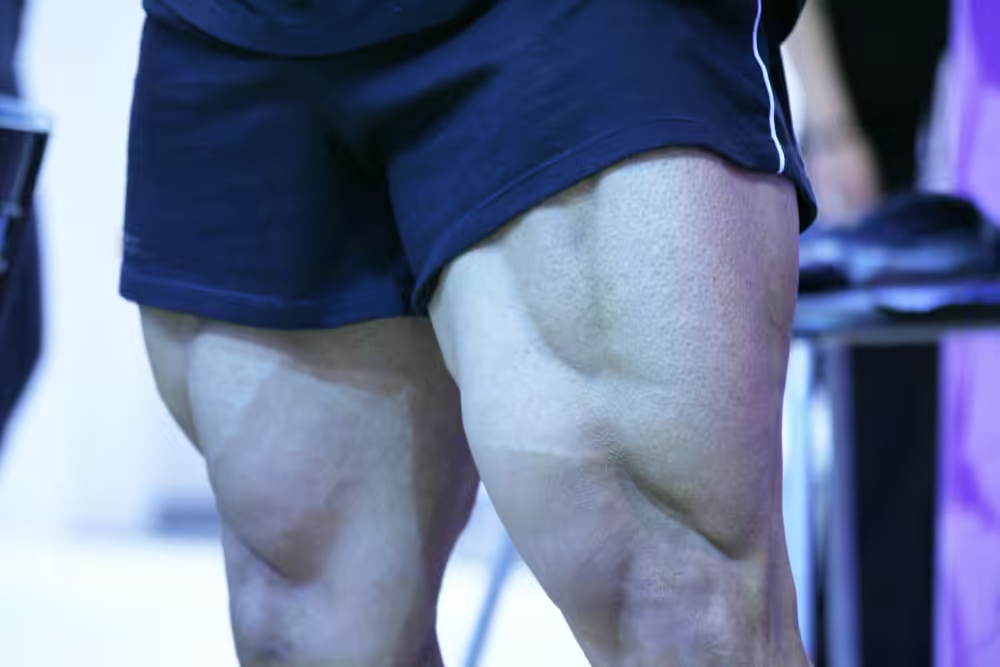
Yes, most people notice better quad development with front squats. Because the bar sits in front of your body, your knees travel further forward, and your torso stays more upright. This shifts more of the load directly onto your quads instead of your hips.
However, you need to master proper form to achieve maximum quad activation. If you’re doing reps with poor form, it doesn’t make much difference whether it’s a front or back squat.
Are Front Squats Better for the Lower Back?
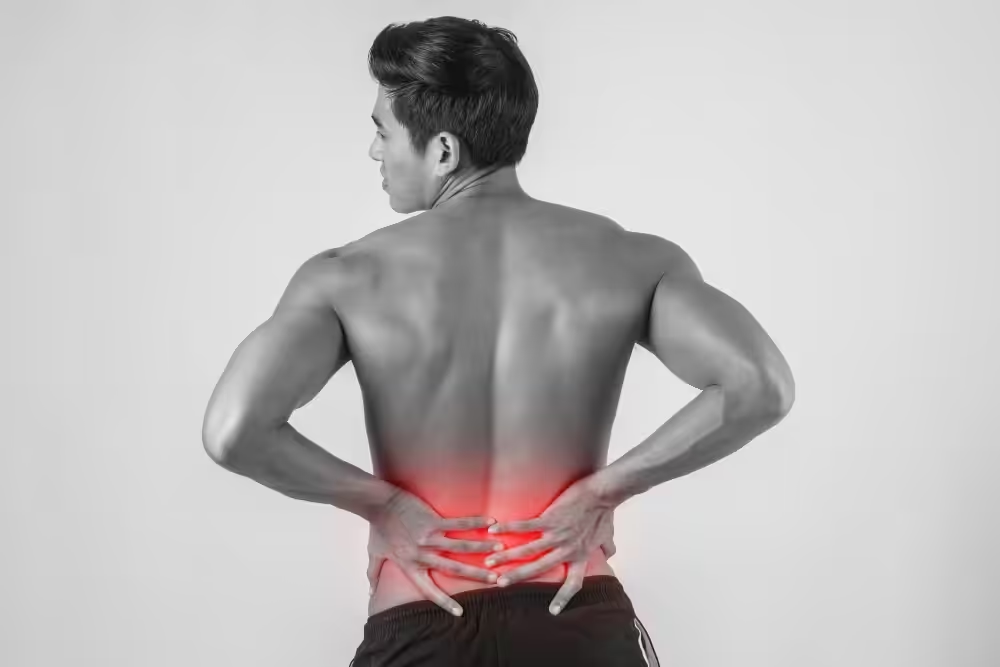
Usually, yes. Most people who struggle with lower back pain choose front squats over back squats.
Because the bar sits in front, your torso stays more upright, which reduces forward lean and limits stress on your lower back.
That said, back squats are not bad for your lower back if your form is solid. Problems usually come from excessive forward lean, poor bracing, or lifting more weight than you can control.
Muscles Worked: Front Squat vs Back Squat
Both exercises target very similar muscle groups, since they are squat variations. But small changes in bar position and body angle shift how much each muscle is involved.
What Do Back Squats Work?
- Glutes
- Hamstrings
- Quads
- Lower back (erectors)
- Core
What Do Front Squats Work?
- Quads
- Core
- Glutes
- Upper back
- Hamstrings
Do Squats Work the Back?
Yes, squats absolutely work your back, but not in the same way as pulling exercises. Your lower back and upper back act as stabilizers. Back squats place more direct load on the lower back, while front squats challenge your upper back more due to the upright position.
Do Front Squats Work Glutes?
Yes, front squats do work your glutes, just slightly less than back squats. Because of the more upright torso, the movement shifts some emphasis away from the hips. Still, your glutes are actively involved, especially as you drive up from the bottom.
Do Front Squats Work Abs?
Yes, front squats are excellent for your abs. The front-loaded position forces your core to work harder to keep you balanced and upright.
Do Front Squats Work Hamstrings?
Yes, but to a lesser degree compared to back squats. Front squats are more quad-dominant, so your hamstrings assist the movement rather than being the primary driver.
Do Front Squats Work Calves?
Yes, your calves are involved, but mainly as stabilizers. They help control your balance and keep your ankles stable, especially at the bottom of the squat.
Do Front Squats Work Shoulders?
Yes, but only minimally. Your shoulders support the bar in the front rack position, while your upper back works to keep your elbows lifted and your posture fixed. You can’t count front squats as a shoulder workout, but they can help improve strength and endurance.
Difficulty & Strength Comparison
When comparing the two, most people quickly notice a difference in both difficulty and how much weight they can lift.
Is Front Squat Harder Than Back Squat?
Yes, the front squat feels harder. The front-loaded position requires more balance, mobility, and core strength. Back squats, on the other hand, feel more stable and allow you to rely more on your hips and posterior chain, and that is why you can move much heavier loads on this exercise.
Front Squat vs Back Squat Weight Ratio
In most cases, your front squat will be about 70 to 85 percent of your back squat. For example, if you can back squat 225 lbs, your front squat will typically fall somewhere between 160 and 190 lbs, depending on your technique and experience level.
Keep in mind, this is just an estimate, not a fixed rule. The best way to find your actual ratio is to start with lighter weights, focus on proper form, and gradually increase the load over time. From there, you can test your one rep max safely and see where your true front squat strength stands compared to your back squat.
Which Is Better for Your Goals?
Both exercises have their place in a well-structured program. It comes down to choosing one that makes more sense for your specific goal.
Hypertrophy
When it comes to front squat vs back squat hypertrophy, both are highly effective for building muscle.
Front squats place more emphasis on your quads, which makes them a great option if you want to grow your thighs and improve definition in the front of your legs.
Back squats allow you to lift heavier weights, which can drive more overall muscle growth, especially in your glutes and posterior chain.
For the best results, many lifters include both, using front squats for quad focus and back squats for total lower body size.
Athletic Performance
For athletic performance, both variations can be useful, but they serve slightly different purposes.
When looking at front squat vs back squat for vertical jump, front squats can be more specific since they train upright posture and quad strength, which are important for explosive jumping mechanics.
For front squat vs back squat for runners, front squats are often a better fit because they reinforce posture, core stability, and knee drive, all of which carry over well to running form.
Are Front Squats Better Than Back Squats?
Not necessarily. Front squats are a great choice if you want to focus on your quads, reduce stress on your lower back, and improve posture and core strength.
Back squats, on the other hand, are better for lifting heavier weight and building overall lower body strength, especially in your glutes and hips.
So instead of asking which one is better, it makes more sense to ask which one suits you and your goals better.
Equipment Variations & Alternatives
If you don’t have access to a barbell, there are alternatives you can try.
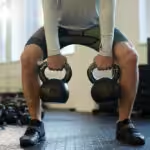
Front Dumbbell Squat
A front dumbbell squat mimics the barbell version by holding dumbbells at shoulder level.
- Keep the dumbbells close to your shoulders at all times
- Point your elbows slightly forward to stay upright
- Focus on keeping your chest up throughout the movement
- Brace your core to stay balanced and in control
Can You Do a Back Squat With Dumbbells?
No, you can’t do a barbell back squat with dumbbells. The only variation you can do is a front squat.
If you want to avoid front squats, you can try a variation where you hold dumbbells at your sides. The main limitation with this variation is load, since you won’t be able to go as heavy as with a barbell.
Are Goblet Squats the Same as Front Squats?
Goblet squats are similar, but not exactly the same. Both use a front loaded position and promote an upright torso, which makes them great for quad focus and learning proper squat mechanics.
However, goblet squats are usually limited by how much weight you can hold, so they’re more suited for beginners or higher rep training.
Can You Do Front Squats on the Smith Machine
Front squats on a Smith machine can be a useful alternative, especially for beginners. The fixed bar path allows you to focus more on your leg work and less on coordination.
That said, it doesn’t fully replicate the free weight version, since your stabilizing muscles are less involved.
Common Problems & Fixes
Even though squats look simple, small mistakes can lead to discomfort or pain. Here are the most common issues and how to deal with them.
Why Is Front Squat Hurting My Wrists?
Wrist pain usually comes from trying to hold the bar with your hands instead of letting it rest on your shoulders. Instead, you should:
- Keep your elbows high to create a solid shelf
- Let the bar sit on your delts, not in your grip
- Use just your fingers under the bar, not a full grip
- Switch to a cross-arm grip if mobility is limited
- Work on wrist and shoulder mobility over time
Why Does My Lower Back Hurt When I Do Squats?
Lower back pain during squats is usually a sign of poor positioning or control.
- Excessive forward lean, especially in back squats
- Weak core or poor bracing
- Rounding your lower back at the bottom
- Going too heavy too soon
How to Fix Lower Back Pain From Squats
Fixing lower back pain comes down to improving your technique and reducing unnecessary stress.
- Lower the weight and focus on proper form
- Keep your chest up and maintain a neutral spine
- Brace your core before every rep
- Improve hip and ankle mobility for better positioning
- Consider front squats to reduce lower back load
Injury & Safety Considerations
Squats often get blamed for injuries, but in reality, most problems come down to poor technique or ego lifting. When done correctly, both front and back squats are safe and effective.
Are Front Squats Bad for Knees?
No, front squats are not bad for your knees when performed correctly.
Your knees naturally travel forward in this movement, which is normal and safe as long as your heels stay down and your knees track in line with your toes.
Are Back Squats Bad for Knees?
Back squats are also not bad for your knees, but technique matters.
If your knees collapse inward or your weight shifts forward onto your toes, you can place unnecessary stress on the joint.
Are Back Squats Bad for Your Spine?
Back squats are not bad for your spine when done with proper form.
The back squat does place more load on your back compared to front squats, but this is manageable if you maintain a neutral spine and brace your core properly.
Are Squats Bad for Your Back?
No, squats are not bad for your back when performed correctly.
They can actually help strengthen your lower back and core over time. Problems usually come from poor technique, lack of mobility, or ego lifting.
FAQ
Are front squats necessary?
No, front squats are not strictly necessary. You can build strength and muscle with back squats alone. However, front squats offer unique benefits like increased quad focus and core engagement, which can improve your overall squat performance.
Can front squats replace back squats?
Yes, they can, depending on your goals. If you’re focused on quads, posture, or reducing lower back stress, front squats can fully replace back squats. But if your goal is maximum strength and lifting the heaviest weight possible, back squats are usually the better option.
Are front squats better for tall people?
In many cases, yes, front squats can feel more comfortable for taller lifters. The upright torso position reduces excessive forward lean, which is a common issue for people with longer legs. This can make it easier to maintain proper form and balance.