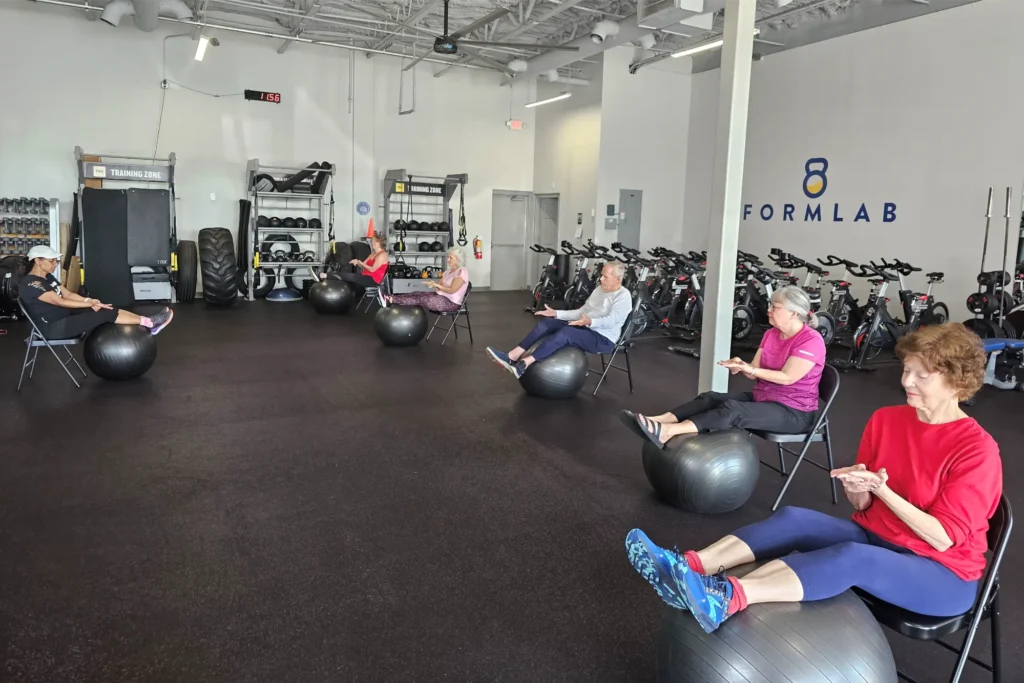
Yes, you can strengthen your legs while sitting with resistance bands. Seated band exercises can work your quads, hamstrings, glutes, calves, and hips with less joint stress, which makes them useful for desk workers, older adults, and people easing back into lower-body training.
Key Takeaways
- Seated band work is best for low-impact leg training when standing exercise feels uncomfortable, impractical, or too stressful on the joints.
- Different band types change what you can do. Loop bands work well for hip and thigh moves, while longer therapy or tube bands are better for presses, curls, and calf work.
- Band setup matters as much as the exercise itself. Poor anchoring can make the move awkward or unsafe, so the chair and anchor point need to stay stable.
- These exercises fit three common use cases: mobility-friendly strength work, desk-based movement breaks, and light leg training during recovery.
- Progress should come from more tension or more control, not faster reps. Slower returns and stronger band resistance usually make seated moves more effective.
- Seated training helps maintain strength, but it has limits. If your goal is full lower-body power or athletic performance, seated work is a support tool, not the whole program.
Why Seated Resistance Band Exercises Work
Seated resistance band exercises may seem simple, but they deliver serious benefits:
They Engage Key Lower-Body Muscles
You don’t have to be standing to work your legs. These exercises activate the quads, hamstrings, glutes, calves, and even the stabilizing muscles around your hips and knees.
They’re Low-Impact, Joint-Friendly Workouts
If you have knee pain, arthritis, or are recovering from an injury, seated resistance training reduces joint strain while still strengthening muscles.
They Improve Circulation and Flexibility
Sitting too long can cause stiffness and poor blood flow. These movements keep your legs active, preventing cramping and swelling.
They Can Be Done Anywhere
No gym? No problem. Whether you’re at home, in the office, or traveling, you can get an effective leg workout from a chair.
They Help Prevent Muscle Atrophy
If you’re inactive due to work, injury, or aging, muscle loss can happen quickly. Resistance bands provide an easy way to keep your legs strong without standing or walking.
How to Choose the Right Resistance Band for Seated Leg Exercises
Before diving into the exercises, make sure you have the right band. Here’s what to consider:
1. Types of Resistance Bands
- Loop Bands (Mini Bands): Great for thigh and glute exercises, as they wrap around your legs.
- Therapy Bands (Flat Bands): Long, stretchable bands ideal for leg presses and knee extensions.
- Tube Bands with Handles: Provide more control for leg presses and hamstring curls.
2. Resistance Levels
Bands come in different strengths. Light, medium, and heavy. Start with a lighter band and work your way up as you build strength.
3. How to Anchor Your Band Safely
- Loop it around your thighs, ankles, or feet.
- Secure it under the legs of a sturdy chair.
- If using a therapy band, wrap it around a solid object or hold it firmly in your hands.
Best Resistance Band Exercises for Legs while Sitting
Now for the good stuff. Seated resistance band exercises that target your legs effectively.
Quadriceps and Knee Strengthening
Seated Leg Press
Works: Quads, hamstrings, glutes
- Loop the band around the bottoms of both feet and hold the ends.
- Push your feet forward until your legs are fully extended.
- Slowly return to the starting position.
- Reps: 10-15
Knee Extensions
Works: Quads, knee stabilization
- Anchor the band under your chair and loop it around one foot.
- Start with your knee bent, then straighten your leg against the band’s resistance.
- Lower back slowly.
- Reps: 10-15 per leg
Glutes and Outer Thighs (Hip Stability)
Seated Hip Abductions
Works: Glutes, outer thighs, hip stabilizers
- Place a loop band just above your knees.
- Push your knees outward against the band’s resistance.
- Hold for a second, then return slowly.
- Reps: 12-15
Glute Kickbacks (Seated Glute Marches)
Works: Glutes, hamstrings
- Loop the band around your thighs.
- Push one foot back while keeping your other foot planted.
- Return to start and switch legs.
- Reps: 10-12 per leg
Small resistance bands are great tools for hip stability. Here are the 12 essential small resistance band leg exercises.
Hamstrings and Inner Thigh Strengthening
Seated Hamstring Curls
Works: Hamstrings, knee mobility
- Anchor the band in front of you and loop it around one ankle.
- Pull your foot back like you’re trying to bring your heel to your chair.
- Slowly return to start.
- Reps: 10-12 per leg
Calf and Ankle Strengthening (Circulation & Stability)
Seated Calf Raises with Resistance Band
Works: Calves, lower leg endurance
- Loop the band around your feet and hold the ends.
- Press your toes downward like you’re standing on tiptoes.
- Slowly lower back down.
- Reps: 12-15
You can always try these exercises at our Brunswick gym – make sure to claim your 3-day free pass at HiTone Fitness.
Final Thoughts
You don’t need to stand to build strong, toned legs. With resistance bands, you can get a solid lower-body workout from the comfort of your chair. Whether you’re at home, in the office, or recovering from an injury. Resistance band exercises for legs while sitting engage key muscles, improve circulation, and help maintain strength without putting stress on your joints.