
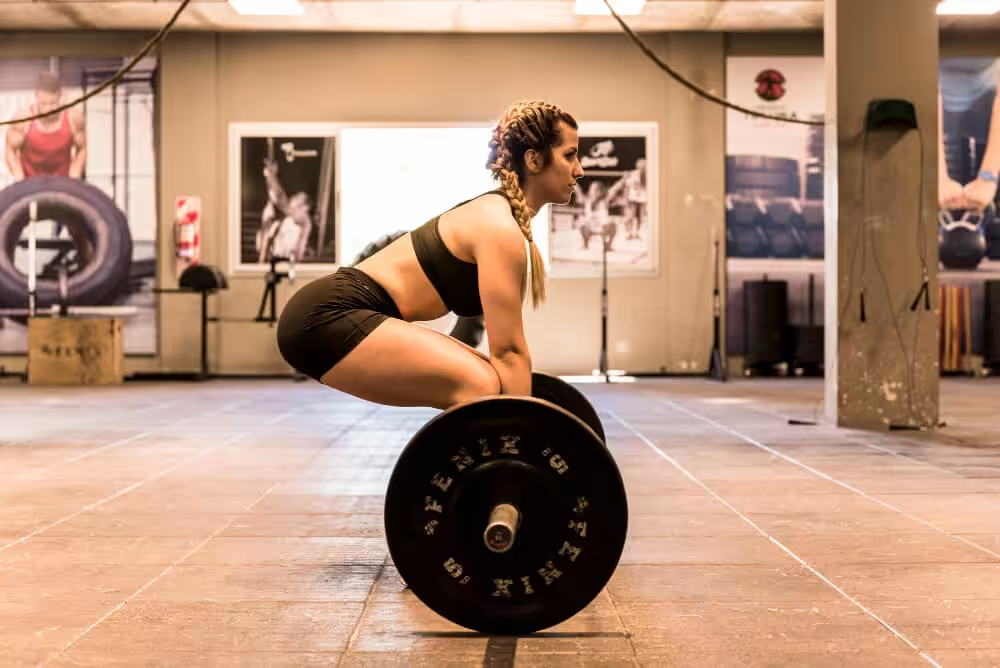
Weight lifting on an empty stomach can work well for some healthy people, especially during short or moderate early-morning workouts, but it is not the best choice for everyone. The right approach depends on your goal, workout intensity, training experience, and how your body responds when you train without food. If fasted lifting leaves you feeling strong, focused, and steady, it may be fine. If it makes you feel weak, shaky, dizzy, or unable to lift with good form, eating something small before training is usually the better option.
Key Takeaways
- Fasted lifting is usually easier to tolerate during shorter, lower-volume, or moderate strength sessions.
- Heavy lifting, high-volume workouts, and max-effort training often go better with some fuel beforehand.
- Burning more fat during a workout does not always mean losing more body fat over time.
- Muscle loss is more likely when fasted training is paired with low protein intake, poor recovery, or a large calorie deficit.
- If you train before breakfast, hydration, a gradual warmup, and a solid post-workout meal become more important.
Is It Bad to Lift Weights on an Empty Stomach?
Lifting weights on an empty stomach is not automatically bad. Many people train first thing in the morning before eating and feel completely fine. For others, fasted lifting can lead to lower energy, weaker lifts, poor concentration, or an uncomfortable drop in intensity.
The main question is not whether fasted lifting is “good” or “bad.” The better question is whether it helps you train well.
If you can complete your workout with good form, normal strength, and steady energy, lifting on an empty stomach may fit your routine. If your performance drops, your form breaks down, or you feel lightheaded, your body is probably telling you that it needs fuel before training.
This is especially important with resistance training because quality matters. A strength workout depends on control, focus, progressive overload, and safe movement. If skipping food makes your workout less effective, the convenience of fasted lifting may not be worth the tradeoff.
What Counts as Weight Lifting on an Empty Stomach?
Weight lifting on an empty stomach usually means training after several hours without food. For most people, this happens in the morning after an overnight fast. You wake up, drink water or coffee, and start your workout before breakfast.
This is different from lifting after a long fast, an aggressive calorie deficit, or a full day without eating. An overnight fast is common and usually easier to manage. Longer fasts can make strength training more difficult because your body has gone much longer without incoming energy, fluids, and nutrients.
That distinction matters. Someone doing a 30-minute moderate workout before breakfast is in a very different situation from someone trying to complete a heavy leg day after not eating all day.

Pros of Weight Lifting on an Empty Stomach
It can be convenient for early-morning workouts
For many people, the biggest benefit of fasted lifting is convenience. You do not have to plan a meal, wait for digestion, or train with food sitting heavily in your stomach. This can make it easier to stay consistent, especially if mornings are the only realistic time you have to work out.
If eating before training makes you feel sluggish, bloated, or uncomfortable, lifting before breakfast may feel better.
It may help you stay consistent
The best workout routine is the one you can actually repeat. If fasted lifting helps you get to the gym before work, avoid schedule conflicts, and build a regular habit, that consistency can be valuable.
For some people, trying to eat before an early workout creates one more barrier. Removing that step can make training feel simpler.
It may increase fat use during the workout
When you train without a recent meal, your body may rely more on stored fuel during the session. This is one reason fasted exercise is often associated with fat burning.
However, this needs to be understood carefully. Using more fat during a workout does not automatically mean you will lose more body fat overall. Fat loss still depends on your total calorie intake, protein intake, training consistency, recovery, and overall lifestyle.
If fat loss is your goal, fasted lifting can be one possible strategy, but it is not a shortcut. For a more structured conditioning approach, you may also want to try HIIT calorie-burning exercises.
It may feel better for people who dislike pre-workout meals
Some people simply do not like eating before training. A full meal can feel heavy, especially before squats, deadlifts, lunges, or core work. If you feel better training light, fasted lifting may be more comfortable than forcing food before every session.
The key is to pay attention to performance. Comfort is helpful, but your workout should still feel controlled and productive.
Cons of Weight Lifting on an Empty Stomach
Your strength may drop
Strength training depends on available energy. If you lift without eating and notice that the same weights feel heavier than usual, your body may not be performing at its best.
This matters most for heavy lifts, progressive overload, and workouts where you are trying to increase strength or build muscle. If fasted training causes you to lift less weight, complete fewer reps, or cut your workout short, it may limit your progress over time.
You may fatigue faster

Some people feel fine during the warmup but run out of energy halfway through the workout. This can happen if you start strong but do not have enough fuel to support the full session.
Faster fatigue can reduce your total training volume. That means fewer quality sets, less focus, and less productive work for the muscles you are trying to train.
Your form may suffer
Lifting while under-fueled can make it harder to stay focused and controlled. If you feel shaky, distracted, lightheaded, or unusually weak, your form may break down.
That is a bigger concern with free weights, heavy compound lifts, and technical movements. When your form slips, the risk-reward balance changes. In that case, eating before training or lowering the intensity is the smarter choice.
It may not be ideal for muscle gain
You can still build muscle if you lift fasted, but the rest of your day has to support that goal. Muscle growth depends on progressive training, enough total calories, enough protein, and good recovery.
Fasted lifting becomes a problem when it leads to weaker workouts or when it is combined with under-eating. If you are trying to gain muscle, you may do better with at least a small pre-workout snack or a well-timed meal after training.
It can feel uncomfortable for beginners
Beginners are still learning how their bodies respond to exercise. They may not know the difference between normal workout discomfort and signs that they are under-fueled.
If you are new to weight lifting, you do not have to start with fasted training. It is often better to build confidence with good form, manageable intensity, and stable energy first.
Does Lifting Weights on an Empty Stomach Burn More Fat?
Lifting weights on an empty stomach may increase fat oxidation during the workout. In simple terms, your body may use a higher percentage of fat for energy during that session.
But that does not guarantee greater fat loss over time.
Body fat loss depends more on your overall calorie balance, training consistency, protein intake, sleep, and recovery. If fasted lifting makes your workouts weaker, it could even work against your goal by reducing the quality of your training.
A better way to think about it is this:
Fasted lifting may help some people stick to a routine, and consistency can support fat loss. But fasted lifting itself is not magic. If you want to lose fat, the bigger priorities are eating in a sustainable calorie deficit, getting enough protein, lifting consistently, and staying active outside the gym.
Fasted vs. Fed Weight Training: Which Is Better?
Neither fasted nor fed weight training is automatically better. Each can work, depending on the person and the workout.
Fasted lifting may be a good fit when:
- You train early in the morning.
- Your workout is short or moderate.
- You feel comfortable training before breakfast.
- Your strength and form do not suffer.
- You eat enough protein and calories later in the day.
Fed lifting is usually better when:
- You are training heavy.
- You are doing a long or high-volume workout.
- You are trying to build muscle.
- You feel weak or shaky when fasted.
- You need maximum performance from the session.
For general fitness, either approach can work. For performance, strength, or muscle gain, many people do better when they have some fuel available before training.
Can You Lift Weights While Fasting?
Yes, you can lift weights while fasting, but the type of fast matters.
If you are doing a typical overnight fast and lifting in the morning before breakfast, many healthy people can tolerate that well. If you are following intermittent fasting, you may still be able to lift during your fasting window, especially if the session is moderate and you eat enough during your feeding window.
Longer fasts are different. The longer you go without food, the more likely you are to notice lower energy, reduced strength, poor focus, or slower recovery. Heavy lifting after a long fast is usually not the best choice for most people.
If you are fasting for medical, religious, or health-related reasons, adjust your training intensity based on how you feel. A lighter session, machine-based workout, mobility session, or lower-volume lift may be more appropriate than chasing personal records.
Lifting Weights in the Morning on an Empty Stomach
Morning fasted lifting is one of the most common forms of training on an empty stomach. It can be practical, but it works best when you approach it carefully.
Before a morning fasted workout:
- Drink water before you train.
- Give yourself a longer warmup than usual.
- Start with moderate weights.
- Avoid max-effort lifts until you know how your body responds.
- Pay attention to signs like dizziness, shakiness, nausea, or unusual weakness.
If you feel good, you can gradually increase intensity over time. If you consistently feel underpowered, try eating something small before your workout and compare the difference.
A banana, Greek yogurt, toast, a small protein shake, or a simple carb source may be enough to improve performance without making you feel too full.
Will You Lose Muscle If You Lift Weights Fasted?
Fasted lifting does not automatically cause muscle loss. Your body does not instantly start breaking down muscle just because you train before breakfast.
The bigger issue is your overall recovery pattern. Muscle loss becomes more likely when fasted training is combined with too few calories, too little protein, excessive training, poor sleep, or long-term under-recovery.
If you want to protect muscle while training fasted, focus on the basics:
- Eat enough protein across the day.
- Have a balanced meal after training.
- Avoid extreme calorie deficits.
- Keep your workouts productive but recoverable.
- Track whether your strength is staying stable or improving.
If your lifts are dropping week after week, your body may need more fuel or recovery.
Who Should Eat Before Lifting Weights?
Some people are better off eating before they lift. You should strongly consider having food before training if:
- You are doing heavy strength work.
- You are training for muscle gain.
- You are doing a long or intense workout.
- You are new to lifting.
- You feel dizzy, shaky, nauseous, or weak when fasted.
- You struggle to focus during fasted workouts.
- Your performance clearly improves when you eat first.
People with diabetes, blood sugar regulation issues, a history of disordered eating, pregnancy, or medical conditions should be more cautious with fasted training. If fasting affects your health, medication, or blood sugar, speak with a qualified healthcare professional before making it part of your routine.
What to Eat If Fasted Lifting Makes You Feel Weak
You do not always need a full meal before lifting. If fasted training makes you feel weak, try a small, easy-to-digest option first.
Good pre-workout choices include:
- A banana.
- Toast with a small amount of nut butter.
- Greek yogurt.
- A small smoothie.
- A protein shake.
- Oatmeal if you have more time to digest.
- Fruit with a small protein source.
If your workout starts within 30 minutes, simple carbs are usually easier to digest. If you have one to two hours before training, you can include more protein and complex carbs.
For a more detailed breakdown of workout fueling, read our pre-workout meal plan for HIIT enthusiasts.
What to Eat After Fasted Weight Training
Post-workout nutrition matters more when you train fasted because your body has gone longer without incoming nutrients. After lifting, aim to eat a meal that includes protein and carbohydrates.
Protein helps support muscle repair. Carbohydrates help replenish energy. You do not need to overcomplicate it.
Good post-workout meals include:
- Eggs with toast and fruit.
- Greek yogurt with berries and granola.
- Chicken or tofu with rice and vegetables.
- A protein smoothie with fruit.
- Oatmeal with protein powder or a side of eggs.
The goal is not perfection. The goal is to give your body enough fuel to recover and be ready for your next workout.
How to Decide Whether Fasted Lifting Is Right for You
The best way to decide is to compare how you feel and perform.
Try fasted lifting for a few shorter or moderate workouts. Pay attention to your energy, focus, strength, form, and recovery. Then try the same type of workout after a small meal or snack.
Ask yourself:
- Did I lift better after eating?
- Did I feel more focused?
- Did I complete more quality sets?
- Did I recover better afterward?
- Did fasted training feel comfortable and sustainable?
Your answer does not have to match anyone else’s. Some people train great before breakfast. Others clearly perform better with food. Choose the option that helps you train consistently, safely, and effectively.
If you are in Morganton and want help building a workout routine that fits your energy, schedule, and goals, visit HiTONE Fitness. Our coaches can help you find a realistic training approach that supports your lifestyle.
Final Thoughts
Weight lifting on an empty stomach can be a useful option, especially for people who train early and feel comfortable exercising before breakfast. But it is not automatically better for fat loss, strength, or muscle growth.
If fasted lifting helps you stay consistent and your workouts still feel strong, it may be a good fit. If it leaves you feeling weak, dizzy, unfocused, or unable to lift with proper form, eat something before training.
The best approach is the one that helps you train well, recover well, and stay consistent over time.
FAQ
Can I drink coffee or take pre-workout before lifting on an empty stomach?
Yes, but start carefully. Coffee or pre-workout may feel stronger when you take it without food, especially if it contains caffeine or other stimulants. If you feel jittery, nauseous, anxious, shaky, or lightheaded, reduce the amount or have a small snack before training.
Does creatine break a fast?
Plain creatine has little to no calories, so many people still consider it compatible with a fasting window. However, if you mix creatine into juice, a smoothie, or a flavored drink with calories, that would no longer be calorie-free.
Are BCAAs or amino acids still considered fasted?
BCAAs and essential amino acids contain amino acids, which your body can use as nutrients. Some people use them during a fasting window for training support, but they are not the same as drinking only water, black coffee, or plain tea.
Do electrolytes break a fast before lifting?
Plain electrolytes with no sugar or calories usually do not add meaningful energy before a workout. They can be helpful if you train early, sweat heavily, or feel low on energy when dehydrated. Check the label, because some electrolyte drinks contain sugar or calories.
Should I do cardio before lifting if I am training fasted?
If you are fasted and your main goal is strength, it is usually better to lift first and keep cardio light or separate. Doing hard cardio before lifting may make you more tired and reduce the quality of your strength workout.