Most BJJ athletes train their bodies the way powerlifters do—and wonder why none of it shows up on the mat. Building strength is valuable, but only if it maps directly to how you move, hold, and resist under pressure in grappling. This guide breaks down the best exercises for BJJ into what matters most: movement patterns, grip endurance, cardio that mimics rolling, and mobility work that actually keeps you training.
Key Takeaways
- BJJ strength work must match mat demands: hip power, rotational control, and grip endurance matter more than one-rep max strength.
- The most transferable lifts include kettlebell swings, sandbag carries, Zercher squats, Turkish get-ups, and gi or towel-based pulling variations.
- Conditioning should follow rolling patterns: mixed aerobic pacing, short scrambles, and grip-fatigue intervals.
- Mobility work must emphasize hip rotation, scapular control, and knee stability to keep training volume sustainable.
- A simple three-day split balances strength, conditioning, and joint prep without interfering with regular BJJ sessions.
Mat-Ready Strength: What Actually Carries Over to BJJ
Start here. If an exercise doesn’t match these criteria, it doesn’t belong in your program.
- Full-body force transmission: Grappling is never isolated. You push, pull, and twist in chains. Your training must reflect that.
- Rotational and isometric control: Most submissions happen in the twist. Most escapes happen in the hold. You need both.
- Explosive hip action: Every takedown, bridge, and guard recovery starts here.
- Grip fatigue resistance: If you can’t hold, you can’t control. If you can’t control, you’re done.
Section 1: Strength Training That Actually Transfers
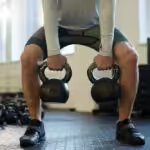
Kettlebell Swings

Builds explosive hip extension, anaerobic power, and posterior chain endurance. It directly maps to bridging, takedown entries, and guard explosiveness.
Sandbag Carries
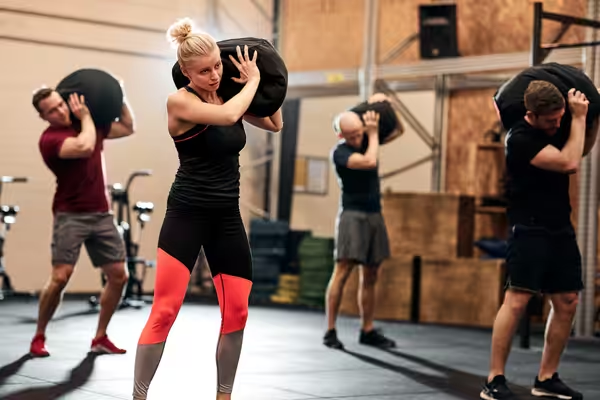
Loaded carries build trunk stability, isometric grip, and positional resilience—mirroring scrambles and top control battles.
Zercher Squats
Front-loaded squatting with an arm wrap trains midline stability and reinforces the posture you fight from in the clinch.
Pull-Ups (Gi or Towel)
Whether gi-wrapped or towel-held, pull-ups develop vertical pulling strength and grip endurance. Go weighted or volume-based depending on your needs.
Turkish Get-Ups
This is your rotational stability and flow pattern. It links shoulder control, hip drive, and grounded transitions in one move.
Section 2: Rotational Core + Anti-Rotation Drills
Landmine Rotations
Generate torque from the hips and brace through the trunk. Vital for sweeps, throws, and regaining frames under pressure.
Paloff Press Holds
Teaches you to resist rotation. Perfect for staying stable during scrambles or defending against heavy top pressure.
Hanging Knee Raises (Twist Variant)
Engage your obliques and grip at the same time. Control your tempo—this isn’t a kip contest.
Section 3: Conditioning That Matches How You Roll
Assault Bike Intervals
Program 30-second sprint / 30-second cruise intervals to mimic scramble/recovery pacing. Build up to around 10 minutes.
Row Erg (5×5-Minute Rounds)
Train aerobic threshold and grip simultaneously. Keep your breathing steady and controlled so you could hold a conversation if needed.
Grip-Focused Circuits
Combine grip and upper-body endurance to simulate the way your hands and forearms fatigue during hard rounds.
- Farmer carries with gi towel: 40 meters
- Plate pinches: 30-second hold
- Dead hang from pull-up bar: 20 seconds
- Rest: 1 minute
Run that circuit for 3 rounds. No dropping implements early unless you absolutely have to.
Section 4: Joint Health + Mobility (So You Can Train Tomorrow)
90/90 Hip Switches
Improves internal and external hip rotation—core for knee shield, open guard, and transitions from bottom. Move slowly and without using your hands if possible.
Scapular CARs
Restores shoulder blade motion. Essential for framing, posting, and keeping shoulders comfortable under constant collar ties and frames.
Banded Tib Rotations
Targets neglected shin rotation to help the knees tolerate the twists and torques of guard play, passing, and leg entanglements.
Section 5: Foundational Bodyweight Work (for White and Blue Belts)
Hip Bridges
Glute power drives bridge escapes and helps you build a stable base. Start with both feet on the floor, then progress to single-leg bridges as control improves.
Shrimp Variations
Builds the exact movement pattern you use to escape side control and recover guard. Drill straight-back shrimps, angle shrimps, and long-range hip escapes.
Hollow Body Holds
Trains your core to brace while your legs move—exactly what you need for guard retention, inversions, and staying tight while attacking from bottom.
For general bodyweight exercises that wrestlers benefit from, read this guide.
Sample BJJ Strength & Conditioning Split
Here’s one way to plug these exercises into your week alongside regular rolling.
| Day | Focus | Main Work |
|---|---|---|
| Day 1 | Strength | Kettlebell swings (4×20) Pull-ups (gi grip, 3×AMRAP)Landmine rotations (3×12/side) Sandbag carries (3×30 m) |
| Day 2 | Conditioning | Assault bike intervals (10 minutes) Grip circuit (3 rounds) Row erg (2×5 minutes) 90/90 hips + light foam rolling |
| Day 3 | Mobility & Isometrics | Paloff holds (3×30 s/side) Scapular CARs (2×10) Banded tib rotations (2×15/leg) Hollow body hold (3×20 s) |
Most hobbyists can run this three-day template alongside two to four BJJ sessions per week. If you’re feeling constantly drained, cut one gym day before cutting mat time.
Final Thoughts
Power doesn’t win rounds—precision and control do. But when strength shows up in the right patterns, it becomes a multiplier. Build hips, build grip, train conditioning that reflects the match, and protect your joints like your game depends on it. Because it does.