The debate around Romanian deadlift vs deadlift comes down to one thing, purpose. Are you trying to build maximum strength? Or are you focusing on glutes and hamstrings? Let’s break down the real difference, so you know which one belongs in your workout.
Key Takeaways
- Beginners can do both exercises, but they need to learn proper form first.
- Romanian deadlifts primarily target the hamstrings and glutes.
- Traditional deadlifts target the legs and the full posterior chain.
- Do Romanian deadlifts for muscle growth and toning.
- Do traditional deadlifts for power, muscle building, and strength.
Romanian Deadlift vs Deadlift – Key Differences
| Aspect | Romanian Deadlift (RDL) | Traditional Deadlift |
| Starting Position | Starts from the top | Starts from the floor |
| Knee Bend | Slight bend, mostly fixed | More knee bend throughout |
| Main Focus | Hamstrings and glutes | Full posterior chain and legs |
| Weight Used | Moderate | Usually heavier |
| Range of Motion | Stops below knees or mid-shin | From floor to standing |
| Goal | Muscle tension and control | Max strength and power |
When Should You Do Romanian Deadlifts (RDLs)?
Here are a few situations where you might skip traditional deadlifts and focus on RDL instead:
- You want to tone and shape your legs, especially glutes and hamstrings.
- You prefer a more controlled movement with a lighter weight.
- Your hips feel uncomfortable during traditional deadlifts.
- You want to reduce spinal loading while still training the posterior chain.
When Should You Do Deadlifts?
There are clear situations where traditional deadlifts should be part of your workout routine:
- You are building serious strength.
- You are training for powerlifting.
- You want athletic improvements like explosiveness and pulling power.
- You focus on heavy compound movements in your full-body training.
When Should You Do Both?
Even if you are a beginner, both exercises can have a place in your routine as long as your form is correct and you progress gradually.
- You can perform traditional deadlifts on your back day as a posterior chain strengthening movement.
- You can perform Romanian deadlifts on leg day as an additional exercise focused on glutes and hamstrings. For a mix of hamstring-focused exercises that include this deadlift, read our 6-exercise guide.
Are Deadlifts Worth It?
Deadlifts are one of the most effective compound movements you can include in your training program, as long as you do it with proper form.
Yes, some people report back stiffness or even injuries from deadlifts. In most cases, this comes from poor technique or ego lifting.
That is why beginners should consider guidance from a qualified trainer or experienced gym staff. If you are looking for a personal trainer in:
- Concord, NC
- Gastonia, NC
- Morganton, NC
- Sanford, NC
- Irmo, SC
- South Congaree, SC
- Fayetteville, GA
- Brunswick, GA
Then visit HiTone Fitness.
Is RDL a Compound Exercise?
Yes, the Romanian deadlift is a compound exercise because it targets multiple muscle groups at the same time. Your glutes, hamstrings, lower back, and core all work together during the movement.
That said, it does not sit at the same intensity level as a traditional deadlift. The amount of weight you can lift in a conventional deadlift is usually much higher than what you can handle with an RDL. And that difference in load affects how much overall stress and stimulus your body receives.
Does that make the RDL a bad exercise? Not at all. It is still highly effective, especially for building hamstrings and glutes. It is still a compound lift. It still delivers serious results when performed correctly.
However, if your goal is to include one major compound movement in a full-body routine that heavily targets both your back and legs, the traditional deadlift will usually be the stronger choice.
Does Romanian Deadlift Work the Lower Back?
Yes, the Romanian deadlift does work your lower back, but as a secondary muscle group.
Because the movement is built around a hip hinge, your lower back muscles are engaged to stabilize your spine throughout the lift. They are not the primary drivers, but they play an important supporting role.
When performing the exercise, you should not feel sharp tension or stiffness in your lower back. The primary sensation should be a deep stretch in your hamstrings and strong activation in your glutes.
What Is a Romanian Deadlift?
The Romanian deadlift, often called the RDL, is a deadlift variation that focuses on the hip hinge. This movement trains you to push your hips back while keeping your spine neutral and your upper body tight.
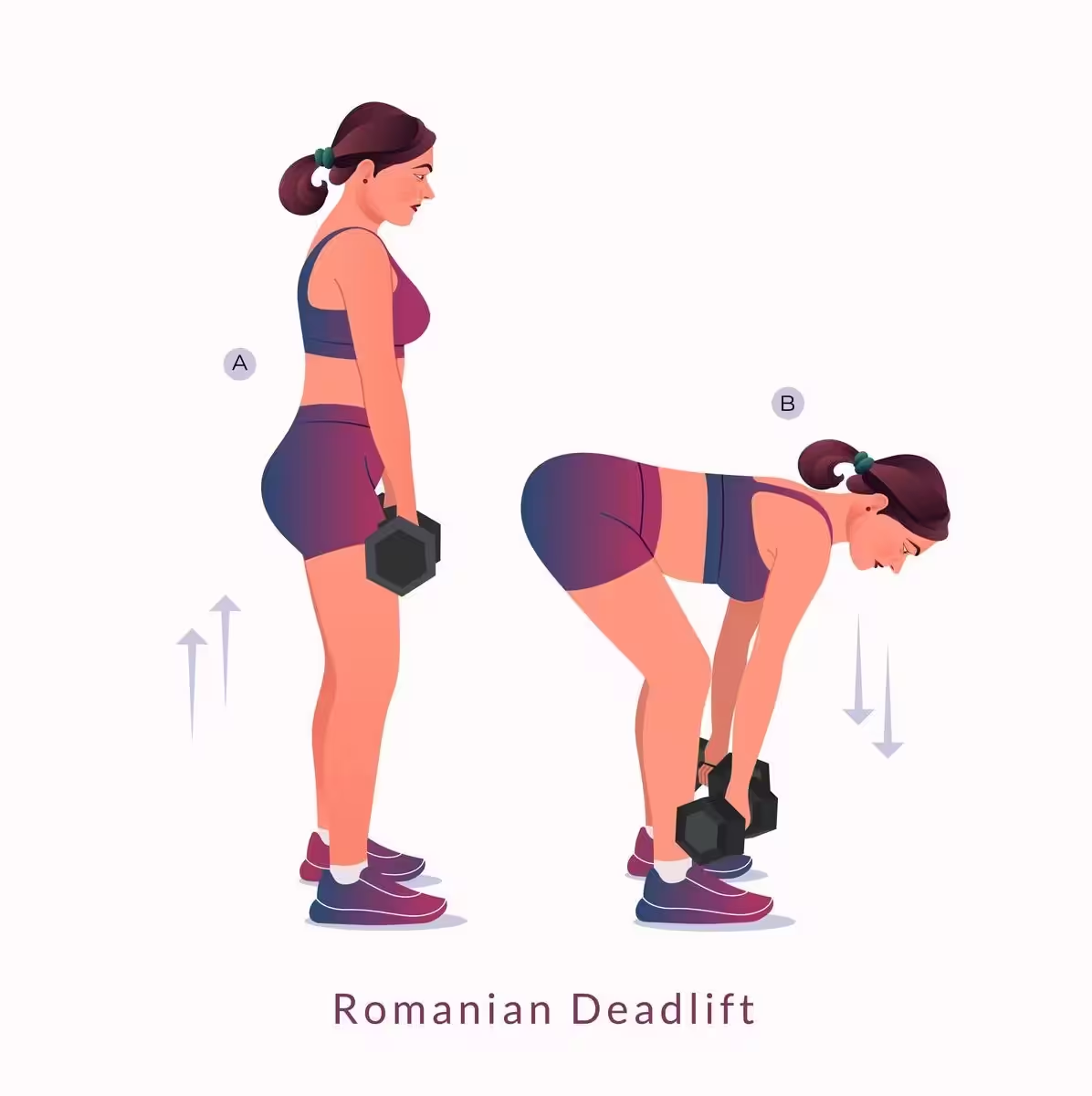
The goal is simple. Lower the weight to just below your knees while keeping only a slight bend in your knees. Instead of squatting down, you bend at the hips and feel a deep stretch in your hamstrings.
How to Do a Romanian Deadlift?
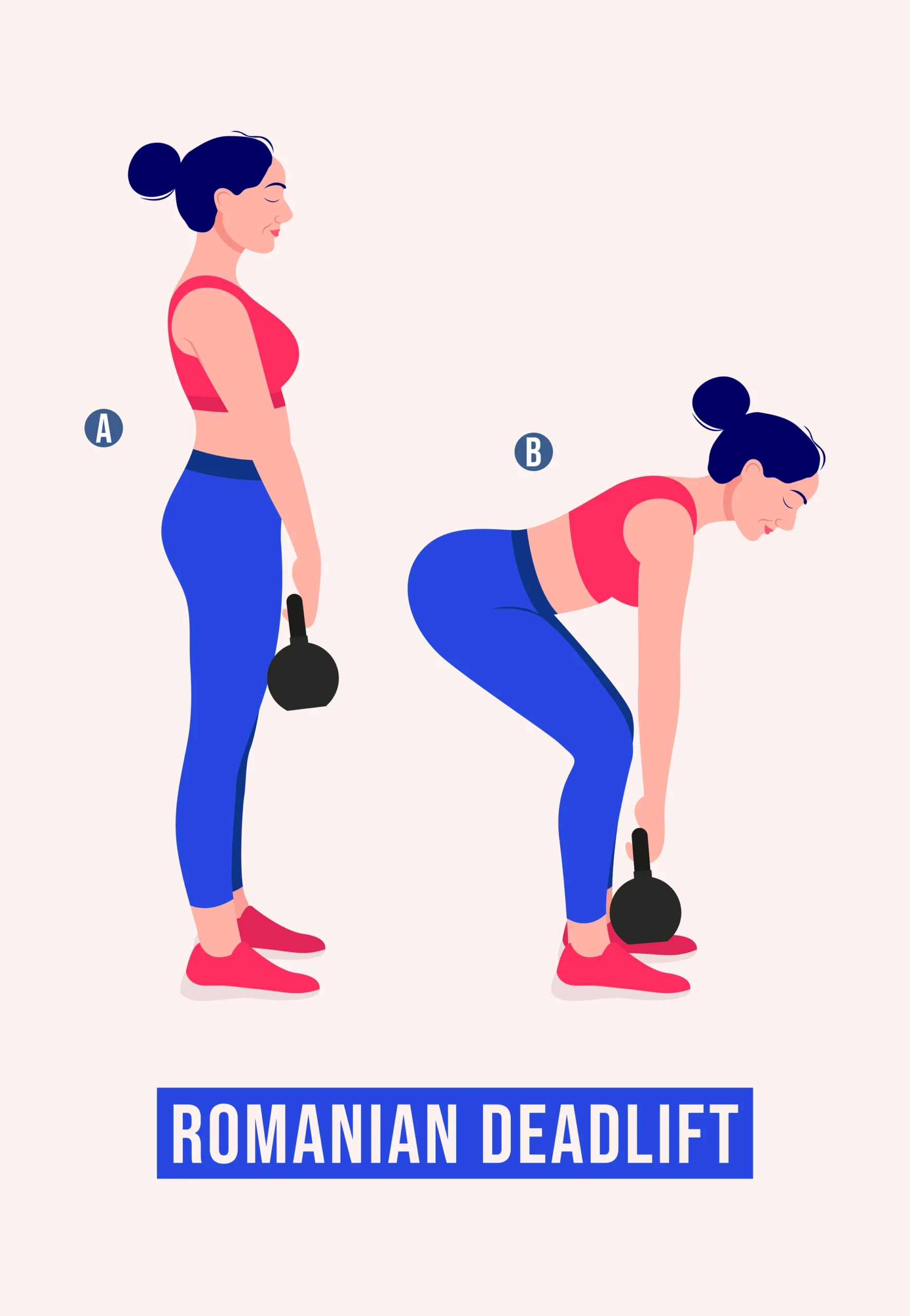
- Stand tall, holding the weight in front of your thighs. Keep your chest up and shoulders pulled back.
- Set your feet about hip width apart.
- Slightly bend your knees and lock that angle in.
- Push your hips back slowly while lowering the weight along your legs.
- Keep the weight close to your body and your spine neutral.
- Lower the weight to just below your knees or until you feel a strong hamstring stretch.
- Drive your hips forward and squeeze your glutes to return to the starting position.
What Does the Romanian Deadlift Work?
The Romanian deadlift targets several muscle groups, with clear primary and secondary movers.
Primary Muscles:
- Glutes
- Hamstrings
Secondary Muscles:
- Inner thighs
- Lower back
- Core
If you are using proper form and a challenging weight, you will also feel engagement in:
- Grip and forearms
- Lats
- Traps
That said, this does not turn the RDL into a full back workout. Your lats and traps are working to stabilize the weight, but you should not count Romanian deadlifts as dedicated back sets or as a replacement for specific forearm training.
Dumbbell Romanian Deadlift vs Barbell vs Kettlebell
You can perform the Romanian deadlift with almost any type of weight. The mechanics stay the same, but each tool offers a slightly different training feel.
- Dumbbell Romanian Deadlift: A favorite for many lifters because it allows better control and freedom of movement.
- Barbell Romanian Deadlift: The barbell allows progressive overload more easily and is often preferred for strength-focused training.
- Kettlebell Romanian Deadlift: Still highly effective, especially for home gyms. You can use one kettlebell in each hand or a single heavier kettlebell held with both hands.
Romanian Deadlift Variations
Beyond changing the equipment, you can also change how the movement is performed.
- Single Leg Romanian Deadlift: It is performed by standing on one leg while hinging at the hips. As you lower the weight, your free leg extends straight back behind you to maintain balance. This variation challenges your balance, improves coordination, and increases glute activation on each side individually.
- Deficit Romanian Deadlift: It is performed while standing on a small elevated surface, such as a weight plate. This increases the range of motion, allowing you to hinge slightly deeper and create more stretch in the hamstrings. It is an advanced variation and should only be used once you have mastered proper form on the standard RDL.
What Is a Deadlift?
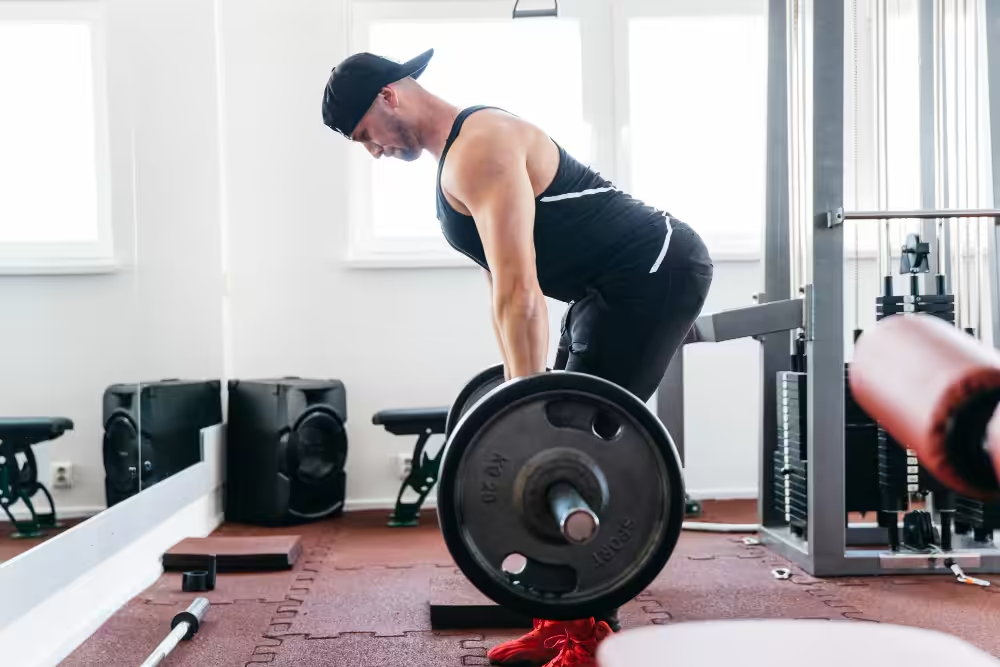
The deadlift is one of the most powerful compound lifts you can perform. It is a hip hinge movement where the weight starts on the ground, and using a combination of hip drive and bent knees, you pull the bar up until you are standing fully upright.
It trains strength from the ground up. You are literally picking weight off the floor with your entire body working together.
Read Next: Deadlift vs Squat
How to Do a Deadlift
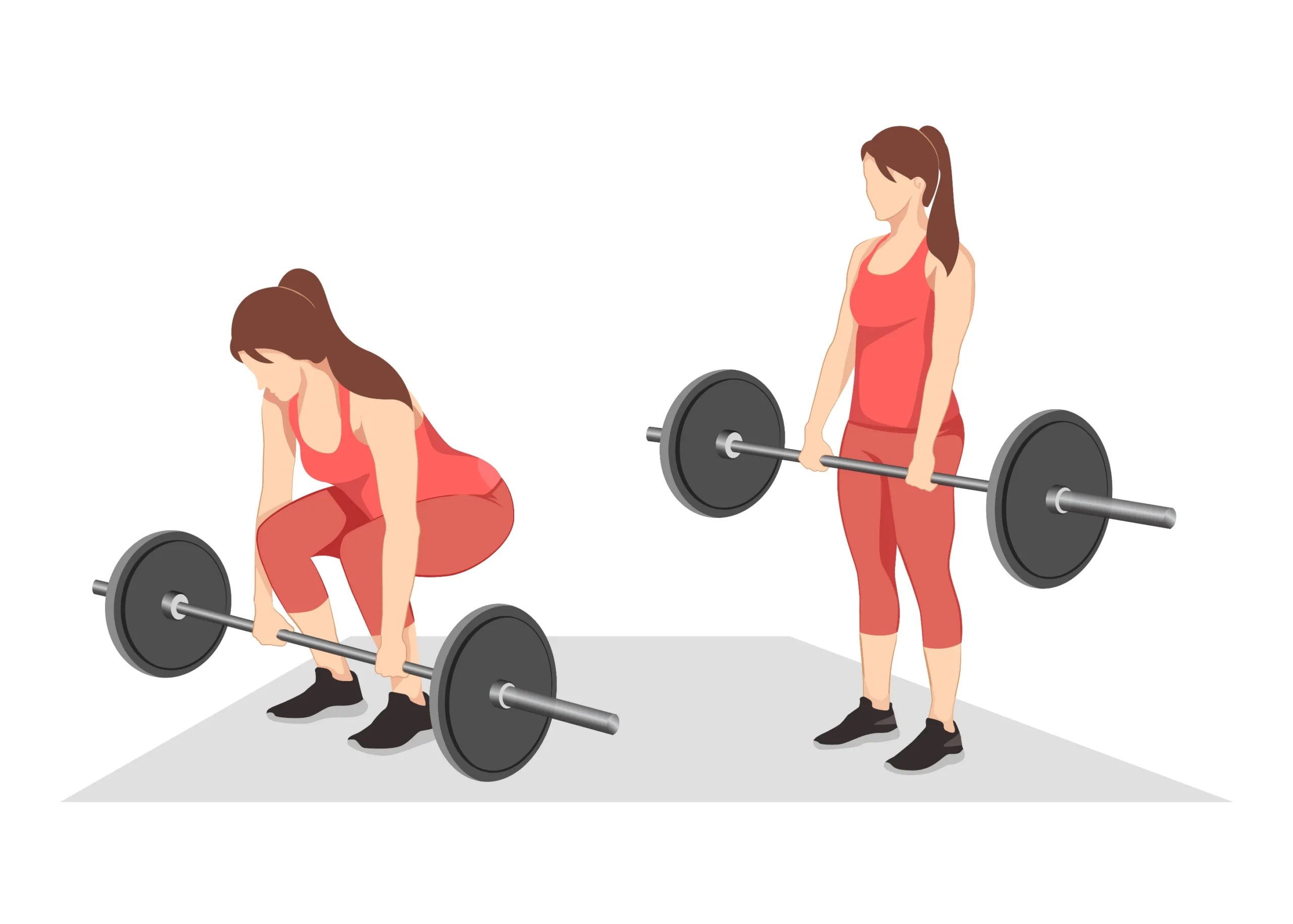
- Stand with your feet about hip-width apart, with the barbell positioned over the middle of your feet.
- Bend at your hips and knees to grab the bar just outside your legs.
- Keep your chest lifted, shoulders slightly in front of the bar, and spine neutral.
- Take a deep breath and brace your core.
- Push through your heels and extend your knees and hips at the same time.
- Keep the bar close to your legs as you stand tall.
- At the top, squeeze your glutes without leaning back.
- Reverse the movement by pushing your hips back first, then bending your knees once the bar passes them.
Deadlift Muscles Worked
The deadlift is a full-body compound movement, which is why it is a favorite for so many lifters. It builds raw strength and muscle across multiple areas at once.
Primary Muscles:
- Glutes
- Hamstrings
- Quadriceps
Secondary Muscles:
- Lower back
- Core
- Lats
Additional Engagement:
- Traps
- Forearms and grip
- Calves
Deadlift Variations
The traditional deadlift is performed with a barbell, but small changes in equipment or stance can significantly shift the feel of the movement.
- Sumo Deadlift: The sumo deadlift uses a much wider stance with your toes turned slightly outward. Your hands grip the bar inside your knees. This variation reduces the range of motion and increases emphasis on the inner thighs and glutes. It can also feel more comfortable for lifters with limited hip mobility.
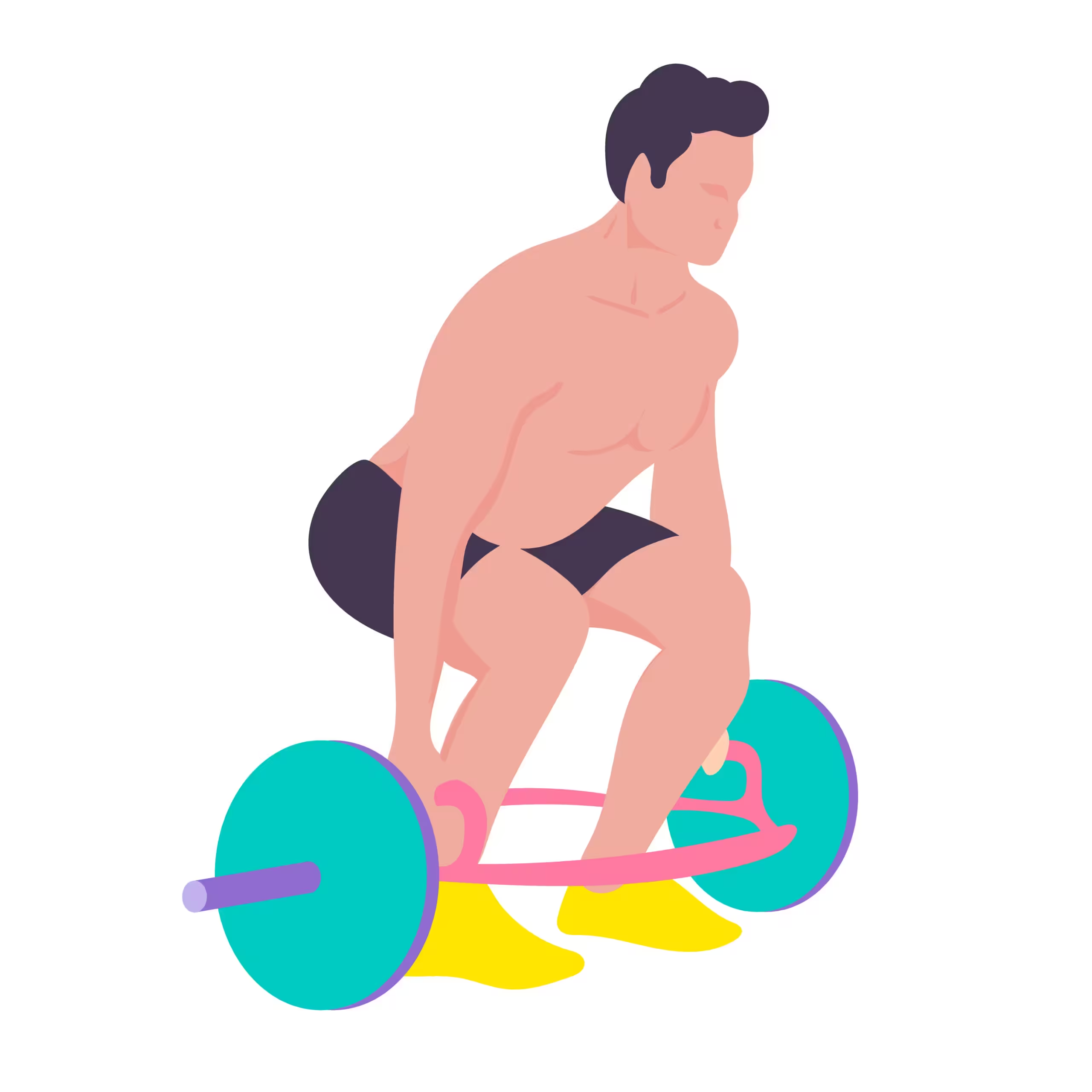
- Hex Bar Deadlift: Also known as the trap bar deadlift, uses a bar that you stand inside of. The handles are at your sides instead of in front of you. This setup keeps your torso more upright and reduces stress on the lower back. Many people find it more joint-friendly.
Can You Do Deadlifts With Dumbbells?
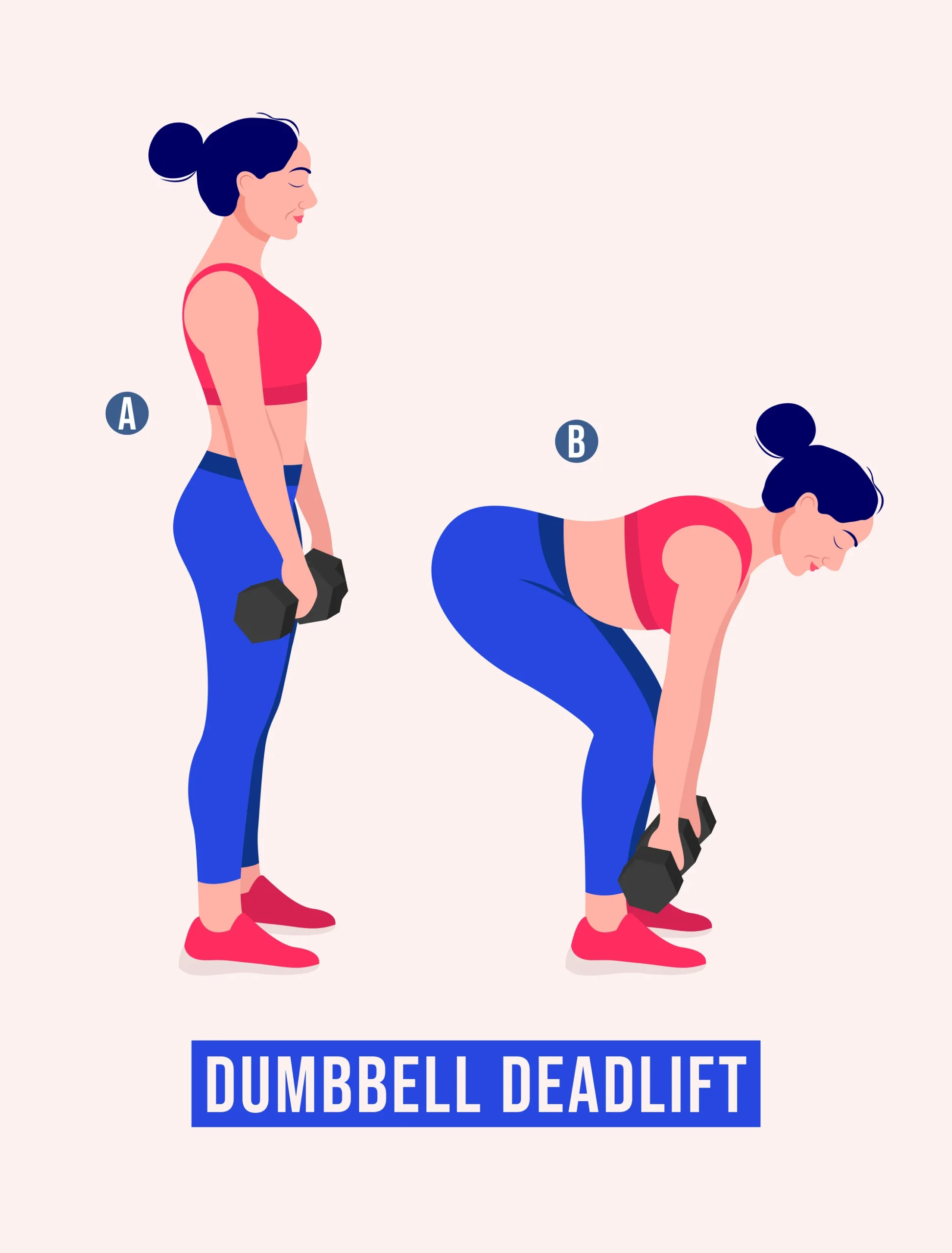
Yes, you can perform deadlifts with dumbbells. The movement pattern stays similar, but you need a few adjustments.
- Instead of holding the weight directly in front of you like a barbell, position the dumbbells slightly at your sides. This allows a more natural arm position and better balance.
- You also will not lower the weights all the way to the ground in the same way as a barbell. Barbells naturally touch the floor when you reach the correct depth. With dumbbells, you have to determine your stopping point based on hip position and maintaining a neutral spine.
If you are training at home without a barbell, dumbbell deadlifts are absolutely an option. However, the experience can feel different.
Here are a few reasons we do not prefer dumbbells if a barbell is available:
- It is harder to use very heavy weight without the movement feeling awkward.
- The weights do not reset on the floor each rep.
- Managing heavy dumbbells can challenge control more than strength.
- You may find that lighter dumbbells feel too easy, while heavier ones feel unstable.
Can You Do Deadlifts With Kettlebells?
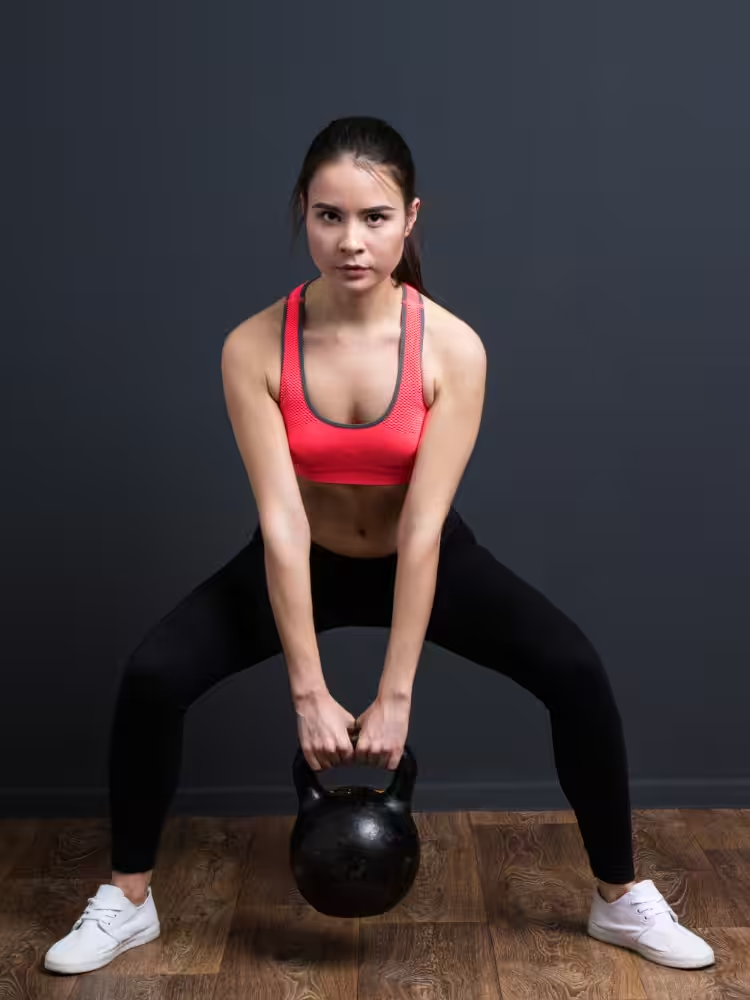
Yes, kettlebells can work well for deadlifts, but just like dumbbells, you need small adjustments.
- You can hold one kettlebell in each hand, similar to a hex bar setup. This keeps the weight at your sides and creates a balanced feel.
- You can also use one heavier kettlebell placed between your feet with a slightly wider stance, which resembles a sumo-style deadlift.
Between dumbbells and kettlebells, kettlebells often feel more natural and convenient. Between kettlebells and a barbell, the barbell is still the clear winner for maximum strength development and progressive overload.
FAQ
Can you do a Romanian deadlift with a kettlebell?
Yes, you can do a Romanian deadlift with kettlebells. You can use one kettlebell and hold it with both hands between your legs, or you can use two kettlebells positioned at your sides.
Why is it called the Romanian deadlift?
The Romanian deadlift got its name from Romanian weightlifter Nicu Vlad and his coach, Dragomir Cioroslan. Nicu demonstrated this variation to the USA Weightlifting team during a training clinic. Since he was from Romania, people started referring to the movement as the Romanian deadlift.
Are Romanian deadlifts good for glutes?
Yes, this exercise is very effective for the glutes and hamstrings. It is a great choice whether your goal is to tone your glutes or build stronger and more powerful leg muscles.
Are deadlifts for the back or legs?
Deadlifts work both your back and your legs. Where you feel more tension depends on your form and technique. However, when performed correctly, the movement usually places more overall stress on the lower body, especially the glutes and hamstrings, while the back works to stabilize the lift.
Is it normal for the back to be sore after deadlifts?
Yes, it can be normal to feel soreness after deadlifts. But there is a good type of sore and a bad type of sore. If it is general muscle soreness that fades after a few days, that is usually fine and part of recovery. If it is sharp pain, pain in one specific area, or it does not go away after a few days, then that is the bad type of sore. In that case, stop doing deadlifts and consult your doctor.
Does deadlift work abs?
Yes, deadlifts work your abs, just not in the same way as crunches. Deadlifts target the entire core, including the abs, by forcing them to brace and stabilize your body during the lift. So yes, you can absolutely feel abdominal soreness after heavy deadlifts.