
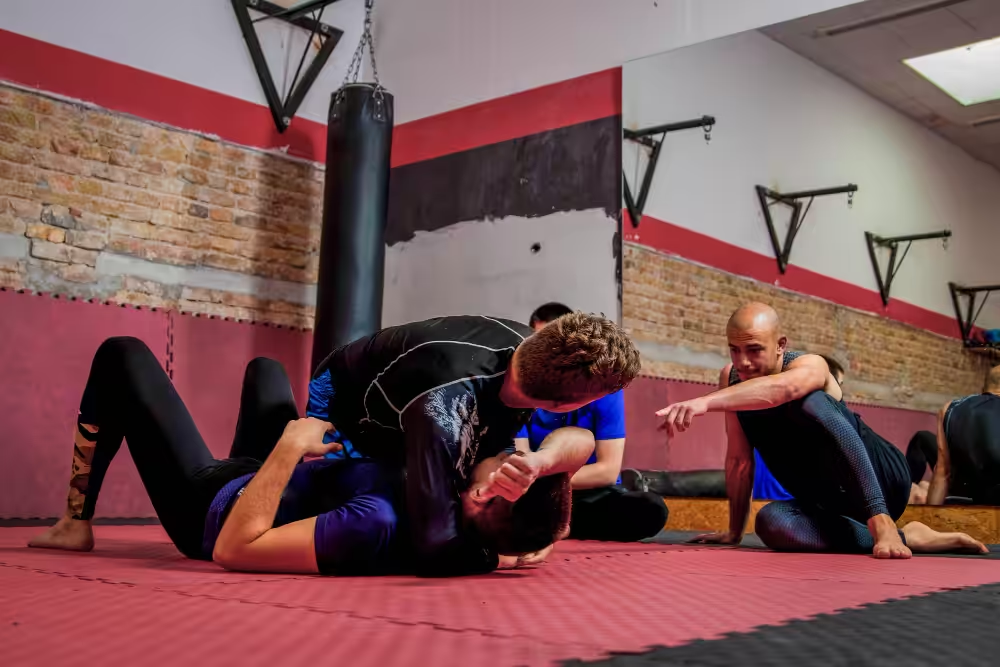
Ever been in the middle of a deep submission, but your arms are so fried from rolling that you can’t finish it? Or stuck in half guard trying to bridge, only to realize your hips aren’t strong enough?
Smart, tailored strength training for BJJ becomes a game changer when technique alone isn’t enough. This isn’t about building mirror muscles. It’s about real, functional strength that translates to the mat.
Why You Should Do Strength Training for BJJ
BJJ strength training brings serious benefits, whether you’re chasing medals or rolling for fun. Here’s what you can expect:
Injury Prevention
BJJ is a tough sport. Between submissions, scrambles, and takedown attempts, there’s a chance something could tweak or snap.
Specific strength training for Brazilian jiu-jitsu reinforces your muscles, joints, and connective tissues. That added strength gives your body a buffer against injury.
Improved Grip Strength
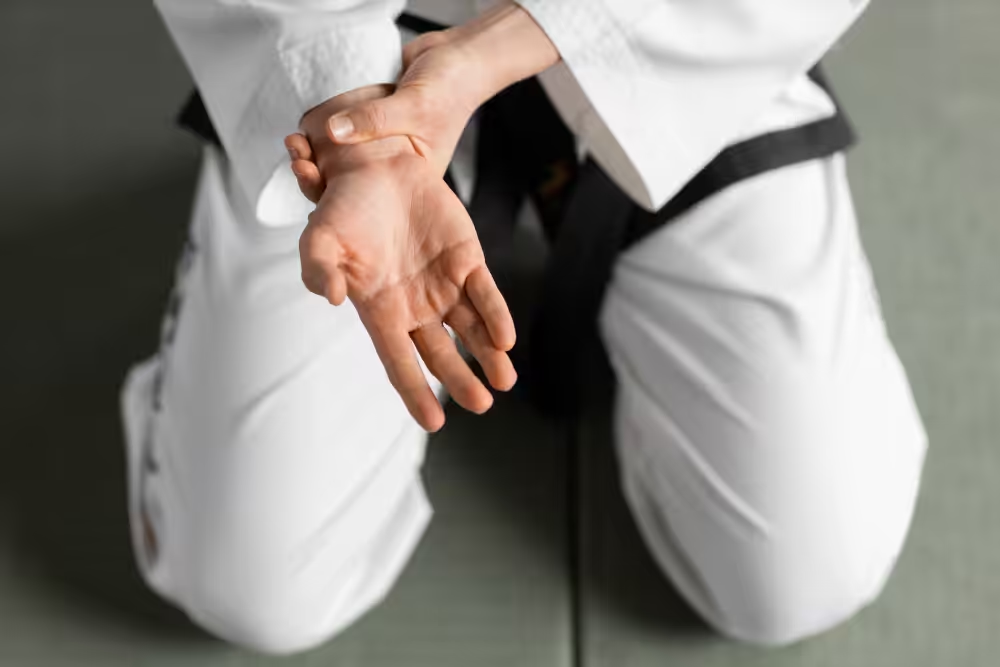
If you train gi, this is non-negotiable. But even in no-gi, grip matters more than people think.
BJJ strength training builds a crushing grip that helps you control sleeves, lapels, and wrists—or keep hold during slippery no-gi scrambles.
Better Takedowns & Base
Strong hips and explosive legs pay off fast in wrestling exchanges.
With the right strength work, you’ll shoot faster, sprawl harder, and finish takedowns with more power. It’s a game changer for offense and defense.
Improved Endurance
Cardio is built on the mats, no doubt. But that burning feeling in your arms after a failed submission attempt? That’s muscular endurance.
Strength training helps you keep pushing through rounds without your limbs turning into noodles. Less burnout, more output.
What Muscles You Should Focus On
Train with balance, but don’t waste time chasing pump workouts like biceps curls and triceps pushdowns. Big arms don’t guarantee stronger chokes. Functional strength is the goal. Here’s where to focus:
| Muscle Group | Why It Matters for BJJ |
| Posterior Chain (glutes, hamstrings, lower back) | Powers hip escapes, takedowns, guard retention, and provides posture and base in top control |
| Upper Back & Lats | Essential for pulling, maintaining posture, creating frames, and breaking grips |
| Core (anti-rotation & stability) | Builds strength for scrambles, bridging, and all guard work |
| Grip & Forearms | Critical for gi grips, hand fighting, wrist control, and no-gi scrambles |
| Neck & Traps | Reduces injury risk during takedowns and scrambles |
| Hips & Hip Flexors | Crucial for guard recovery, triangles, bridging, and hip mobility |
| Shoulders & Rotator Cuff | Keeps joints stable, resilient, and injury-free |
Strength Training for BJJ – Must-Do Exercises
The best strength training exercises for BJJ are compound, functional, and efficient. Movements that build real-world strength, not gym numbers. Here are the core lifts:
- Squats
- Deadlifts
- Overhead press
- Bench press
- Lunges
- Pull-ups
These exercises hit multiple muscle groups, reinforce key movement patterns, and carry over directly to the mats.
You’ll get even more out of your training by pairing these lifts with targeted accessory work. Supportive exercises can level up your game when programmed right.

3-Day Strength Training for BJJ
3-day strength training for BJJ is one of the most efficient ways to build serious strength, recover properly, and still leave plenty of time for rolling.
Since the goal here is functional, full-body strength, we’re sticking to compound movements and keeping it simple. The classic push–pull–legs split works incredibly well for BJJ athletes.
Here’s how to break it down:
Day 1: Push (Chest, Shoulders, Triceps)
| Exercise | Sets × Reps | RPE | Rest | Notes |
| Bench Press | 3–4 × 5–6 | 8 | 2–3 min | Barbell or dumbbells. Go with whatever feels more stable and controlled. |
| Overhead Press | 3–4 × 5–6 | 7–8 | 2–3 min | Barbell or dumbbell—both are solid options. |
| Incline Bench Press | 3 × 8–10 | 7 | 90 sec | Targets the upper chest. Barbell or dumbbells work fine. |
| Dips | 3 × 10–12 | 7 | 60–90 sec | Killer for triceps and chest. Use bodyweight or add resistance if advanced. |
| Seated DB Overhead Extension | 2–3 × 10–12 | 6–7 | 60 sec | Alternative finisher. Isolate the triceps. |
Day 2: Pull (Back, Biceps, Grip)
| Exercise | Sets × Reps | RPE | Rest | Notes |
| Deadlift | 3–4 × 5–6 | 7–8 | 3 min | The king of posterior chain work. Sub in Barbell Bent-Over Rows if needed. |
| Pull-Ups | 3–4 × 6–8 | 7–8 | 2 min | Use bands or assisted machine if you can’t do full bodyweight yet. |
| Chest-Supported DB Rows | 3 × 8–10 | 7 | 90 sec | Locks down momentum so you focus on pure pulling strength. |
| Bicep Curls | 2–3 × 10–12 | 6–7 | 60 sec | Nothing fancy. Squeeze and control the weight. |
| Chin-Ups | 3 × 6–8 | 7 | 90 sec | Alternative finisher. Focus on pulling with biceps, not back. |
Day 3: Legs (Power, Stability, Hips)
| Exercise | Sets × Reps | RPE | Rest | Notes |
| Squats | 3–4 × 5–6 | 8 | 3 min | Back squat, front squat, or Zercher—pick the variation that works for you. |
| Walking Lunges | 3 × 8–10 per leg | 7 | 90 sec | Brutal in the best way. Builds unilateral strength and balance. |
| Glute Bridges | 3 × 12–15 | 7 | 60–90 sec | Essential for hip drive, especially in escapes and sweeps. |
| Bulgarian Split Squats | 2–3 × 8–10 per leg | 7 | 90 sec | Bonus exercise. These will humble you and build serious leg control. |
How Many Reps and Sets?
You don’t need to train like a bodybuilder to get stronger for BJJ. The goal here is strength, power, and endurance. That means smart programming.
Here’s the general breakdown:
Main Lifts (e.g., squats, deadlifts, presses):
- 3–5 sets of 6–8 reps
- Heavy, controlled, and explosive. Focus on quality over quantity.
Accessory Lifts (e.g., rows, lunges, dips):
- 3–4 sets of 8–12 reps
- These build muscle endurance and help with joint stability.
Isolation or Finisher Moves (e.g., curls, glute bridges):
- 2–3 sets of 10–15 reps
- Great for volume and dialing in smaller muscle groups that still matter on the mats.
When you can hit the top end of the rep range for all sets at the same RPE, add weight:
- Upper body exercises: add 2.5–5 lbs
- Lower body exercises: add 5–10 lbs
Keep your sessions under 60 minutes. You’re training for BJJ performance, not powerlifting meets.
Calisthenics vs Weight Training for BJJ
Both calisthenics and weight training can make you stronger for BJJ, but they serve different roles. One isn’t automatically better than the other.
Calisthenics
Calisthenics builds control, coordination, and relative strength. These movements translate well to BJJ because they teach you to move your own body efficiently and can build serious grip strength.
Pros:
- Great for beginners and people training at home
- Builds joint control and body awareness
- Easier to recover from, depending on intensity
Cons:
- Hard to progressively overload past a certain point
- Limited lower body resistance unless you get creative
Weight Training
Lifting weights gives you the ability to target weak points, overload major muscle groups, and develop serious strength. Movements like squats, deadlifts, rows, and presses train your whole body and improve power output for takedowns, guard passing, and escapes.
Pros:
- Easier to scale and progress
- Builds absolute strength and muscle mass
- More direct carryover to explosive movement
Cons:
- Requires access to equipment
So What’s Better?
If you can do both, do both. Pull-ups and dips are great additions to weight lifting. Together, they give you a complete strength base.
But if you have to choose? Go with weight training for maximum impact on your BJJ performance.
Tips for BJJ Strength and Conditioning
To perform better on the mats, you need consistency and a few key principles to guide your training. Here’s what matters most:
Train Strength and BJJ on Separate Days (If Possible)
Trying to lift heavy and go to BJJ class in the same day? It’s manageable, but after some time you won’t give either one your full effort. Ideally, split them across different days.
Prioritize Recovery
More isn’t better if your body’s constantly beat down. Sleep, hydration, food, and rest days are part of your training. Treat them like it.
Keep Conditioning Mat-Focused
Don’t waste time on random HIIT circuits. Instead, do conditioning that mimics the demands of rolling: intervals, short bursts of effort, and low rest. Exercises like assault bike sprints, kettlebell swings, battle ropes, or BJJ-specific drills.
Don’t Chase the Pump
You’re not training to look jacked on Instagram but to dominate on the mats. Focus on strength, mobility, and durability. Instead of focusing solely on traditional lifts, consider exercise selection that prioritizes BJJ-specific movement patterns over raw strength numbers.
Master the Basics First
You don’t need fancy equipment or trendy programs. Nail your squats, hinges, presses, pulls, and core work. These are the foundations of athletic performance.
Final Thoughts
If you want to roll harder, recover faster, and stop fading halfway through a round, strength training for BJJ isn’t optional. It’s essential.
You don’t need to train like a powerlifter or bodybuilder. You need smart, functional strength that translates to the mat. A few well-structured workouts each week can change your game.
These BJJ-specific principles also apply to MMA strength training, where the additional striking and wrestling demands require even more specialized programming approaches.
FAQ
Are 2 Days of Strength Training for BJJ Enough?
Yes, if the workouts are focused and consistent. Two solid sessions a week can build real strength, especially if you’re also training BJJ multiple times. Prioritize compound lifts, hit all major muscle groups, and recover well.
Is Strength Training Good for BJJ?
Absolutely. It helps prevent injuries, improves grip, boosts takedown power, and increases endurance. You’re not lifting to show off—you’re lifting to move better, last longer, and dominate on the mats.
How Often Should I Strength Train for BJJ?
2–3 times per week is the sweet spot for most grapplers. It’s enough to build strength without burning out your body for rolling. Make sure it fits your schedule and you have enough time for recovery.