If you want to build serious strength or burn calories while making your muscles work overtime, the sandbag might become your new favorite training tool. But your sandbag workouts need to match your goals. Training for raw power looks different from training to burn fat, and with sandbags, you can do both.
Key Takeaways
Sandbags aren’t fancy, but they can deliver some of the most effective training you’ll ever do.
- Heavy, awkward sandbags are best for strength, while lighter bags and circuits are ideal for calorie-burning.
- For strength workouts, focus on low reps, heavy weight, and controlled power. Go for exercises like the lift from the ground, bear hug carries, and clean and squats.
- For cardio workouts, use lighter bags, higher reps, and fast-paced formats like HIIT or circuits with swings, sprints, and over-the-shoulder tosses.
- Nail your form first before ramping up weight or intensity.
- Pair them with calisthenics or traditional lifts for a more complete program.
How to Choose One of These Workouts?
If you’re chasing strength (and don’t mind adding some bulk), go for strength-focused sandbag workouts. That means working with a bag heavy enough to challenge you, but not so heavy you can’t even get it past your knees.
If your main mission is fat loss and building a leaner look, then lighter sandbags paired with conditioning-style formats (like circuits, AMRAPs, or intervals) are your best bet. Keep in mind though, sandbags aren’t perfect for everything. Some muscle groups, like the chest, won’t get the same engagement you would get from bench presses, dips, or push-ups. That’s why you should mix in some bodyweight training alongside your sandbag work.
What If You’re a Beginner?
If you’re brand new, don’t stress about strength vs fat loss right away. Both styles require the same first step: learning good form. Start with a lighter bag, even if it feels “too easy”. And focus on bracing your core, moving smoothly, and engaging the right muscles. Once your technique is solid, you can crank up the weight and intensity without wrecking your back or shoulders.
Strength Sandbag Workouts
Sandbag training shines when it comes to building raw, functional strength. For this, skip the lighter, handled bags and go straight for the heavy, handle-less ones. The lack of grips makes every lift awkward, and that’s exactly the point.
That instability forces your stabilizers, grip, and core to fire up alongside the big movers like your back, legs, and arms.
Unlike traditional barbell lifts, you can’t “cheat” a sandbag. Every rep demands posture control, balance, and full-body effort.
Some of the best sandbag exercises for strength are:
- Lift from the Ground: A raw test of power that hammers your posterior chain.
- Bear Hug Carry: Brutal on grip, core, and lungs while forcing you to stay tall.
- Clean and Squat: A full-body challenge that smokes your legs and back.
- Over-the-Shoulder Toss: Builds explosive hip drive and total-body power.
For step-by-step instructions on these moves, check out my full guide on 15 must-try sandbag exercises.
If your goal is raw power, try pairing these ideas with a focused kettlebell and sandbag workout for explosive strength.
Example Strength Sandbag Workout (Full-Body)
- Lift from the Ground: 4 sets of 6-8 reps
- Bear Hug Carry: 4 carries of 30-40 steps
- Clean and Squat: 4 sets of 5-6 reps
- Over-the-Shoulder Toss: 3 sets of 8-10 reps (each side)
How to approach it:
- Rest 90-120 seconds between sets.
- Focus on controlled, powerful reps instead of speed.
- Choose a bag heavy enough that the last rep of each set feels challenging, but not sloppy.
Calorie-Burning Sandbag Workouts
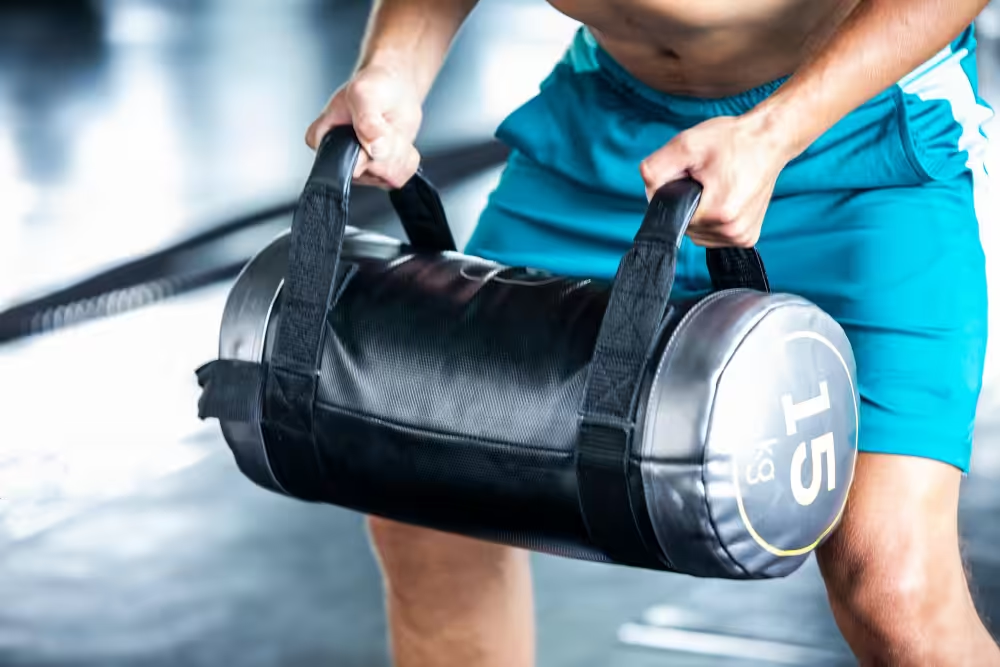
When the goal is burning calories and conditioning, the setup looks different. Here you’ll want a lighter sandbag, usually one with handles, so you can keep the pace high without breaking form. The focus is on higher reps, faster transitions, and total output, not max strength.
These workouts often borrow from HIIT or circuit-style training: short bursts of intense effort, minimal rest, and movements that keep your heart rate spiked while still working major muscle groups.
Some of the best calorie-burning sandbag exercises include:
- Sandbag Swings: Explosive hip power and a massive calorie burn, similar to kettlebell swings.
- Sprints with Sandbag: Turn simple runs into lung-busting intervals.
- Lunge with a Twist: Combines lower-body work with core rotation, keeping multiple muscles engaged.
- Plank with Sandbag Swipes: Torches the core while adding cardio intensity.
- Sandbag Over the Shoulder (repeated): Quick, powerful, and perfect for conditioning circuits.
For exercise breakdowns, check out the 15 must-try sandbag exercises guide.
Example Workout (20-Minute Sandbag HIIT):
- 30 seconds: Sandbag Swings
- 30 seconds: Bear Hug Carry (short distance laps)
- 30 seconds: Sandbag Over the Shoulder (alternate sides)
- 30 seconds: Plank with Swipes
- Rest 60 seconds, then repeat 4-5 rounds
FAQ
Can I use sandbags if I have joint issues?
Yes, but stick to lighter bags and higher-rep conditioning formats. Sandbags are less rigid than barbells, which can actually be easier on the joints. Still, try to avoid jerky movements.
How often should I train with sandbags?
For strength goals, 2-3 sessions per week is enough, with rest days in between. For calorie-burning or conditioning, you can go 3-4 times a week since the loads are lighter, but avoid training hard on consecutive days if you’re still sore.
Do sandbag workouts replace cardio?
They can, depending on how you structure them. High-intensity sandbag circuits elevate your heart rate just like running or cycling, but also build muscle at the same time.
What size sandbag should I own if I only want one?
Go with a mid-range bag (40-60 lbs). It’s heavy enough to challenge you in strength moves but still manageable for conditioning. If budget allows, get two bags: one heavier and one lighter.
Can I combine sandbag workouts with traditional weights?
Absolutely. In fact, that’s the sweet spot. Use barbells and dumbbells for structured strength or muscle growth, and add sandbags for conditioning, grip, and real-world strength. They complement each other perfectly.