
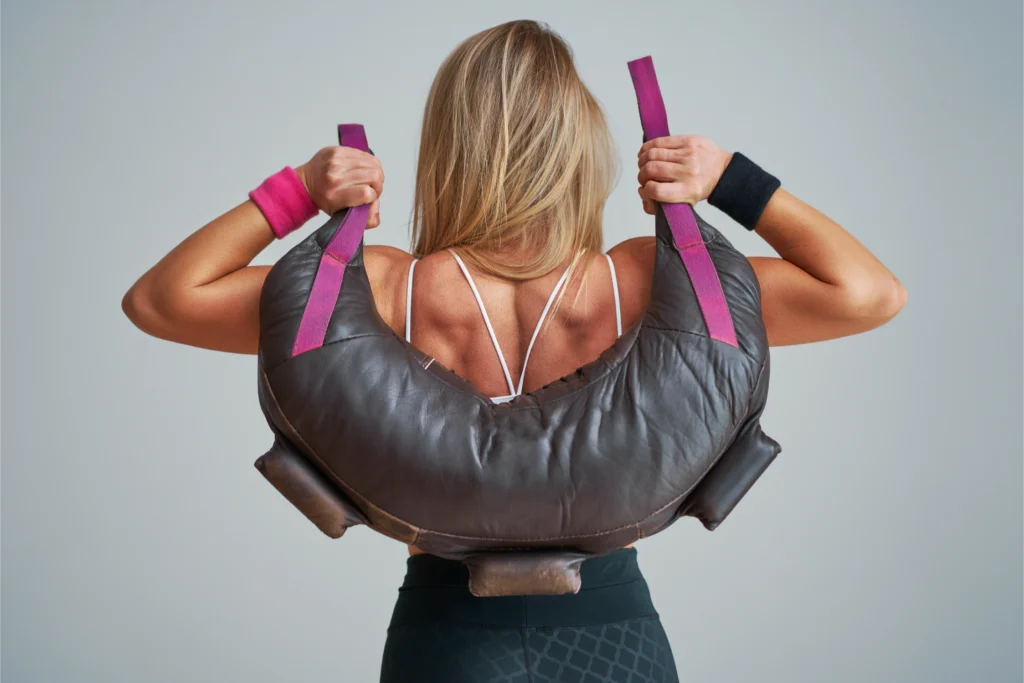
These unpolished tools can deliver a workout that hits harder than most traditional workouts. And yes, sandbag workouts are absolutely effective.
While barbells and dumbbells build precision strength, sandbags build adaptive power. They make you strong in motion, not just on paper. Whether you’re after functional fitness, conditioning, or a tougher, more capable body, sandbag training can deliver results that go far beyond aesthetics.
Key Takeaways
Here’s what to remember about sandbag workouts:
- Sandbags are effective because they challenge control, not just strength.
- They build real-world strength.
- They improve movement quality.
- Use barbells and machines for precision, and sandbags for adaptability and resilience.
What “Effective” Really Means in Training
When people ask if sandbag workouts are effective, what they really want to know is if these workouts can actually build strength and muscle. The answer is yes, but the real value goes deeper.
“Effective” isn’t just about looking stronger. It’s about moving better. It’s about control, balance, and being able to generate force when things aren’t perfectly stable. Sandbag training builds that kind of strength. It forces you to stay braced, coordinated, and aware every second you move the bag.
And if you’re sold on their effectiveness, these core benefits of sandbag workouts explain exactly what you’re getting for your effort.
Why Sandbags Challenge Your Body Differently
Every sandbag lift feels different. The weight shifts, drops, and pulls against you. Nothing stays even, and that’s what makes it so effective. You can’t just move through the motions. You have to react, stabilize, and adjust mid-rep.
That shifting resistance recruits muscles that usually stay quiet during traditional lifts. Your grip tightens, your core fires, your balance gets tested. It turns every rep into a full-body effort.
Test out sandbags’ effectiveness with these CrossFit exercises.
The Hidden Gains Most People Miss
The real benefits of sandbag training don’t always show up in the mirror, but you’ll feel them in how you move.
- Grip Strength: Every session builds iron grip endurance. The bag’s shifting weight forces you to hold tighter and longer than you think you can.
- Core Control: Your abs and obliques stay under constant tension. Even when you’re training legs or shoulders, your core is doing double duty to keep you stable.
- Posture and Coordination: Sandbags make your body work as one unit. The instability teaches you to align your hips, spine, and shoulders naturally, improving posture and reducing weak links.
This workout tool is also a great for both Sandbag Workouts for Strength: 4 Exercises for Full-Body Power.
Sandbags vs. Conventional Strength Tools
Sandbags are different. They don’t stay balanced or predictable, and that’s their biggest strength. They train your body to handle resistance that fights back. Instead of isolating muscles, sandbags make everything work together.
You can think of barbells as strength builders and sandbags as strength testers. Barbells develop precision. Sandbags expose weaknesses and fix them. When you combine both, you get the best of both worlds: raw power with real-world control.
Once you decide to give them a shot, start with a structured sandbag workout for beginners so you can actually track progress.
FAQ
Can I build muscle with sandbags?
Yes, but in a different way than traditional lifting. Sandbags don’t isolate muscles as effectively as dumbbells or cables, but they stimulate full-body growth through tension, time under instability, and compound movement. The muscle you build feels as strong as it looks.
Can sandbags replace a full gym setup?
If you train for function and endurance, yes. You can build an entire program using one or two sandbags. But if your goal is pure muscle growth or maximal strength, it’s better to combine sandbags with traditional lifts.
Can sandbag training help with lower back pain?
When done correctly, yes. Sandbag work strengthens the posterior chain and deep core muscles that support your spine.
How long should a typical sandbag session last?
You don’t need long sessions. Because sandbag training hits so many muscles at once, 25–40 minutes is plenty.
Do I need a handled sandbag or a handleless one?
Both work, but they serve different purposes. Handled bags are better for beginners and high-rep conditioning. Handleless bags challenge grip and stability more, which makes them ideal for advanced strength and power training.
What’s the best surface for sandbag training?
Train on rubber flooring, grass, or turf. Avoid concrete or rough surfaces that can tear the bag.